Pakistan's economic leading voices
Meet the business and industry leaders driving Pakistan’s booming economy
IGLOO Pakistan
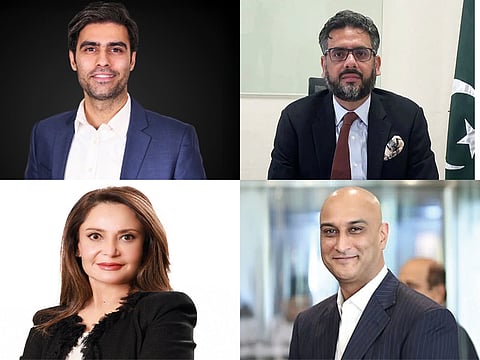
From its origins as a household ice cream brand to a diversified FMCG manufacturer, IGLOO boasts more than five decades of history. Established in 1971, the company today spans ice cream, frozen foods, industrial chocolate, cheese and foodservice supply, serving both retail and B2B customers nationwide. "Over the past 10 years, we have transformed the company," says Karim Teli, managing director and CEO of IGLOO Pakistan.
Our strategy focuses on delivering quality, quantity and competitive pricing.Karim Teli, Managing Director and CEO of IGLOO Pakistan
New product lines address local snack demand through frozen paratha, puri and chapati, alongside one of Pakistan’s largest chocolate operations, producing chocolate chips, coatings and spreads for bakeries and restaurants. A dedicated division supplies mozzarella and cheddar to pizzerias, while a vegan cheese is under development. This expansion has supported the company’s recent move into markets abroad. “This year, we made our first export shipment to Dubai,” Teli says.
IGLOO's domestic footprint is complemented by Dip Shop, its customisable ice cream parlour concept, and by nationwide institutional supply to restaurants and cafés. The company has also focused on major trends, using in-house chocolate manufacturing to differentiate premium lines. “Our strategy focuses on delivering quality, quantity and competitive pricing, because that is what local consumers value,” Teli says.
KP Province
Khyber Pakhtunkhwa Finance Minister Muzzammil Aslam outlines the province’s long-term financial strategy and the key sectors driving investment growth.
What are your priorities for Khyber Pakhtunkhwa’s economy?
My first priority was to build financial buffers, based on three principles: expenditure rationalisation, resource optimisation and tax maximisation. Over the past 18 months, we have increased reserves from roughly $85-90 million to approximately $1.1 billion. This has transformed our ability to govern. We can now make long-term commitments in areas such as education, healthcare and security with confidence.
Khyber Pakhtunkhwa has long-term potential as a regional trade corridor.Muzzammil Aslam, Finance Minister of Khyber Pakhtunkhwa
What investment opportunities would you highlight in the province?
Tourism is a major opportunity, particularly in hospitality infrastructure. International brands have begun to enter the market, reflecting growing confidence. The province also offers strong potential in minerals, including marble, precious stones and rare earth elements – resources which are currently underdeveloped. Finally, Khyber Pakhtunkhwa has long-term potential as a regional trade corridor linking Pakistan, Central Asia and China.
Pakistan Business Council (PBC)
The Pakistan Business Council (PBC) is a key private-sector advocacy body representing Pakistan’s largest enterprises. Elected chairperson in February 2025, Dr Zeelaf Munir has positioned the PBC as a data-driven policy voice at a time when investor confidence and regulatory credibility are central to the country’s economic outlook.
The PBC is an advocacy platform consisting of 94 to 100 private enterprises, having expanded from just 14 founding companies. Collectively, PBC members account for 11% of GDP, 40% of exports and 33% of tax revenues, providing both scale and leverage.
Under Munir’s leadership, strategy is anchored around five pillars. "We provide predictability, competitive exports, industrial depth, speedy and simplified regulation, and sustainability,” she says. These priorities shape advocacy towards consistent tax policy, export competitiveness, industrial development, regulatory efficiency and ESG integration.
The PBC positions itself as a bridge between global capital and regional opportunities. “For both international and local investors, we provide credibility and scale, enabling them to assess balance sheets and governance with confidence, reducing entry and execution risk,” Munir says, highlighting Pakistan’s strong alignment with UAE priorities.
QUOTE 79/87 CHARS “For both international and local investors, we provide credibility and scale.”
Mehran Bottlers
Founded around one of Pakistan’s most-loved consumer brands, Mehran Bottlers combines industrial scale with a global mindset. The Karachi-based company has manufactured Pakola, the first locally produced soft drink, since 1979, building on a legacy that dates back to 1950.
Under CEO Zeeshan Habib Teli, the business has undergone a significant transformation and grown its international reach. Early investments in canning facilitated longer shelf life and exports to markets such as North America, Australia and the UAE. Today, Mehran Bottlers’ products are available in 18 countries.
A milestone has been the development of its Faisalabad facility. “Previously, Pakistan consumed around 200 million cans annually. Today, it consumes 400 to 500 million, and about 150 million of them are filled by us,” says Teli.
The facility underpins a toll-manufacturing model that now accounts for roughly half of volumes. “Our facility gives UAE investors a direct way to test the Pakistani market without upfront investment,” he adds, outlining plans to double capacity in 2026.


