Al Hamra CEO unveils vision to transform Ras Al Khaimah into a global lifestyle and investment hub
Building communities, not just structures, to redefine Ras Al Khaimah's future
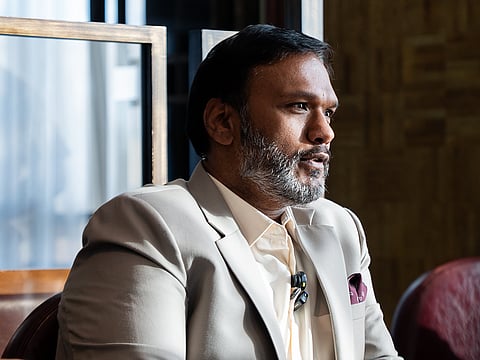
As Group CEO of Al Hamra, how are you redefining the organisation’s growth strategy to capitalise on Ras Al Khaimah’s emergence as a global investment and lifestyle destination?
By staying focused on Ras Al Khaimah and building communities, not just buildings. Our mandate from His Highness is to develop the emirate as a whole, which is why we have never gone to another city or another country. Manar Mall, our largest retail asset, is not even in Al Hamra, it is in the city, because our remit is the whole emirate.
We have now completed around 90 per cent of the Al Hamra masterplan. Of the 10 per cent that remains, 3 to 4 per cent is already planned as residential, and the remaining 6 to 8 per cent is reclaimed land along our beachfront, which we are dedicating to hospitality and branded residences. Once that is complete, there is no shortage of land in Ras Al Khaimah, whether on the beach, in the mountains or in the desert, and we will continue to build wherever the leadership’s vision takes us.
With Ras Al Khaimah attracting increasing international investor interest, which emerging opportunities and market segments will drive Al Hamra’s next phase of expansion?
Ras Al Khaimah’s population is expected to grow from around 400,000 today to roughly 600,000 by 2030, and those people have to live somewhere. That makes end users our biggest opportunity: people who buy because they want to live here, not only as an investment.
We have four developments in the market today, and deliberately at very different price points. Waldorf Astoria Residences is 34 branded homes at the top end. Al Hamra Waterfront is five towers and 622 apartments on the marina. Al Hamra Greens will be around 1,800 homes across six clusters, of which we have launched two, around 350 units. And Aila Homes is 210 three and four-bedroom townhouses. In a real community you have people from every income background. One buyer wants a five-bedroom villa at Dh20 million, another wants a townhouse at two and a half million. We build for both.
Every home also comes with a visa solution at any price point. Above Dh2 million, once you have paid 20 per cent, we process a 12-year visa, take the customer through the entire journey and cover all the fees ourselves rather than charging extra.
My advice to investors is to do their due diligence rather than follow the market’s momentum. Look closely at a developer’s track record, their delivery record and the real value they provide. Our philosophy has always been to build communities we can deliver and sell, which is why we are patient, calculated and selective in how we grow.
As competition intensifies across the UAE’s luxury real estate market, how is Al Hamra building a distinctive competitive advantage while delivering sustainable value for investors and stakeholders?
Our success equation is simple: keep pioneering, keep quality of life at the centre, and keep building integrated destinations rather than individual projects. We have done that for 25 years in Ras Al Khaimah, bringing the emirate its first freehold community, its first mall, its first international golf course, its first marina, its first five-star hotel and its first branded residence. Each one was an early act of conviction in this emirate.
Everything here was built to work together rather than as separate projects, and after 25 years you can see the difference. When you live in Al Hamra there is something for everybody: a school for your children, around 27 restaurants across our hotels and retail, a beach that is open to all, and one of the very few golf courses in the UAE that sits on the beach. That is what turns a development into a destination, and it is why more than 5,000 residents from over 100 nationalities now call Al Hamra Village home.
We are also disciplined at the top end. The Sky Palace at Waldorf Astoria Residences sold for Dh134 million, and it achieved that price precisely because there is only one. When something is rare, people are willing to pay far more for it. If you build many of them, the value disappears. We may build one or two more in a future development, but no more than that.
Ras Al Khaimah has arrived, but it did not happen overnight, and we have been one of the architects of that journey. We intend to keep shaping what comes next. Our communities are for everyone, and they are strategically placed. Al Hamra Greens is designed for people who want to work well and live well, three minutes from the upcoming RAK Central and close to the emirate’s free zones. Communities like these will be the engine of Ras Al Khaimah’s growth, housing the people who power its economy
How do you see Ras Al Khaimah’s evolving tourism, hospitality and infrastructure landscape reshaping the emirate’s economic future, and what role will Al Hamra play in accelerating this transformation?
Everything you see in Ras Al Khaimah is part of His Highness’s long-term vision: an emirate that is tolerant, welcoming and growing, where people come to live, work, retire, and experience. Wynn Al Marjan Island, and the businesses following it will accelerate that.
Our role is to build the assets and communities that complement it. We already partner with most of the major hotel companies in the emirate, we remain open to new brands and concepts, and our beachfront plans will add to that offering.
What have been your most defining leadership decisions at Al Hamra, and what lasting impact do you hope to create for the organisation and Ras Al Khaimah over the next decade?
I came to Ras Al Khaimah in 1998 as an accountant at Manar Mall. We were building our first shopping centre, and very few people believed it would succeed. His Highness did, and he invested in it. That taught me early that our job is to execute a long-term vision with conviction.
Every decision I am proudest of as Group CEO comes back to one idea: a home is not a commodity, it is someone’s lifetime savings and lifetime dream. That is why we build ecosystems, not single buildings. If people say they chose Ras Al Khaimah for the quality of life Al Hamra created, that is the impact I want.


