
UAE rescuer envisions self-sustaining cat sanctuary to transform animal welfare
UAE-based rescuer outlines vision for Abu Huraira Park’s self-sustaining future
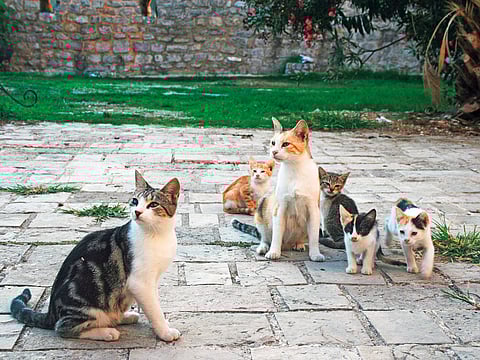
On any given evening in Abu Dhabi, Yasmina A is likely to be found doing quiet rounds. A carrier in one hand. A list of clinic bills in the other. For 14 years, cat rescue has shaped her days, her finances and her sense of purpose. Now she wants to turn that lived experience into something far bigger: a structured, long-term sanctuary she calls Abu Huraira Park.
“The Abu Huraira Project was not born from ambition,” she says. “It was born from responsibility.”
Yasmina moved to the UAE from Austria more than a decade ago. She began, as many rescuers do, by feeding stray cats, fostering when she could, arranging Trap-Neuter-Return and covering veterinary visits. Over time, rescue became the axis of her life. She describes years of redirecting every available resource toward animals in need. Savings gave way to solutions. Loans and pending vet bills became part of the routine. The animals always came first.
What eventually shifted was not the scale of the suffering she witnessed. It was her understanding of it. “Compassion without structure leads to exhaustion,” she says. “Compassion with vision can create lasting change.”
Phased approach
Abu Huraira Park is her attempt to build that structure. The concept has been studied and refined over several years. It begins with a phased approach. The foundation is TNS: Trap–Neuter–Shelter. Cats would be humanely trapped, medically treated and neutered. Instead of being returned to the streets, they would enter a protected sanctuary designed as a living community.
Central to the first phase is what she calls Noah’s Ark, an isolation and rehabilitation veterinary centre where rescued cats receive treatment and recovery care before joining the larger sanctuary space. Medical care, she believes, must sit at the heart of any humane model. The vision includes ongoing treatment, prevention and lifelong monitoring to ensure health and dignity.
“The long-term solution is not returning animals to the streets,” she says. “It is removing the streets from the equation altogether.”
Ramadan, she believes, offers a moment to speak about that responsibility more openly. The name Abu Huraira carries religious and cultural resonance. It translates to “father of the kitten” and references teachings that emphasise mercy toward animals.
“Ramadan is a time when faith moves from words into responsibility,” Yasmina says. “Every day, we see cats injured, hungry, exposed to heat and danger. Noticing suffering creates obligation.”
For her, mercy must be organised. She wants the project to reflect shared values of compassion and accountability while remaining grounded in practical systems. She frames the sanctuary as a complete ecosystem rather than a series of emergency rescues. Shelter, veterinary care, population control, education and daily operations would operate within one coordinated framework.
She describes it as a small city within a protected park. The aim is to reduce repeated interventions and lower long-term costs by creating predictable outcomes. Fewer animals on the streets. Fewer emergency cases.
“Sustainability is achieved through a self-operating structure,” she says. “Innovation is in solving the problem once, properly, and for the long term.”
Financial independence forms a core pillar of her planning. After years of personal strain, she believes compassion must be shielded from instability. A self-sustaining model would protect care from fluctuations in donations and allow decisions to be guided by animal welfare rather than financial urgency.
Community engagement sits alongside care. Yasmina imagines families visiting the sanctuary, children observing structured programs and volunteers participating in guided roles that protect both animals and people. She wants empathy to be learned through experience.
“Children learn by witnessing care in action,” she says. Volunteers, she adds, would be part of structured programs that cultivate mindful participation. The goal is to prevent burnout and create involvement that is sustainable and meaningful.
Vision in progress
Yasmina is clear that the project is not presented as a finished reality. It is a vision seeking dialogue and alignment. She says the concept has been discussed in professional settings and refined through formal presentations. Her hope is to work alongside government authorities and carefully selected private and community partners.
“The project is about sharing a vision born in the UAE,” she says. “A vision inspired by compassion, responsibility and long-term care.”


