
Christmas in the Middle East: Food traditions from Palestine to Egypt
In Middle Eastern homes, tradition unfolds through shared food, memory and togetherness
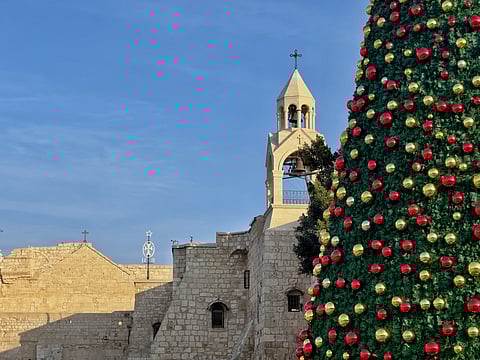
‘Tis that time of the year again – of beautiful weather, hot beverages, bright lights, cakes, roasts, family get-togethers, and celebration in the air. Christmas time is magical around the world, and while we usually relate it to snow-swept landscapes, it is just as special in the desert.
“People are always surprised when they find out there are Christian [Arabs], although Jesus was born in Bethlehem and it’s a bit of a no-brainer,” laughs Haya Bishouty, founder of Haya’s Kitchen, a sufra, or communal eating concept, dedicated to Palestine, Tetas or grandmothers and tradition. “Christmas is very much about food and our family traditions.”
Palestinian-Jordanian chef Sara Aqel, who divides her time between Dubai and Amman where she runs her restaurant Dara Dining, remembers Christmas as a time of calm. “Most of my memories of Christmas are from school because I really used to enjoy that time of the year,” she says. “Everyone would suddenly become super joyful, as if there was something in the air. They would bring something to eat to school every day. Now it’s the same in my restaurant. Everyone’s mood has changed.”
Across the region, what’s common during any festival, including Christmas, is harmony and a table groaning under the weight of incredible food. From fantastic spreads to whipping up delights in the days leading up to Christmas, here in the Middle East, the festival is all about bringing everyone together through cooking.
“On Christmas Eve, the heart of the celebration was always the kitchen, specifically wherever Teta stood preparing the holiday feast,” recalls Bishouty. “The moment she started getting the meal ready, all of us slipped into the kitchen like her little elves. We didn’t just help her cook, we built the Christmas Eve meal together. Those moments were as much a part of the holiday as the feast itself.”
UNIQUE CUSTOMS
Countries like Palestine, Iraq, Lebanon, Jordan and Egypt are home to some of the world’s oldest Christian communities, so their Christmas celebrations are magnificent and deeply reverent in nature. Grand parades, midnight mass, fasting, nativity scenes and Christmas trees are common, but there are unique aspects as well. For example, in Lebanon, poinsettias are found in every corner and there are gifts from Baba Noel. In Iraq, Chaldean Christians read aloud the story of the birth of Jesus in Syriac on Christmas Eve, while in Egypt, Christmas is celebrated on January 7.
“Coptic Christians typically fast for 43 days leading up to the festival while strictly following a vegan and pescatarian diet,” says Egyptian food writer Nermine Mansour who blogs at cheznermine.com. “So, on Christmas Day, we don’t serve any vegetable dishes at all. It’s all about meat, and more meat, cold cuts and maybe a large tray of cheese. A salad would be a shame.”
Some dishes typically found at a Coptic Christmas celebration are fatta, which is layers of toasted and fluffy Egyptian rice topped with tender meat, drizzled with a garlicky tomato sauce, warak enab or rolled and stuffed grape leaves, macarona forn, a baked pasta with ground meat covered in a silky bechamel sauce, fiery shaved beef or veal liver, and baid mezalail or hard-boiled eggs fried in ghee.
Mansour lived in Alexandria for many years, so Christmas celebrations were characterised by Alexandrian pastries, which carry Greek and Italian influences and are considered some of the best in the region. One such dessert is the Baba au Rhum, a soft and airy yeast cake drizzled with a warm and citrus-flavoured beverage syrup. Savoy cakes and ice cream cakes are also popular during this time.
One of Aqel’s favourites unique to Jordan is a sweet Christmas bread made with olive oil and sprinkled with black and white sesame seeds. And in Syria, a Christmas feast will feature a turkey stuffed with freekeh or cracked wheat with lots of nuts on top as well as chestnuts and even desert truffles, says Chef Mohamad Orfali of the Orfali Bros. There’s gravy too, usually flavoured with seven spice or baharat.
In Iraq, kleicha, touted as the national cookie and drawing from the qulluppu pastries of Mesopotamia are a must during Christmas, while pacha – stuffed tripe – is the star of the feast. Christmas in the yesteryears also included kubba yakhni, a hearty lamb dumpling soup or stew with chickpeas and onions.
THE COMMON THREAD
At the same time, one of the most significant characteristics of an Arab Christmas is the plethora of foods and dishes that are common across the region. In many ways, a Christmas table is similar to an Eid table because the experience of food here is more cultural than religious. For instance, ka’ek and maamoul – delicious semolina cookies filled with nuts and dates – are par for the course during Christmas, Easter and Eid.
“The beauty of Coptic fasting actually manifests itself when it overlaps with Ramadan,” says Mansour. “So, for example, during iftar, we’ll invite Muslims into our home, and during Advent, they’ll invite us and have enough vegan dishes to serve us.”
A typical Christmas feast will include a turkey or large chicken stuffed with mince, spiced rice or freekeh, and nuts. You can also expect kharouf with hashweh, which is lamb stuffed with rice and meat, and koosa and warak, which is stuffed vine leaves and zucchini. Many of these dishes are common to celebrations in the Middle East throughout the year.
However, burbara and the meghli are two types of puddings that are distinctive during Christmas and rich with symbolism. Burbara is a wheat porridge made on December 4 to celebrate the Feast of Saint Barbara and kick off Christmas. The wheat represents the time she spent hiding in wheat fields while fleeing persecution. The grain is soaked overnight, then boiled with spices and raisins. It’s topped with shaved coconut, candied fennel, pomegranate, etc. The meghli or mughli – common in Lebanon and Palestine – is traditionally prepared for new mothers in the Levant, and it also signifies the birth of Jesus. It has caraway, sugar and cinnamon, and again, topped with coconut, almonds, pistachios, pine nuts and even raisins.
Whether sweet or savoury, there’s something for everyone in the place where it all began. In that spirit, we wish you a Merry Christmas or, as they say, Eid Milad Majid!


