
Beat the Heat: Expert skincare to stop your routine sliding off your face
How to make skincare survive a UAE summer without sliding off your face
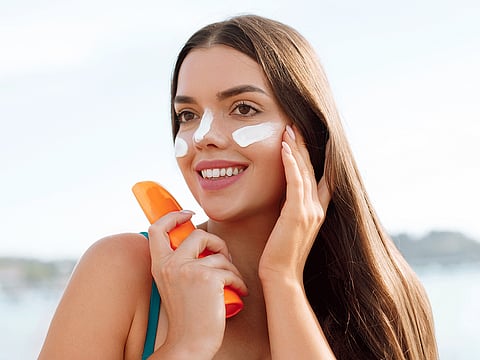
There comes a point every UAE summer when your carefully planned skincare routine simply gives up. The moisturiser that felt luxurious in March suddenly feels heavy. Your foundation starts slipping before lunchtime. Sunscreen disappears under sweat, and by the time you leave the office, your skin feels both oily and dehydrated. It is a contradiction familiar to anyone living through months of intense heat and humidity, made even more complicated by hours spent moving between scorching streets and aggressively air-conditioned offices. Keeping skin healthy in these conditions is not about piling on more products. It comes down to choosing the right formulas, applying them in the correct order and knowing which habits deserve a place in your routine.
Layer your products with purpose
Summer is not the season for a complicated 10-step routine. Skin needs lightweight hydration that absorbs quickly without creating a film that slides away at the first sign of perspiration. Dermatologist Dr Hadley King tells Byrdie that skincare should always be applied from the thinnest consistency to the thickest. “Apply products in order from thinnest to thickest,” she says, explaining that this allows each formula to penetrate properly before the next one is added.
That usually means starting with a gentle cleanser, followed by a hydrating serum containing ingredients such as hyaluronic acid or niacinamide, then a lightweight gel or lotion moisturiser before finishing with sunscreen.
Many people skip moisturiser during the summer because their skin already feels oily. Dermatologists say that often creates an even bigger problem. Dehydrated skin responds by producing more oil, leaving the complexion shinier by the end of the day. Niacinamide remains one of the season’s standout ingredients because it helps regulate oil production while supporting the skin barrier. Ceramides and glycerin also help replace moisture lost through constant exposure to air conditioning.
Make-up starts with sunscreen
One of the biggest misconceptions about summer beauty is that sunscreen belongs at the end of a make-up routine. Dermatologists continue to stress that SPF must be the final step in skincare and the layer directly beneath make-up.
Dr Divya Shokeen tells Teen Vogue that sunscreen should be treated as “the last step in your skincare routine before make-up.”
Allowing sunscreen a few minutes to settle before applying foundation reduces pilling and helps make-up last longer throughout the day.
Tinted moisturisers and foundations containing SPF are useful additions, although experts say they should never replace a dedicted sunscreen. Most people simply do not apply enough make-up to reach the level of protection stated on the label.
Broad-spectrum SPF 30 remains the minimum recommendation for everyday wear. SPF 50 offers additional reassurance for anyone spending time outdoors during a UAE summer. Choosing the right texture also makes a noticeable difference. Gel and fluid sunscreens generally perform better in humid weather than richer creams because they absorb more quickly and leave a lighter finish.
Setting sprays cannot replace sunscreen
Social media has popularised setting sprays containing SPF, although dermatologists warn against relying on them as the primary source of sun protection. Dr Kseniya Kobets tells Teen Vogue that SPF sprays are useful for touch-ups throughout the day. She explains that they should never replace a proper layer of sunscreen applied in the morning.
Traditional setting sprays have a different purpose altogether. They help make-up last longer by reducing movement and improving wear. They provide no meaningful UV protection unless specifically formulated with SPF.
If you enjoy wearing make-up every day, use a regular setting spray after finishing your make-up, then carry an SPF facial mist or sunscreen stick for reapplication outdoors.
Reapply more often than you think
Applying sunscreen once before leaving home is rarely enough during the Gulf summer. The American Academy of Dermatology recommends reapplying sunscreen every two hours whenever you remain outdoors and immediately after heavy sweating or swimming.That recommendation becomes particularly relevant in the UAE, where high temperatures accelerate perspiration for much of the year.
Dr Marisa Garshick tells Good Housekeeping that sunscreen sticks and powder formulations make reapplication easier over make-up because they minimise disruption while adding another protective layer. For anyone commuting, attending outdoor lunches or walking between meetings, carrying a travel-sized sunscreen has become just as practical as carrying lip balm.
Make your gym routine skin-friendly
Exercise introduces another challenge. Sweat itself does not damage skin, although allowing it to sit on the face for long periods can contribute to clogged pores and irritation.
Dermatologist Dr Corey L. Hartman tells Women’s Health that removing make-up before exercising is one of the simplest ways to reduce congestion and breakouts.
If you head to the gym straight from work, cleanse your face or use a gentle cleansing wipe before your workout. Apply a lightweight sunscreen if you are exercising outdoors.
After training, cleanse your skin as soon as possible to remove sweat, oil and bacteria. Follow with a lightweight moisturiser to restore hydration without feeling greasy.
Avoid harsh exfoliants immediately after exercise because freshly heated skin is often more sensitive.
Do not underestimate office air conditioning
Ironically, many people experience their greatest skin dehydration indoors. Powerful air conditioning strips moisture from the surrounding air, leaving skin feeling tight despite the humidity outside. Dermatologist Dr Dendy Engelman tells Byrdie that maintaining the skin barrier is one of the most important priorities during warmer months because healthy skin retains moisture more effectively.
Hydrating mists can provide temporary comfort during the working day, although they should be followed by a moisturiser if used frequently. Otherwise, the evaporating water may leave skin feeling even drier. Keeping a fragrance-free moisturiser at your desk allows you to restore hydration during long office hours without restarting your entire routine.


