David Attenborough turns 100: 8 surprising facts about his life
Wildlife, BBC history and strange personal facts as Attenborough celebrates his 100th year
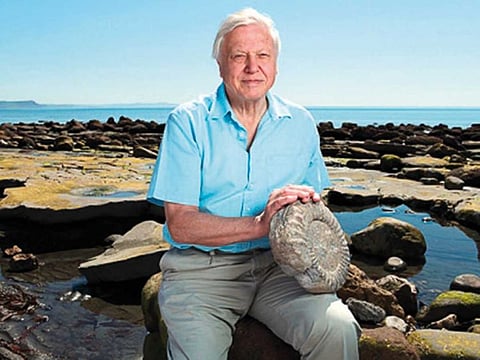
Dubai: For a lot of people, the voice of nature sounds exactly like Sir David Attenborough. And now, the legendary broadcaster has officially turned 100.
The British naturalist celebrated his centenary on May 8, 2026, after a career that has stretched across more than seven decades, from black-and-white television to ultra-HD wildlife documentaries. The BBC marked the occasion with special programming, concerts and nature events across the UK.
Here are some genuinely wild facts about the man who made millions care about penguins, jungles and deep-sea creatures.
Get updated faster and for FREE: Download the Gulf News app now - simply click here.
1. He is older than sliced bread
Seriously. Commercial sliced bread only became widely available in 1928, two years after Attenborough was born in 1926. Reddit users celebrating his birthday also pointed out he is older than antibiotics and LEGO, which were discovered in 1928 and 1932 respectively.
2. He almost never became a TV presenter
When Attenborough first joined the BBC in 1952, he was reportedly told he was not suitable for television. Instead, he began behind the scenes as a producer before eventually becoming one of the most recognisable faces and voices on Earth.
3. More than 50 species are named after him
Scientists have honoured him by naming creatures and plants after him, including spiders, carnivorous plants, frogs, echidnas, parasitic wasps and even a prehistoric marine reptile.
4. He once collected fossils and salamanders as a child
Attenborough spent his childhood in Leicester collecting fossils, insects and tiny creatures, his obsession with nature started extremely early in life.
5. His gorilla moment became television history
One of the most famous scenes in wildlife TV happened in 1979 when young mountain gorillas climbed onto Attenborough during filming for Life on Earth. The clip is still considered one of the greatest nature documentary moments ever filmed.
6. He doesn't like rats
According to Live Science, Attenborough has often said that, despite years of filming some of the planet’s most intimidating wildlife, rats are one of the few animals he genuinely dislikes. He has traced that feeling back to an experience in the Solomon Islands, when a violent storm hit and he reportedly woke up to rats running across his bed and the floor of his hut.
Even with that personal aversion, he has been clear that it doesn’t change his broader view of animals, emphasising that all species, including rats, have their place in nature and deserve respect.
7. His brother was a Hollywood heavyweight
David Attenborough’s older brother was Richard Attenborough, a major figure in British and Hollywood cinema. While David was shaping wildlife storytelling at the BBC, Richard was building a parallel legacy in film, both in front of and behind the camera.
Richard starred in classics like Brighton Rock and later became an acclaimed director, winning Academy Awards for films such as Gandhi. He also appeared in global blockbusters later in life, including Jurassic Park. Despite their very different careers.
8. He never learned to drive
Despite spending decades filming in some of the most remote corners of the planet, Attenborough never passed his driving test and does not drive. He has previously mentioned that he simply never took to driving, which makes it a surprising detail in a life defined by constant travel and fieldwork.
Over the years, Attenborough’s documentaries have gone from simply showing viewers the beauty of nature to warning about climate change, plastic pollution and extinction. Series like Blue Planet II helped push conversations about ocean plastic into the mainstream.
And even at 100, he is still working proving that curiosity may be one of the greatest anti-ageing secrets around.


