Zbigniew Brzezinski’s remarkable foresight
Two books laud the diplomat’s visceral understanding of enduring Russian nationalism
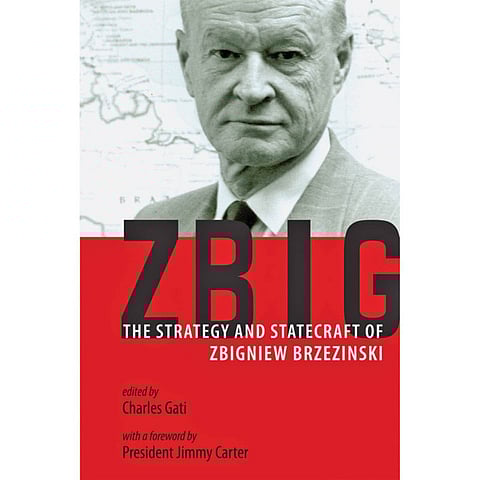
Zbig: The Man who Cracked the Kremlin
By Andrzej Lubowski,
Open Road, 254 pages, £11.99
Johns Hopkins University Press, 280 pages, $29.95
Dozens of books have been written about Henry Kissinger, America’s master diplomat during the Cold War. Until now, none has appeared in English about Kissinger’s great rival and sparring partner, Zbigniew Brzezinski. Conventional wisdom holds that Kissinger had the greater impact, having helped bring about the Sino-Soviet split and brokered detente with China. But two appreciations present things very differently.
History, say both books — one by Polish journalist and economist Andrzej Lubowski, the other edited by Charles Gati of Johns Hopkins University — has overlooked Brzezinski’s pivotal role in foreseeing and helping bring about the downfall of the Soviet Union. “It is hard to imagine an individual more vindicated by the actual course of historical events,” writes Francis Fukuyama in Gati’s collection of essays on Brzezinski’s continuing 65-year career.
The parallels between Kissinger and Brzezinski are uncanny. Both were born in strife-torn interwar Europe: Kissinger in Germany in 1923; Brzezinski in Poland in 1928. Both left Europe for North America in 1938. And both worked their way to the top as brilliant scholars at Harvard and beyond. Both also retained their foreign accents yet made it to the pinnacle of America’s WASPy postwar foreign-policy establishment. As the joke went: “America is a place where a man called Zbigniew Brzezinski can make a name for himself without even changing it.”
There the parallels end. Kissinger’s ability to ingratiate was legendary: He almost always left adversaries believing he agreed with them. “With due respect to Kissinger, he is the most devious man I ever met,” said Shimon Peres, Israel’s former prime minister. On the other hand “Zbig” - as Brzezinski is universally known, since it is more easily pronounced — is surgically precise in what he says. That was true in his early years as a high-flying Sovietologist in the 1950s. And equally true when he ran US foreign policy as the hawkish national security adviser to Jimmy Carter in the late 1970s. There was (and is) little doubt when he disagreed with you. Victims often included Kissinger himself, in whom Brzezinski once detected a “fascination with enemies and ennui with friends”.
Perhaps because he was born Polish, Brzezinski was never in doubt about Soviet Russia’s intentions. He had an almost visceral grasp of Russian nationalism, differentiating him from those who focused on Soviet ideology. This “window on the Vistula”, in the words of Israeli scholar Shlomo Avineri, gave him a scepticism many saw as pugilistic but which was borne out by events. He correctly foresaw the gradual disintegration of the Soviet Union and its Warsaw Pact satellites into their constituent nationalisms. And he did his best in the Carter years to chivvy it along. Kissinger believed in the “balance of power”. Brzezinski was always contemptuous of it. As another joke went, peaceful coexistence with the Soviet Union meant: “What’s mine is mine and what’s yours is negotiable.”
The Carter presidency is seen in hindsight as a period of vacillation between Richard Nixon’s genius and Ronald Reagan’s unyieldingness. That is unfair. Largely because of Brzezinski, Carter’s impact was dynamic. He deployed the Helsinki treaty of 1975 to needle the Soviet Union on human rights, helping give birth to Samizdat and other tools of dissent. He pushed a deal on the ultimately unratified Strategic Arms Limitation Agreement to reduce nuclear weapons. He encouraged Carter to fund the Mujahideen resistance after the Soviet invasion of Afghanistan. “Carter and Brzezinski not only anticipated the decline of the Soviet Union but helped accelerate it,” writes David Rothkopf in Gati’s book. On top of that he helped broker the historic Camp David accords between Israel and Egypt.
There were also failures, of which the Iran hostage crisis was the most spectacular. Months before the 1979 revolution, Carter described the Shah’s Iran as “an island of stability”. Brzezinski’s grasp of the Middle East was never close to his feel for Russia. Even today, as perhaps America’s most incisive foreign-policy commentator, he has blind spots. He regards India as a multi-ethnic state unlikely to survive, a hangover from seeing the world through a Soviet prism. Yet among the great late 20th-century American diplomats, he has few peers. It is unfair, as Lubowski notes, that he merits not one mention in Kissinger’s 740-page “Diplomacy”.
These two books are both long overdue. However, Brzezinski still awaits the full biography he deserves.
–Financial Times


