‘The Bricks That Built the Houses’ by Kate Tempest: Daring and vivid
Kate Tempest’s debut novel offers a fresh vision of familiar lowlife
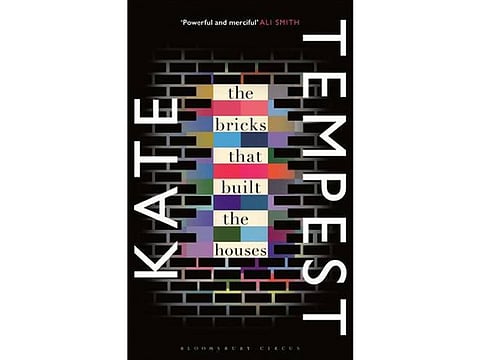
At 30, Kate Tempest is less than seven years younger than me and yet the distance between us feels like decades. Early on in her debut novel, ‘The Bricks That Built the Houses’, Tempest’s heroine, Becky Darke, 26, is standing next to a fellow dancer, Aisha, at a music industry party.
“Aisha is rich with confidence,” we’re told. “The brutal unnerving confidence of a 21-year-old... Becky is surprised that Aisha has stopped so long to hang out with her. She makes Becky feel old.”
This is rather how Tempest’s novel worked on me, leaving me with the sense that any criticisms I might level at a book that is often strikingly original but under-edited and uneven, would only be reflected back at me, evidence of my desperate uncoolness and early-onset middle age.
It’s possible you already know about Tempest. A poet, playwright, spoken-word performer, winner of a Ted Hughes award for her “spoken story” Brand New Ancients, and a rapper whose debut album, Everybody Down, was shortlisted for the Mercury music prize. If you want an idea of the extraordinary power she can wring from language, track down her recasting of - fittingly - The Tempest - written and performed as part of the Royal Shakespeare Company’s Sound and Fury initiative. It’s absurdly good.
Tempest’s debut novel is a companion piece to Everybody Down and retells the same story covered in her narrative-rich album. Although those 12 songs are here stretched to almost 400 pages of dense prose, the lyrics act as hooks on which the rest of the text hangs. A Tempest connoisseur will encounter regular moments of recognition as familiar passages and phrases from the album pop up within the business of the novel. There’s something in the concept of this, in its plannedness, that remind me of Adele’s “age” albums, a far-sightedness that has a faintly corporate sheen about it.
Tempest is, of course, another product of the fabled south London Brit school.
The Bricks That Built the Houses tells the story of Becky, a waitress-cum-dancer-cum-masseuse, her boyfriend, Pete, a gangly dreamer, and Pete’s sister, Harry, a drug dealer - a “boyish woman who swaggers when she walks”.
We first meet Becky and Harry in a speeding car driven by Leon, Harry’s sidekick, on the getaway from a heist. The novel then steps backwards in time, Pulp Fiction-style, to show the trio moving through a London whose cocaine shimmer barely covers its grottiness and venality. The portraits of London are excellent - Tempest is a native and her carefully wrought metaphors work best when they are illuminating cityscapes, giving the reader fresh and vivid visions of a familiar world. Elsewhere, the metaphors are more laboured. The principal friction seems to be between the written and the spoken word, between the lyric and the prose sentence. Phrases that delight within the quickfire barrage of Tempest’s songs fall flat against the more (literally) prosaic landscape of the novel.
Also, without the discipline imposed by the need to fit words to music or metre, the language can run away with itself.
Where the novel is at its lyrical best, it recalls two other great, recent, experimental novels about being young: Jon McGregor’s If Nobody Speaks of Remarkable Things and Eimear McBride’s A Girl Is a Half-Formed Thing. There’s the same sense of daring and linguistic inventiveness, the same feeling of language pushed to its limits.
It fairly flies off the page. Perhaps that’s the problem, though. Novels are inward-looking, shifty things, and can’t be all dazzle. There are many passages in The Bricks That Built the Houses where Tempest’s extraordinary talents are able to shine through. Elsewhere, and particularly in the long and multi-generational origin stories that we are given for each of the characters, the prose flounders, and I found myself willing the sentences off the page and on to a stage, with Tempest’s unique delivery and the rigorous thump of a backbeat marshalling new life into the words.
— Guardian News & Media Ltd.


