Fundamentals of elements
A detailed history of the periodic table and its long interaction with warfare
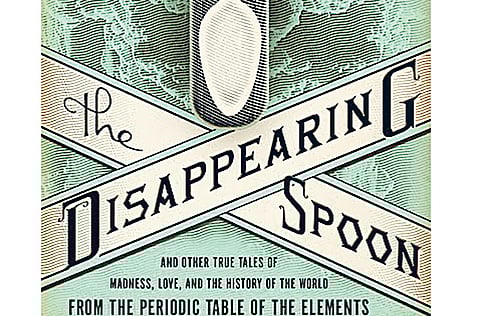
The periodic table is many things. It is an invaluable tool for organising the building blocks of the universe. Its columns and rows are a microcosm of the history of science. And it is also a storybook, containing all the wonderful and clever and ugly aspects of being human.
From simple hydrogen at the top left to the man-made impossibilities at the bottom that can only be conjured into existence for fractions of a second, the periodic table describes every single known element: The chemical substances that, separately or combined, make up everything we can see or sense around us.
Some elements have been important since the early days of civilisation: Humans have always lusted after gold, while iron helped remake societies. However, simply relying on the elements we found around us was never enough. For thousands of years, alchemists attempted to unearth new elements and study their properties. Hennig Brand, a German alchemist, was the first to succeed for centuries, when in 1669 he boiled down urine to discover phosphorus. But it was not until the late 1700s that our knowledge of the elements really took off, as chemists developed new ways to purify and isolate elements.
The discovery of dozens of elements brought new challenges for scientists. In fact, scientists discovered so many new elements with so many similarities that six separate people came up with the idea of the table independently in the mid-1800s.
A series of discoveries
So why do most people today only know about one of those six, Dmitri Mendeleev — a Russian chemist who published his first table in 1869? Mendeleev came late to the periodic table but incorporated the most elements into his version and used it to predict the existence of substances, such as gallium and germanium, that had not yet been discovered.
After Mendeleev, many scientists helped fill in and refine the periodic table. These included Marie and Pierre Curie in Paris, who studied radioactivity and discovered a glow-in-the-dark element, radium. There was Ernest Rutherford, who figured out the structure of atoms and discovered how one element can "transmutate" into another.
Perhaps even more talented than Rutherford was his student at the University of Manchester, Henry Moseley. Before Moseley, scientists knew that the periodic table worked but couldn't understand why the elements sat in the spots they did — especially because some (like cobalt and nickel) didn't line up exactly by weight and had to be switched around to fit in columns with similar elements. Moseley ended the confusion by linking an element's spot to its positive charge. Moseley had little time to enjoy his success. He died two years later at Gallipoli. A colleague claimed that his death alone ensured that the war would go down as "one of the most hideous and most irreparable crimes in history".
Moseley's death was not the only interaction between warfare and the periodic table. During the First World War, the metal molybdenum, when sprinkled into steel, improved the stresses and temperatures that German howitzers could handle. Tungsten, played a similar role for the Nazis.
The demand for tantalum — a component of mobile phone circuits — intensified a horrific civil war in the Congo. The discovery of trillions of dollars of elemental wealth in Afghanistan, if not properly managed, may further destabilise that country.
Scientists added number 117, called "ununseptium" earlier this year. But creating new elements is very difficult, given that the heaviest can only be created — in incredibly small quantities — by manipulating fragile nuclear material and disintegrate in milliseconds.
So we may be nearing the end of the periodic table. Yet its wonders remain inexhaustible. Nothing short of the explosion of our Sun billions of years from now — and the vaporisation of the Earth that will follow — will wipe it from our consciousness. Even then, the 92 natural elements that make up our solar system will likely drift across the universe and become fodder for new planets, new life forms and stories we can't even imagine.


