A tale of love and loss
A displaced family's plight is a lesson in Palestinian history
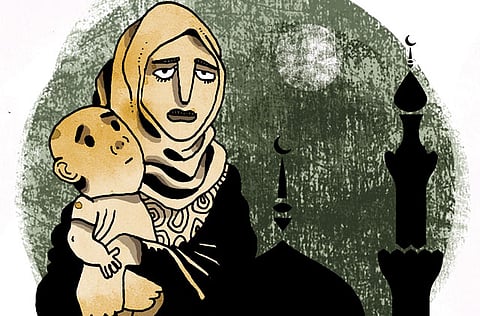
It is not often that a novel can narrate actual history so powerfully and accurately, making it as real and useful as any history book. Such is the work of Susan Abulhawa's Mornings in Jenin which relies on a fictional Palestinian family, the Abulheja family, to tell the story of six decades of Palestinian suffering and expulsion, of Israeli brutality and indiscrimination, and of a tragic conflict in which the once vicitimised Jews had turned into victimisers of the Palestinian people.
The Abulhejas (and countless other Palestinian families) are forced out of their village in 1948 and into a refugee camp where they are met with a series of life challenges and forced to accept that everything that belonged to them is now gone for good.
Abulhawa relies on real events to support her heartfelt story, beginning with Jewish migration to Palestine and the 1948 conflict all the way to the Israeli massacre in Jenin in 2002. Through a Palestinian family of farmers from Eid Hod village, the reader forms an instant connection with the Palestinian father, mother, children, and eventually, grandchildren. The reader also gets a valuable lesson in historical events which rocked their world — a lot of them in the most tragic way.
Abulhawa is at her best when she describes events immediately after the 1948 war and Palestinian hopes and expectations during the early years of the Palestinian-Israeli conflict; back then it was accepted wisdom that Arab armies were going to liberate Palestine and return to Palestinians what is theirs.
Four generations of one family live through all the wars Israel fought with the Palestinians, as refugees completely abandoned by the international community. There are now more than 6 million such refugees spread all over the world. The fact that one of her main characters, Amal, ends up seeking asylum in the United States makes the story all the more interesting and perhaps relatable to a Western audience.
Abulhawa's knowledge of Palestinian folklore and culture is evident and she uses it as the backdrop for a journey of hardship, patience, acceptance and perseverance. In the most wicked way, the reader learns that despite the deaths of your loved ones and completely blind hatred and injustice being practised against your people, human nature forces you to push through and live on. In many ways, this is a depressing read, especially for those familiar with the conflict; the theme of death never escapes the storyline.
Abulhawa writes in one passage, "Toughness found fertile soil in the hearts of Palestinians, and the grains of resistance embedded themselves in their skin … Only martyrdom offered freedom. Only in death were they at last invulnerable to Israel." This captures the difficulties of being Palestinian — often reduced as they are to wanting death to stand tall against the oppressors.
The writer further reinforces her plot by quoting very influential works on the subject, such as the work of Robert Fisk's Pity the Nation and, of course, Mahmoud Darwish's genius poetry. More or less, it is a valuable collection of works on a topic that forms the heart of the Middle East.
Perhaps a valuable lesson to take away from this historical novel is not to take anything for granted. Abulhawa's character, Amal, speaks the truth when she says: "Growing up in a landscape of impoverished dreams and abstract national longings, everything felt temporary to me. Nothing could be counted on to endure, neither parents nor siblings nor home. Not even one's body, vulnerable as it was to bullets. I had long since accepted that one day I would lose everything and everyone …" Palestinians learned this lesson the hard way.
Mornings in Jenin is a much-needed literary contribution on Palestine and it can go a long way to help educate the rest of the world on the story of the people of the land.
Mornings in JeninBy Susan Abulhawa, Bloomsbury, 327 pages, £7.99


