A love less ordinary
A candid, reckless and touching story of an affair and loss
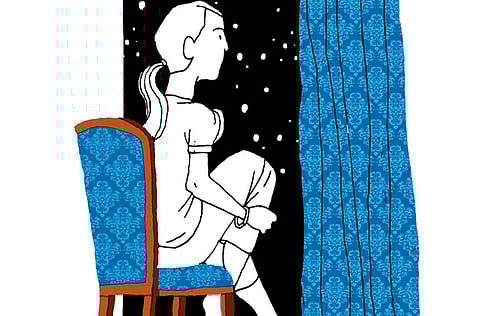
I just can't believe it. That all you have to do is sleep with somebody and get caught and you never have to see your in-laws again. Ever. Pfffft! Gone. It's the nearest thing to magic I have yet found." That is the Anne Enright voice all right — wry, disabused, reckless, candid, funny.
The Forgotten Waltz, as its romantic title suggests, has more of a soft centre than Enright usually allows herself. Each chapter is headed by the title of a tear-jerking pop song and the woman who tells the story has to keep telling us how deeply in love she is. But the context, and the object, of the sentimental intensity is as unromantic as you can imagine. This is Ireland in the late 2000s and Enright's people in this novel are businesswomen, property owners, Dublin suburbanites. They work in IT and consultancy and have beach houses and barbecues, go wind-surfing and hold parties; their love affairs are kept going through texts and meetings in airport hotels and presents of Hermes scarves.
Even for the narrator, Gina Moynihan, who derides her status-conscious sister for minding that the woman three doors down at Brittas Bay has wooden blinds on her mobile-home windows, the cost of adultery is not in shame or guilt but in house sales. "Who would have thought love could be so expensive? ... The price of this house plus the price of that house, divided by two ... Thousands. Every time I touch him."
The story is, almost, an ordinary one. A 34-year-old married woman — attractive, energetic and independent-minded — falls in love with an attractive married man she meets at her sister's house. He has a daughter. The affair goes through all the predictable stages: a drunken one-night seduction in a foreign hotel, a clandestine office romance, discovery and family recriminations, the romantic affair turning into a bickering second marriage, the ultimate loneliness of the woman.
But what deepens the mix are two discomforting, awkward and delicately handled factors. One is the sudden death of the sisters' mother. Because of her consuming affair, Gina has not paid attention to her mother's illness and the death catches her by surprise. In The Forgotten Waltz this grief is more touching than the grief of desire. The other fine thing is the difficult, insistent presence of Evie, the lover's daughter. First seen as an overweight, overwrought little girl, she grows up and makes more claims on our attention as the novel goes on. We learn her painful story, which changes our view of everyone else in the book and Gina has to learn how to deal with her. That impossibly difficult yet involving relationship, between the father's mistress and the angry adolescent girl, gives us the last — and one of the best — scenes in the book.
The novel is told in retrospect from the end-point of the snow-bound winter of 2009, when Dublin has ground to a halt and the streets are empty and blanketed. The bubble has burst, the boom is over, all the buying has stopped. "We listen to it ... the rumour of money withering out of the walls and floors and out of the granite kitchen countertops, turning them back to bricks and rubbles and stone." Gina tells her lover, of their affair, that "the whole project is about failure. It has failure built in." The parallels between different forms of expensive wastage are not laboured but made plain.
Hermione Lee's Edith Wharton is published by Vintage.


