What really went wrong in Egypt
Rising prices, unemployment strongest motivating factors to stand up to the government
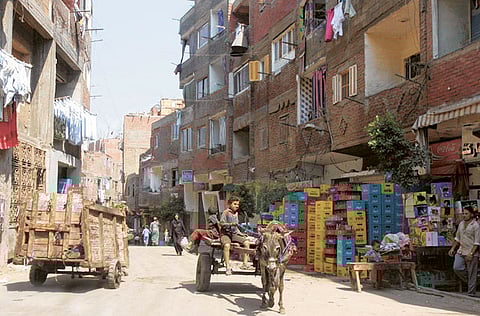
How did things get to this in Egypt?
The unrest, it is strongly believed, came as a result of the public's political, economic and social dismay with their government's policies. The economic factor, however, was what finally tipped the scales.
Authorities in Cairo over the past few years have been introducing reforms aiming to improve the living standards of the nearly 80 million population —nearly 40 per cent of Egyptians who live in Upper Egypt live at or below the poverty line, according to the World Bank.
Also, the government has been for some years attempting to attract foreign investments, boost economic sectors, particularly tourism, create new job opportunities and provide better living conditions for its people.
But many Egyptians have been complaining about the thinning out of the middle class, which has come about as a result of daily hardships, skyrocketing prices, increasing unemployment and the rising cost of living.
Mohammad Ali, a 52-year-old owner of a stationery factory, told Gulf News bitterly how the living conditions were deteriorating and how he finds it difficult to meet the demands of his family, which comprises his wife and five children.
"The minimum you need for a couple is 1,000 Egyptian pounds (Dh627) a month," he said.
Other Egyptians agreed with such an estimate. For a family with three children, they added, the average income needed would be around 4,000 to 5,000 Egyptian pounds ($680 to $850).
"I am not pessimistic, but this is the reality…. There is no middle class anymore," he said in reference to the widening gap between rich and poor.
Heavy burden
Some of Mohammad's children go to colleges. Although education is free and Egyptians don't pay tuition fees to higher education institutions, there are still expenses.
"They need clothes and books. It is really a heavy burden. I didn't cost my parents the amount of money my children are costing me at present." Mohammad is not alone in his agony.
Many Egyptians say they dream of a better tomorrow because of their daily hardships. Daily bread and butter is a priority for the vast majority of the Egyptian people.
Inflation rates jumped in Egypt in the past few years, amid rising food prices in the most populous Arab nation. Last year, the inflation rate jumped to 11.7 percent. According to some Western statistics, the inflation rate jumped from 4.30 percent in 2003, to 9.50 percent in 2005, to 18.30 percent in 2009, before going down to 11.90 percent in 2010.
Economists warned that the poor are the most affected by rising prises, while spending on food and drink consumed the bulk of the Egyptian family income.
Egypt ranks 137th in the world in per-capita income, but with its population it is categorised among the top 20 countries. Unemployment stands at 9.7 per cent and poised to increase.
High unemployment, especially among the youth — two-thirds of the population is under the age of 30 — in Egypt was like a "time bomb", IMF Chief Dominique Strauss-Kahn was quoted as saying.
Such a high level of unemployment and inequality in any country create a social situation that may end in unrest, he warned.
Another factor contributing to the unrest is government taxes.
The Egyptian government introduced a new property tax last year despite public protests. Though the government insisted the new tax will only be collected from owners of lavish and luxury properties, almost all Egyptians were forced to declare their properties.
The new tax is supposed to be collected this year.
Egyptian tycoon Salah Diab believes there is a need to develop the tax laws.
Developing taxation model
Taxes, he explained in a recent interview with Gulf News, should be developed in a well-studied and calculated way.
"It should focus more on the surprising wealth and overnight fortunes, not on the natural growth of fortunes," he said.
"The government should impose special taxes on overnight fortunes… and not the ordinary 20 per cent taxes."
According to the current Egyptian tax laws, taxes on salaries are levied at 20 per cent in the first 50,000 Egyptian pounds and 32 per cent on income above that. However, the law is applied on the public sector, whereas margins of corruption increase in the private sector as paid taxes often depend on "connections", as one Egyptian citizen put it.
As for corporates, they are levied at a standard rate of 40 per cent with lower rates for particular industries. Property taxes range between 10 and 40 per cent.
So what went wrong to the extent that the masses of Egyptians were pushed to the street calling for their president Hosni Mubarak to step down?
One reporter based in Alexandria summed it up: "Entrenched corruption, the depredations of police forces and demands for free elections have all helped drive the protest movement, but for many Egyptians, rising prices and unemployment were the strongest motivation to stand up to the government. Now even many of those with jobs are not being paid, adding an edge of desperation to the rage".
Egypt in numbers
Statistical databases show the nation has:
- A population of 80 million, with 33 per cent 14 or younger
- An unemployment rate of 9.7 per cent
- Experienced a three-fold increase in the number of malnourished children under the age of five since 2000, with the number at 1.5 million in 2008
- A literacy rate over 71 per cent, with males at 83 per cent and females at 59.4 per cent
- A labour force of 26 million, with 32 per cent working in agriculture, 17 per cent in industry, and 51 per cent in the service sector.
- More than 20 million internet users, ranking the country 21st in the world, and 55 million mobile phone users, which is 19th in the world.
- The economy is estimated to have grown by an annualised 6 to 6.2 per cent in the October-December quarter, its best performance since the global downturn. Officials cited a recovery in revenue from the Suez Canal and tourism, as well as a stronger construction sector.
- GDP was $188 billion in current dollars in 2009. Per capita GDP was estimated at $2,269 for 2010.
- Inflation has eased somewhat but remains at double-digit levels; it was 11.5 per cent last fiscal year against 16.5 per cent in the previous year, driven mainly by food price rises.
- Egypt's budget deficit last fiscal year was 8.1 per cent of gross domestic product. It aims to keep the deficit at 7.9 per cent of GDP this fiscal year, falling to 3.0-3.5 per cent in 2014/15, state news agency MENA has said.
- The United States is a major supplier of wheat, corn, and soybean products to Egypt, almost all through commercial sales; US agricultural sales to Egypt average $2 billion annually.
- The tourism industry provides about one in eight jobs in the country and generates over 11 per cent of gross domestic product. It is a top foreign exchange earner; in the fiscal year to last June 30, Egypt earned $11.59 billion from tourism, while posting an overall current account deficit of $4.3 billion against a deficit of $4.42 billion in the previous year
- Hydrocarbons play a sizeable role in Egypt's economy; total oil production, however, has declined from a 1996 peak of close to 935,000 barrels per day to about 685,000 bpd. According to the Oil and Gas Journal's January 2010 estimate, Egypt's proven oil reserves stand at 3.7 billion barrels. Over the past decade, Egypt has become a significant natural gas producer and a strategic source for European natural gas.
- About 18 per cent of the population still lives below the poverty line (up to 40 per cent in rural Upper Egypt), and about 20 per cent has moved in or out of poverty over the last few years, heightening a sense of social insecurity.
Sign up for the Daily Briefing
Get the latest news and updates straight to your inbox


