Oil price: Urals crude surges to $123.45, Brent crude at $109.03
How the Strait of Hormuz blockade became a boon for Russian oil
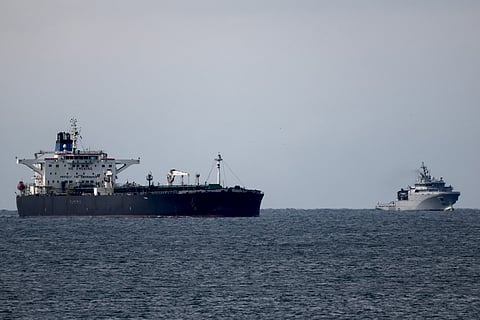
The shutdown of the Strait of Hormuz — amid the US-Israel war with Iran — is fast turning into a windfall for Russia, blunting Washington’s sanctions strategy and forcing a quiet recalibration of pressure on Moscow.
As strikes ripple across the Gulf and threatening passage through the world’s most vital oil chokepoint, the disruption is translating directly into higher revenues for the Kremlin.
With flows from Gulf oil significantly curtailed and thrown into uncertainty, Russian crude has surged in demand, rapidly repositioning itself as one of the most sought-after supplies on the global market.
Urals, the Russian crude oil benchmark was at $123.45, up more than 6%, as of 10.17PM GMT on Thursday (7.17am Tokyo on Friday, April 3, 2026); while Brent surged to $109.03, up nearly 8% since US President Donald Trump's speech on the Iran war drew more questions than answers.
The result is a strategic reversal.
What was once a coordinated Western effort — now largely carried by the EU, UK, and Canada — to squeeze Russia’s oil income is fraying.
Moscow’s flagship Urals blend, shipped from Baltic and Black Sea ports, is now pouring into Asian markets cut off from Gulf barrels, filling the gap and reshaping global trade flows in real time.
Until recently, Urals was still trading at a $20/barrel discount compared to Brent.
However, the global price spike for oil following the production curtailments in Gulf states is already benefitting Urals, which is now trading at a significantly higher margin over Brent.
Moreover, wary of the economic fallout and the risk of eroding domestic support, the Trump administration has begun quietly loosening restrictions on Russian oil flows to India.
The shift is striking. India—one of the world’s largest crude importers—had only recently agreed with Washington to scale back purchases of Russian barrels in exchange for tariff relief.
Now, that position is softening. On March 6, 2026, US Treasury Secretary Scott Bessent had issued a 30-day license allowing Indian refiners to take delivery of sanctioned Russian cargoes already at sea.
The result is immediate: Indian buyers snapped up Urals crude for prompt delivery in multi-million-barrel volumes, even paying premiums for barrels that were previously discounted due to sanctions risk.
Analysts say it will place severe strain on the sanctions coalition, raising the prospect of a broader rollback in efforts to curb Moscow’s energy revenues.
In the midst of the global oil trade disruption, Russia is positioning itself as a reliable fallback supplier to Asia — offering to replace the energy security lost to conflict in the Middle East.


