E-freight erases paper trail as it speeds cargo shipments
e-waybill helps spur migration to fully electronic cargo handling
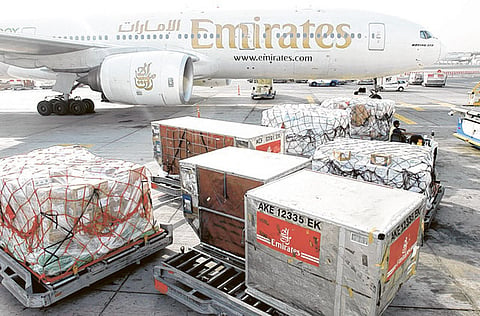
Dubai: Since introducing electronic ticketing and self-service kiosks for passengers in airports, the world's aviation industry says it has saved more than $4 billion (Dh14.68 billion) in operating costs. Today, the industry is moving towards removing paper hurdles from the cargo side of the industry not only to save billions more but to reduce transit times.
Mercator, the airline IT solutions provider of Dubai-based Emirates Group, is working with more than 100 airlines currently using the Mercator IT platform to ease the complex paper trail required for global air freight shipments.
Duncan Alexander, vice-president of Mercato, said "it's still very early days", but noted the industry is slowly moving away from a paper-driven process that can require up to 30 documents to move cargo on a single journey.
The new trend means that "the paper isn't going with the box anymore" and is being transmitted electronically and assessed at each stop in the journey using scanners. "All of the forms are electronic," Alexander said, adding that some cargo warehouses are now "fully electronic with handheld scanners".
One of the biggest challenges toward the full conversion of cargo shipments from paper to an e-freight system is getting all players involved in the supply chain to become involved in recognised international e-freight standards, Alexander said. When the paperless ticket trend happened several years ago, full compliance only happened when "you had a natural momentum where big airlines said if you want to do business with us you have to do this."
Cargo is much more complicated because it involves not only airlines, but cargo agents and other businesses involved in the supply chain as well as governments and customs agencies the world over. To date, Alexander said some airlines have completely converted their electronic systems to move cargo so that no or relatively little paper is involved.
With time, as more of the world cargo is processed and handled through an increasingly globalised e-freight system where much of the paperwork is automated, airlines will experience "a better level of efficiency". More air freight that is moved could bolster global business performance.
Barometer
"Air freight is the barometer of the economy of the world. It is an essential part of world trade, that's why it needs this level of investment," said Alexander, who estimated that "cargo is 10 to 15 per cent of an airline's revenues".
Ushering in an industry-wide e-freight initiative could reduce existing waiting times to move cargo in transit of up to nine hours down to about two hours, he said.
In February, Dubai International Airport recorded 24,646 aircraft movements, a 7.2 per cent increase from 22,982 movements during the same period last year. Freight traffic at Dubai International Airport registered 156,259 tonnes, down from 171,707 tonnes for the same period the year before.
Giovanni Bisignani, director-general and CEO of the International Air Transport Association (Iata), said in the organisation's 2010 annual report that "Iata continues to deliver cost savings and improved processes" under the Simplifying the Business (StB) programme which is looking to create $16.8 billion in annual savings for the industry.
Major changes to reduce paperwork in the shipment of cargo under Iata's e-freight plan "are on target", he said.
The e-freight initiative is one of five components of Iata's StB programme that is working to streamline operations including bar-coded boarding passes, a baggage improvement programme, the Fast Travel programme through automated passenger assistance as well as e-services.
According to Iata's annual report, its e-freight initiative will replace "paper documents with electronic messages. This makes for faster, more reliable air freight. Potential annual savings: $4.9 billion."
The status of the Iata e-freight initiative showed that 50 airports and 25 countries and territories are now working to reduce cargo paperwork and have so far covered 16 paper documents used in freight shipment by air.
Agreed standards
"Each air cargo shipment can require more than 30 different paper documents — increasing the cost of air freight and lengthening transport times," Iata said in its 2010 report. "Iata e-freight is an industry-wide initiative involving airlines, freight forwarders, ground handlers, shippers, customs, brokers and customs authorities."
The report stated that by the "end of 2010, 44 locations and 76 major airports", representing 80 per cent of international air cargo volumes will be e-freight live. And internationally standardised electronic messages will have replaced the 20 paper documents for which there are agreed international standards.
Bisignani said: "We must continue to take advantage of technology to reinvent our way of doing business with increasing efficiency and convenience."
Much of the efficiency headway being made today in cargo hangars at airports around the world is thanks to major strides made in 2009 when Iata helped define through its Cargo Committee and Cargo Service Conference "standard resolutions, recommended practices, and electronic messages required as a foundation for Iata freight".
Other major strides include the creation of a new electronic Air Waybill (e-AWB) which has become the industry e-freight standard. The new waybill was developed by Iata and the International Federation of Freight Forwarders Associations (Fiata).
And Iata has also signed a memorandum of understanding with the World Customs Organisation to work toward further standards. Working with customs officials is critical, Iata said, to create an international e-freight set of standards that are safe and efficient.


