Be legal-wise: Highlights of the new business regulations in Dubai
The Department of Economic Development regulates economic activity in emirate and wields the power to close down any entity found to be in violation of laws and statutes
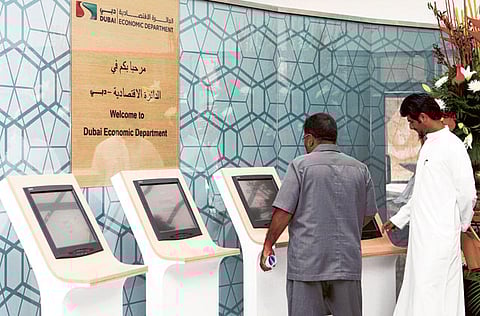
Law No. 13 of 2011, which contains 37 bylaws, deals with the regulation of economic activity in Dubai. Highlights include:
Article 3: Aims of the law:
- To regulate economic activities in Dubai, create an investment-friendly environment in various sectors and set-up a single portal to deal with investor enquiries on the requirements for doing business.
- To create an ideal environment for business operations in the emirate, increase economic growth and develop the economic environment by relying on accurate and transparent information.
- The regulation of marketing and promotions by retailers: the Department of Economic Development (DED) will issue permits for promotional and marketing activities.
Article 4: The responsibilities and jurisdiction of DED:
- The DED will regulate the issuances of licences in accordance with laws, co-ordinate with relevant authorities and specify licence duration.
- Handle the registration of commercial establishments in the business registry.
- Classify economic activities permitted in the emirate in accordance with internationally used systems that will be updated regularly.
- Regulate and specify working hours for businesses.
- Monitoring and inspecting violations of intellectual property rights and commercial fraud.
- Manage consumer and commercial protection operations.
- Ensuring that businesses are only carrying out the activity they are licensed to do.
- No person or corporation can operate in Dubai without an establishment licensed by the DED.
- To be licensed in Dubai, establishments must present the documents required to DED. It will review the licensing request and legal status of a company to make sure it abides by all terms and current legislations that are in effect.
Article 8: Licences:
- The licence will be valid for only one year and is renewable on an annual basis. Any business may request a licence for up to four years with the DED's approval.
Article 9: Business registry
- Businesses should register with the DED's commercial registrar.
- The business owners cannot modify the legal status of the establishment or licence information without the consent of a local or federal establishment that regulates economic activity.
- At the owner's expense, the DED can change licence information but this must be published at least in one daily newspaper that is distributed in the emirate in accordance with the following conditions:
- (a) The withdrawal of one of the partners from a partnership, limited partnership or business company.
- (b) The changing of the commercial name.
- (c) The cancellation of the licence.
Any other circumstances specified by DED
- The DED is allowed to reassess, for a specific period of time, the licences of industrial, agricultural, service, commercial, or any other activities, or modify the terms and restrictions in accordance with public benefit and in coordination with the relevant bodies.
- The department may suspend or modify the terms of licences for professional activities and occupations as per the request or approval of relevant bodies.
Article 13: License renwal and suspension
- A business owner has the right to request the suspension of a licence to temporarily halt its activities.
- The company will not pay fines or licensing fees pertaining to the non-renewal of a licence if the licence has expired and the company has halted the economic activity, or if the establishment has submitted a request that it has stopped practising the activity.
- Economic activities can be carried out in the emirate through establishments that have the following legal status:
- (a) A branch of a foreign or national company, or a branch of a company operating in the free zone,
- (b) Civil Operations/ Works company,
- (c) A single proprietary firm,
- (d) A trading company
- Emirati individuals, and others, can partner with one another for practising professional or vocational businesses by establishing a ‘business company' in accordance with the regulations and legislation of the DED.
Article 15: Body corporates
- A body corporate can be a partner in a ‘business company', on the condition that the nature of the activity matches the practised activity.
- As per the same article, non-Emiratis can practice professional or vocational businesses as long as they have a local services agent.
- The agent can be an individual that has a UAE citizenship or body corporate, as long as all the partners are Emiratis.
Article 16: Local service agent:
The local service agent does not have any civil responsibility or financial obligations related to the business. The agent's obligation is to ensure the company is able to continue practising its business.
- The relation between both parties is to be regulated by an Agency contract modelled by the DED and certified by the notary public.
Article 19: Changes in licensed economic activity:
- Businesses must inform the DED of any modifications or changes in the data or documents that were presented for the issuance of the licence. The establishment has a period of 10 days to inform DED about the changes.
- These changes must also be in line with current bylaws of legislation in the UAE. The company must also retain the commercial name mentioned in the licence in all its dealings.
- It must also allow DED employees, that are licensed to do so, into the company to inspect company documents and registers. It must also provide any information, statistics or reports that the DED might require.
Article 20: Single portal
- The law will establish a single portal such as a services centre for licensing establishments. It will handle dealings with investors and accept licensing applications.
Article 21: Free zones
- As per the request of the Free zone authorities, relevant authorities will be allowed to make use of systems and programmes for licensing establishments, to make use of them to license establishments and companies operating in these zones, in accordance with the current legislation and procedures.
Article 23: Free zone company branches in Dubai
- Free zone companies are allowed to open branches in the emirate in accordance with the DED's practised procedures.
Article 26: Marketing activities:
- The trade permit for a business's marketing activities is granted upon a permit request application submitted to the DED, to ensure it is in line with the terms that regulate the requested marketing activity.
- The duration of the trade permit granted for the establishment carrying out the marketing activity will be determined in accordance with the duration approved by the DED.
- Licences, permits and other services that the DED provides will be subject to fees, to determined through a resolution by the Chairman of the Dubai Executive Council.
Article 29: Violations
- Violators of the law will have to pay a fine starting at a minimum of Dh100 up to Dh100,000.
- The Chairman of the Dubai Executive Council will issue a resolution specifying the violations of this law and the fine that has to be paid.
Article 30: Closures and license cancellations:
- The DED is allowed to close down the business and cancel its licence if it has not renewed the licence and has stopped its activity. This will be done after publishing an advertisement in this regard in a widely distributed local paper, and if no objections are received two weeks after its publication.
- The company or establishment can also be shut down if it has violated the provisions of this law or current legislation in the UAE.
- n Providing wrong and inaccurate information and documents for the licence application procedure can also result in such a penalty.
- The cancellation of the licence does not annul the obligations or rights of the establishment or licence-holder towards other parties.
- The DED is allowed, upon the request of the violating party, to carry out a friendly settlement with the department, provided that the establishment submits the settlement papers within two months from when the violation was committed, and paying not less than 50 per cent of the fine.
- Moreover, the establishment must not have previously committed similar violations for a period of one year from the current violation that requires the settlement or any other terms introduced by the department. The establishment must abide and carry out the terms within the time period specified by the DED, or risk annulment of the settlement.
Article 32: Employees
- DED employees are appointed via a resolution by the DED's Director-General as judicial officers.
- Anyone with interest is allowed to submit a handwritten grievance (complaint) to the DED Director-General regarding the decisions and procedures taken against him within a period that does not exceed 30 days from when he was informed of the procedure or decision.
- A committee will be set up upon a resolution by the Director-General to look into these grievances and complaints.
- The committee must look into these grievances and complaints in a period that does not exceed 30 days from when it received them. Decisions made by the committee are final.
Article 35: Amendments
- Establishments licensed prior to this law are obliged to amend their conditions and status within a period that does not exceed a year from when it comes into effect.
- The Director-General is allowed to extend this period for another year.
- Establishments that were licensed by orders of Shaikh Mohammad are excused from the provisions of this law, and will adhere to specific rules by the DED.
Article 36: Annulments
- This law annuls any provision or legislation that contradicts its bylaws.


