US and China must learn to reduce co-dependency
Market watchers should realise Beijing’s slower growth is not a risk multiplier
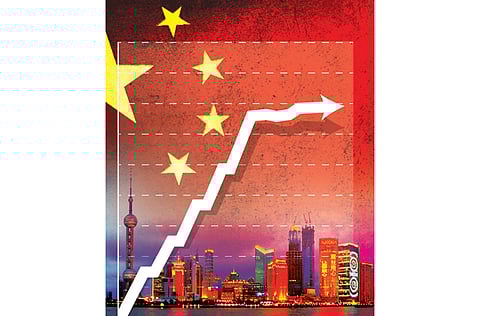
Once again, all eyes are on emerging markets. Long the darlings of the global growth sweepstakes, they are being battered in early 2014. Perceptions of resilience have given way to fears of vulnerability.
The US Federal Reserve’s tapering of its unprecedented liquidity injections has been an obvious and important trigger. Emerging economies that are overly dependent on global capital flows are finding it tougher to finance economic growth. But handwringing over China looms equally large. Long-standing concerns about the Chinese economy’s dreaded “hard landing” have intensified.
In the throes of crisis, generalisation is the norm; in the end, however, it pays to differentiate. Unlike the deficit-prone emerging economies that are now in trouble — whose imbalances are strikingly reminiscent of those in the Asian economies that were hit by the late-1990’s financial crisis — China runs a current account surplus.
As a result, there is no risk of portfolio outflows resulting from the Fed’s tapering of its monthly asset purchases. And, of course, China’s outsize backstop of $3.8 trillion in foreign exchange reserves provides ample insurance in the event of intensified financial contagion.
Yes, China’s economy is now slowing; but the significance of this is not well understood. The downturn has nothing to do with problems in other emerging economies; in fact, it is a welcome development. It is neither desirable nor feasible for China to return to the trajectory of 10 per cent annual growth that it achieved in the three decades after 1980.
Knee-jerk reaction
Yet a superficial fixation on China’s headline GDP growth persists, so that a 25 per cent deceleration, to a 7-8 per cent annual rate, is perceived as somehow heralding the end of the modern world’s greatest development story. This knee-jerk reaction presumes that China’s current slowdown is but a prelude to more growth disappointments to come — a presumption that reflects widespread and longstanding fears of a broad array of disaster scenarios, ranging from social unrest and environmental catastrophes to housing bubbles and shadow-banking blow-ups.
While these concerns should not be dismissed out of hand, none of them is the source of the current slowdown. Instead, lower growth rates are the natural result of the long-awaited rebalancing of the Chinese economy.
In other words, what we are witnessing is the effect of a major shift from hyper-growth led by exports and investment (thanks to a vibrant manufacturing sector) to a model that is much more reliant on the slower but steadier growth dynamic of consumer spending and services. Indeed, in 2013, the Chinese services sector became the economy’s largest, surpassing the combined share of the manufacturing and construction sectors.
The problem is not with China, but with the world — and the US, in particular — which is not prepared for the slower growth that China’s successful rebalancing implies.
The co-dependency construct is rooted in the psycho-pathology of human relationships whereby two partners, whether out of need or convenience, draw unhealthy support from each other. Ultimately, co-dependency leads to a loss of identity, serious frictions, and often a nasty break-up — unless one or both of the partners becomes more self-reliant and strikes out on his or her own.
The economic analogue of co-dependency applies especially well to the US and China. China’s export-led growth miracle would not have started in the 1980s without the American consumer. And China relied heavily on the US dollar to anchor its undervalued currency, allowing it to boost its export competitiveness.
The US, for its part, relied on cheap goods made in China to stretch hard-pressed consumers’ purchasing power. It also became dependent on China’s savings surplus to finance its own savings shortfall (the world’s largest), and took advantage of China’s voracious demand for US Treasury securities to help fund massive budget deficits and subsidise low domestic interest rates.
In the end, this co-dependency was a marriage of convenience, not of love. Frictions between the two partners have developed over a wide range of issues, including trade, the renminbi’s exchange rate, regional security, intellectual property, and cyber attacks, among others. And, just as a psychologist would predict, one of the partners, China, has decided to go its own way.
China’s rebalancing will enable it to absorb its surplus savings, which will be put to work building a social safety net and boosting Chinese households’ wherewithal. As a result, China will no longer be inclined to lend its capital to the US.
Fork in the road for US
For a growth-starved US economy, the transformation of its co-dependent partner could well be a fork in the road. One path is quite risky: If America remains stuck in its under-saving ways but finds itself without Chinese goods and capital, it will suffer higher inflation, rising interest rates, and a weaker dollar.
The other path holds great opportunity: America can adopt a new growth strategy — moving away from excess consumption toward a model based on saving and investing in people, infrastructure, and capacity. In doing so, the US could draw support from exports, especially to a rebalanced China — currently its third-largest and fastest-growing major export market.
Compared with other emerging economies, China is cut from a different cloth. China emerged from the late-1990’s Asian financial crisis as the region’s most resilient economy, and I suspect the same will be true this time. Differentiation matters — for China, Asia, and the rest of the global economy.
— A faculty member at Yale University and former Chairman of Morgan Stanley Asia, is the author of ‘Unbalanced: The Codependency of America and China’.
— Project Syndicate, 2014.


