
Why polarised sunglasses beat ordinary tinted lenses
The science behind polarised sunglasses and how to spot genuine lenses
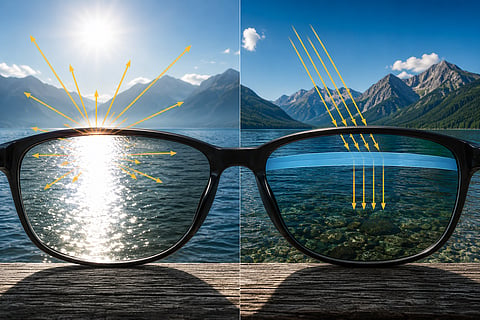
A dark lens makes bright sunlight more comfortable, but it cannot solve one of the biggest problems outdoors: glare. Anyone who has driven on a bright afternoon or looked across calm water has seen intense reflections that seem to wash out detail. The reason is surprisingly simple. As sunlight reflects from smooth horizontal surfaces such as roads, water and even car bonnets, much of that reflected light becomes horizontally polarised. A polarised lens contains a microscopic vertical filter that blocks this specific orientation of light, cutting glare while allowing most useful light through. The result is clearer contrast rather than simply a darker view.
What it is and who it's for
Polarised sunglasses combine a conventional sun lens with a built in polarising film. Unlike ordinary tinted sunglasses, which reduce the brightness of all incoming light, the filter selectively blocks the horizontally polarised reflections responsible for glare. That makes them especially useful for driving, fishing, boating, beach trips and any activity where reflective surfaces dominate the view. In the UAE, where bright sunshine and reflective roads are common throughout much of the year, the difference is often immediately noticeable. One limitation is that polarised lenses can make some LCD screens, digital dashboards and phone displays appear darker or show rainbow patterns depending on the viewing angle. That is a characteristic of the technology rather than a defect.
What to look for
The first priority is genuine polarisation, not simply a dark tint. Many retailers demonstrate this using a hidden image that appears only through a polarised lens, or by rotating the glasses while viewing an LCD screen. Good polarised sunglasses should also provide full UV protection, because glare reduction and UV protection are separate features. Neither automatically means better glare control.
Ray Ban New Wayfarer Polarized RB2132
Ray Ban's New Wayfarer remains one of the easiest recommendations because it combines a timeless design with genuine polarised lenses. The lenses are designed to reduce distracting reflections while maintaining natural colour, making them well suited to everyday driving and city use. The slightly smaller frame than the original Wayfarer also suits a wider range of face shapes.
Maui Jim PolarizedPlus2 Sunglasses
Maui Jim built its reputation around polarisation, and every pair uses the company's PolarizedPlus2 technology. Beyond filtering horizontal glare, the lenses are engineered to enhance colour contrast while blocking UV light. According to the details, the technology eliminates 99.9 per cent of glare and is particularly effective around water and other reflective environments, making it an excellent choice for regular outdoor use.
Costyle Polarized Clip On Sunglasses
Clip-on lenses are a practical solution for anyone who already wears prescription glasses and does not want a separate pair of prescription sunglasses. A polarised clip on delivers the same glare cutting principle while attaching to existing spectacles. The key is choosing the correct size for your frames and confirming that the lenses provide UV protection alongside polarisation.
Verdict
Polarised sunglasses do something ordinary tinted lenses simply cannot. Instead of reducing all light equally, they remove much of the horizontally reflected glare that hides detail on roads, water and other smooth surfaces. Once you understand the science, the benefit becomes much easier to recognise, and a quick rotation test against an LCD screen or a reflective surface can often confirm whether a pair is genuinely polarised. For the broadest combination of optical performance and outdoor versatility, the Maui Jim pair stands out.
Gulf News earns a commission on purchases made through links in this article, at no extra cost to you. Our editorial team selects products independently.


