Indian judiciary on trial: How Justice Yashwant Verma faces impeachment over cash scandal
After outrage, impeachment process begins as government builds consensus with Opposition
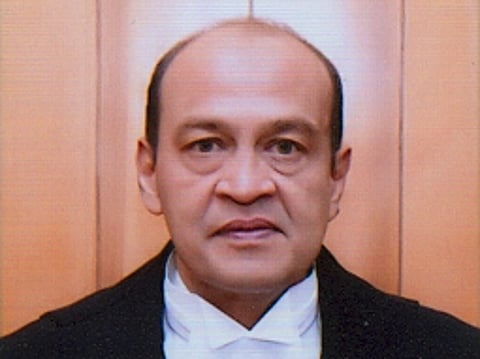
India was horrified in March to see pictures in a national daily of piles of burnt, some still smoking, unaccounted cash in the store/outhouse room of a sitting judge of the Delhi High Court — Justice Yashwant Verma. While no one knows the exact amount, it was said to run into millions of rupees.
National outrage followed. Justice Verma was transferred to the Allahabad High Court, where the Bar protested his transfer, saying that the Allahabad High Court was not a garbage receptacle for tainted judges.
The Supreme Court, the appointing and administrative authority for High Court judges, then announced an inquiry under the leadership of Justice Sanjiv Khanna (now retired). A three-member judicial committee was formed, comprising Punjab and Haryana High Court Chief Justice Sheel Nagu, Himachal Pradesh Chief Justice G. S. Sandhawalia, and Karnataka High Court Judge Justice Anu Sivaraman.
Guilty verdict
In a rare display of urgency in India’s judicial processes, the committee worked overtime to conduct the inquiry into the allegations that “a huge amount of cash was found in the official residence of Justice Verma.”
The committee’s verdict is now in — and it has found him unanimously guilty.
The Narendra Modi government has taken the matter with the utmost seriousness. Union Parliamentary Affairs Minister Kiren Rijiju went public last Tuesday, saying that the government would bring an impeachment motion against Justice Verma in the Monsoon session of Parliament.
Rijiju said: “I have reached out to the leaders of all major political parties. It’s not a political issue, it’s a matter of seriousness related to corruption in the judiciary. There is no scope for any political angle in it. We will evolve a consensus.” The Monsoon session will begin in the third week of July.
Top sources told Gulf News that the Modi government had reached out to Jairam Ramesh of the Congress party, and that the motion was likely to be introduced on the floor of the House by the Union Law Minister, Arjun Ram Meghwal.
Process of impeachment
So, dear readers of SWAT Analysis, how does a judge of the higher judiciary get impeached? It’s a long and difficult process befitting the nature of the position — and can only be done by Parliament.
As per the Judges Inquiry Act, 1968, a complaint against a judge must be made through a resolution signed by at least 100 members if moved in the Lok Sabha, and 50 members if initiated in the Rajya Sabha. Once the MPs submit the motion, the presiding officer can either accept or reject it. The Modi government is learnt to have the presiding officer on board in this case, considering the alleged egregious offence.
After the impeachment motion is adopted, the presiding officer of either House — the Speaker or Chairman — has to constitute a three-member committee of inquiry headed by the Chief Justice of India or a Supreme Court judge, including the Chief Justice of any High Court, and an individual who, in the opinion of the presiding officer, is a “distinguished jurist.”
If the committee returns a guilty verdict, the report is then adopted by the House in which it was introduced, and the judge’s removal is debated.
For a judge of the Supreme Court or the High Court, for an impeachment motion to succeed, at least two-thirds of those present and voting in both the Lok Sabha and Rajya Sabha must be in favour of the removal — and the number of votes must exceed 50 percent of the total strength of each House. If both Houses pass such a motion, the President will formally remove the judge.
The Justice Verma matter is so serious that senior opposition leaders have told the Modi government that the inquiry committee stage can be dispensed with, as the committee set up by then-Chief Justice Khanna has already conducted an inquiry and found the judge guilty. Retired CJI Khanna had sent the inquiry report to the government asking for stringent action.
Meanwhile, Justice Yashwant Verma remains recalcitrant. An outreach at the highest level was made, asking him to voluntarily resign to save the institution from embarrassment, but he promptly refused. Government sources say this made the government determined to press for impeachment, as the judge has been brazen in his defence of indefensible acts.
'No knowledge of cash'
He has repeatedly claimed that he had no knowledge of how the unaccounted cash was found in his guard room or who burnt it. Considering he lives in a high-security bungalow with 24/7 police security and CCTV cameras, the defence is, to put it mildly, unconvincing.
Justice Verma is only the tip of a broken judicial system in India. We have more than 40 million pending cases, and the common man knows that even if justice is eventually delivered, it can take decades — making the process itself the punishment, often bankrupting petitioners as dates upon dates are handed out with no real progress.
The judiciary is an essential pillar of democracy and is meant to serve as a check on the executive and as the guardian of the Constitution.
India urgently needs to restore the judiciary to its original role while sternly weeding out corrupt elements.
Here’s hoping that this impeachment sends out a salutary message — that the judiciary is accountable to the people of India, not a law unto itself.

Swati Chaturvedi is an award-winning journalist and author of ‘I Am a Troll: Inside the Secret World of the BJP’s Digital Army’.

