Clinton: Saleh has failed to fulfil his promise to leave country
President accused of meeting security officials in bid to delay polls
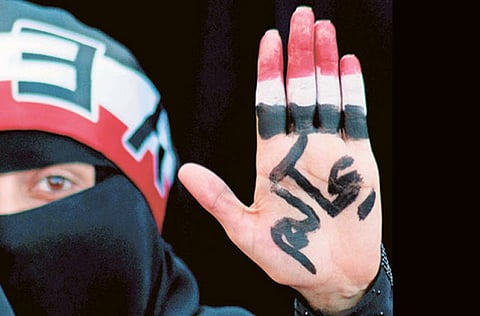
Sana'a: Secretary of State Hillary Clinton says the US regrets that Yemen's president has not complied with agreements to leave the country and allow elections for a successor.
Her comments on Tuesday came as Yemen's foreign minister suggested next month's presidential vote could be delayed because of security concerns.
A top ruling party official also said President Ali Abdullah Saleh met with high-level security officials this week and decided to ask parliament to delay the elections until May 22, which would be a violation of the US-backed agreement the president signed in November. The official spoke on condition of anonymity.
"There have been agreements with respect to the way forward that have not been fulfilled," Clinton said during a trip to Ivory Coast.
"We regret that the president has thus far failed to comply with his own commitments to leave the country, to permit elections to go forward that give the people a chance to be heard and be represented."
Under pressure
Saleh, Yemen's authoritarian leader of 33 years, agreed under pressure to a plan brokered by Yemen's Gulf Arab neighbours to transfer power to his vice-president and hold presidential elections in February that will essentially rubber-stamp the vice-president's takeover.
The agreement did not spell out that Saleh must leave the country. But Clinton's remarks appeared to confirm what Yemeni officials close to Saleh have said — that alongside the Gulf-brokered deal, Saleh made a "gentleman's agreement" with the United States to leave the country.
Saleh, however, may be having difficulties finding a country to take refuge in. And since the agreement was signed, there have been growing fears he may try to slip out of the deal and cling to power. The suggestion of a delay in the vote will feed those fears.
Even before Yemen's uprising began early last year, it was already the poorest country in the Arab world with a weak central government, riven by tribal divisions and several separate conflicts.
Al Qaida link
Yemen is also home to one of the most active and dangerous Al Qaida branches in the world, which has already been linked to attacks on US soil and in neighbouring Saudi Arabia.
Al Qaida militants have taken advantage of the turmoil in the country over the past year to seize control of several areas in the south, giving them a territorial foothold that could be used to plan and organise more attacks.
The opposition accuses Saleh of allowing Al Qaida-linked militants to overrun those areas to bolster his claims that he must remain in power to secure the country.
The United States and its western and Gulf Arab allies such as Saudi Arabia long considered Saleh a pivotal, though not entirely reliable, partner in the fight against Al Qaida.
But the United States withdrew its support last summer and said Saleh should step down. Both the US and its Gulf allies put heavy pressure on Saleh to sign the transfer of power agreement.
Election on February 21
The Gulf initiative says that presidential elections are to be held on February 21, and that Saleh will not be allowed to run. It was agreed that the only presidential candidate will be Saleh's deputy.
In late December, Saleh said he would leave Yemen to help calm the turmoil in his country, and made a request for a visa to receive medical treatment in the United States, but officials in his ruling party later announced he would stay.
In an interview aired on Tuesday on Al Arabiya television network, Foreign Minister Abu Bakr Al Qirbi, a veteran of Saleh's regime, said it will be difficult to have elections if the security situation is not resolved.

