UAE sets model to counter piracy
Security analyst says counter-piracy strategy evident in UAE rescue of ship crew
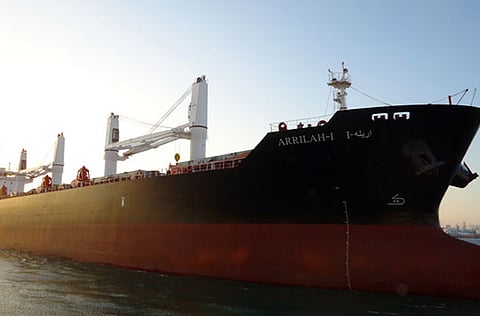
Abu Dhabi: The UAE has set up a model for counter-piracy operations as the international mission in the Gulf of Aden is not a success story, a security analyst said on Sunday.
"The UAE action to free MV Arrilah-I, from pirates in the Arabian Sea, east of Oman shows how one country can retake a hijacked ship with the appropriate mix of Special Operations and Air Forces in coordination with the US Fifth Fleet," said Dr Theodore Karasik, director of Research and Development at the Institute for Near East and Gulf Military Analysis.
The UAE-flagged vessel is heading to Jebel Ali, Dubai after a UAE counter terrorism unit, supported by Air Forces and Air Defence units, and in coordination with the US Fifth Fleet, stormed it on Saturday, rescued the crew and arrested the pirates.
"The decisive operation is evidence of the determination of the UAE Government to respond swiftly to any acts of piracy and indicates the UAE's resolve not to succumb to such threats," an official source from the Armed Forces told WAM.
Dr Karasik told Gulf News the UAE forces were clearly organised, trained, and equipped at the highest level of quality.
"Clearly the UAE is setting a model by using force since other methods to date are seemly inadequate especially when it comes to UAE-owned shipping which are increasingly pirate targets."
Outmanoeuvre
"To date, the anti-piracy mission in the Gulf of Aden is not a success story. The pirates continue to outmanoeuvre Combined Task Force 151 and EUNAV forces in terms of area of operations and intelligence collection of lucrative prey. These anti-piracy operations need to be stepped up further and a collective security regime may be the appropriate remedy."
Maritime piracy is one of the largest challenges to the Arabian Peninsula on Monday, with the Somali pirates having hijacked hundreds of ships in the recent years, taking in hundreds of millions of dollars in ransom.
According to a recent study, maritime piracy cost the global economy up to $12 billion (Dh44.07 billion) last year, with Somalia-based pirates responsible for 95 per cent of the costs.
In early March, Shaikh Abdullah Bin Zayed Al Nahyan, UAE Foreign Minister, said that "to defeat piracy, a coordinated and sustained effort by governments, security forces and industry is required."
This call is a key that needs to be explored further by coordinating the responses of countries impacted by Somali piracy. Somali piracy affects dozens of countries some of them UAE neighbours and others who are UAE allies and friends abroad.
Dr Karasik said clearly collective security begins within the region. "Combined Task Force 151 and EU Naval Force (EUNAV) may be too disparate a force, with disagreements in rules and regulations not seemingly coordinated with the need for further exploration of the causes and cures for Somali piracy."
He said a collective security arrangement in an overarching security architecture designed specifically to fight piracy is a possible remedy. "GCC states and other Arab neighbours must get involved more in the counter-piracy fight and, in the near future, lead the effort since this illegal activity is so close to Arab homelands. The UAE action is a positive first step."


