Surge in e-crimes in Dubai
Sixty-two per cent of phishing in the UAE last year targeted local banks
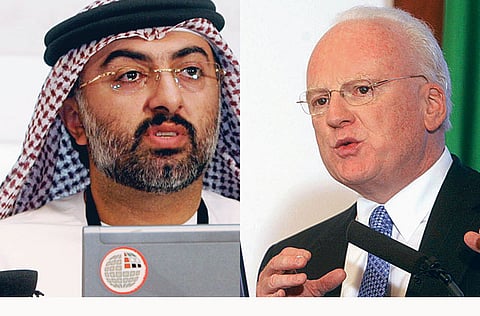
Dubai Most cyber attacks in the UAE last year targeted banks and were perpetrated by electronic criminals from outside the country, a government report has revealed, adding that the number of hacking and defacement incidents quadrupled in 2009 from 2008.
It added that of all the electronic breaches during 2009, "phishing" comprised the main offence - 62 per cent of which targeted local banks, followed by UAE branches of international banks and other institutions at 19 per cent each.
Emergency plan
The report was presented by Mohammad Geyath, Executive Director, Technology Development Affairs, Telecom Regulatory Authority (TRA), at the Crises and Emergency Management Conference in Abu Dhabi which concluded on Wednesday. The report was put together by the Computer Emergency Response Team (CERT), a consultative body that advises TRA. The total number of cyber-related offences recorded by CERT was 51 in 2009, up from 47 in 2008, while incidents of phishing and defacement had increased to 26 in 2009, from six in 2008.
Meanwhile, the TRA announced at the conference an Emergency Plan for the country's telecom sector. Making the announcement Mohammad Nasser Al Ganem, Director-General of TRA, said the plan has been developed in co-operation with the National Crisis and Emergency Management Authority (NCEMA) and in consultation with key stake-holders, telecom operators and service providers.
Designed to protect critical infrastructure for communications, the plan encompasses various stages to deal with crises which cover all aspects of security and protection on the one hand and the preservation of a sustainable network during emergencies on the other.
Earlier, Richard Clarke, former security adviser to the US government, said of all the future risks that the world faces today, the threat of a cyber war could not be wished away, just as the potential crises arising out of climate change and pandemic diseases.
Global issue
He said nations need to ask themselves what national functions depend on cyberspace and conduct an analysis of the risks such utilities as power, water, banking, airports and oil supplies face.
He said countries should spend time to put audits and back-up systems in place to meet any contingency.
"Somewhere on the curve of low probability and high consequence, we should be prepared to spend time on these matters," he said, pointing to cyber wars in some parts of the world like Estonia and Georgia.
Telecom Emergency Plan Announced
Meanwhile the TRA has announced an Emergency Plan for the country's telecom sector.
Making the announcement at the concluding day of the Crises and Emergency Management Conference in Abu Dhabi on Wednesday, Mohammad Nasser Al Ganem, Director-General of TRA, said the plan has been developed in co-operation with the National Crisis and Emergency Management Authority (NCEMA) and in consultation with key stake-holders, telecom operators and service providers.
Designed to protect critical infrastructure for communications, the plan encompasses various stages to deal with crises which cover all aspects of security and protection on the one hand and the preservation of a sustainable network during emergencies on the other.
The stages covered include prevention, preparedness, response and recovery.
Earlier, Richard Clarke, former security adviser to the United States government, said of all the future risks that the world faces today, the threat of a cyber war could not be wished away, just as the potential crises arising out of climate change and pandemic diseases.
He said nations need to ask themselves what national functions depend on cyberspace and conduct an analysis of the risks such utilities as power, water, banking, airports and oil supplies face.
He said countries should spend time to put audits and back-up systems in place to meet any contingency. "Somewhere on the curve of low probability and high consequence, we should be prepared to spend time on these matters," he said, pointing to cyber wars that had proven to be a reality in some parts of the world like Estonia and Georgia.
(With inputs from Salam Al Amir)


