Kuwaitis call for more protests
Opposition pushes for dissolution of house after storming of parliament
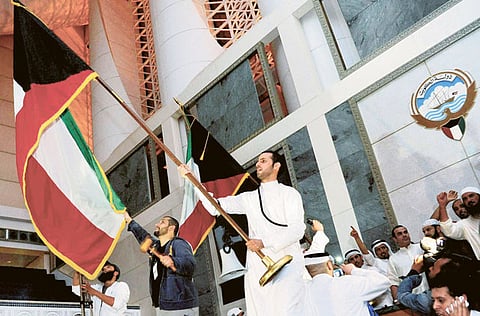
Dubai: An opposition Kuwaiti lawmaker who had participated in the storming of the parliament building yesterday threatened more protests if the government and the assembly were not dissolved.
"We are now waiting for the dissolution of government and the parliament," opposition lawmaker Musallam Al Barrak told reporters in parliament. "Until this happens, Wednesday was only the first step among many. We don't fear anything except God".
According to witnesses, a rally organised by the opposition MPs on Wednesday evening calling for the resignation of Prime Minister Shaikh Nasser Al Mohammad Al Sabah degenerated after protesters decided to organise a second rally in front of the premier's residence.
However, the young people, led by MPs, were prevented by the police and in the ensuing clashes, protesters hurled bottles of water at the servicemen who responded by beating them with batons. Kuwaiti media said the clashes resulted in several injuries.
The rally then moved to the parliament and the protesters muscled their way into the main hall where some lawmakers delivered speeches in which they reportedly said that the time for words was over and that action was the way forward.
‘Assassination'
The Interior Ministry said yesterday five members of the security services were injured in scuffles.
The ministry said police officers and members of the national guard were among those injured. It also says public property was damaged.
The ministry did not elaborate, and there was no word on whether protesters were injured or detained.
MP Muslim Al Barrack, a vociferous opponent of the prime minister, called for a series of popular rallies and sit-ins to remove him while MP Waleed Al Tabtabai mourned the ‘assassination of the Kuwaiti constitution' in reference to the decision by the parliament on Tuesday not to move ahead with the questioning of Shaikh Nasser.
Key facts
how the system works
- Kuwait gained independence from Britain in 1961 and set up the first elected parliament in the Gulf Arab region in 1963.
- Kuwait has a 50-seat parliament with a history of challenging the government. Deputies have to approve the state budget and all major laws. They often exercise their right to question ministers, sometimes prompting them to resign under pressure.
- In May, two lawmakers attempted to question Prime Minister Shaikh Nasser over alleged misuse of public funds, a charge he denies. The request came days after he had unveiled his seventh cabinet. The previous cabinet quit in March to avoid parliamentary questioning of three ministers.
- Kuwait's ruler, Emir Shaikh Sabah Al Ahmad Al Sabah, has the last say in all state matters. He can dissolve the assembly and appoint new governments. Key cabinet portfolios such as defence, foreign affairs and oil are held by members of the ruling Sabah family none of whom have ever held a parliament seat, except as ministers.
- The emir or his predecessors have dissolved parliament six times since its establishment; in 2009, 2008, 2006, 1999, 1986 and 1976. According to Kuwaiti law, elections must be held within 60 days of the assembly being dissolved, but rulers have ignored this rule before, suspending the assembly for five years from 1976 and six years from 1986.
- Kuwait does not allow political parties but tolerates informal political groups.
- Parliament passed a law in 2005 giving women the right to vote and run in elections for parliament. Four women were elected in the last vote in 2009.
- The current emir is the 15th ruler of a 250-year dynasty.
— Reuters


