UAE pushes for clean, sustainable energy
The launch of the Mohammad Bin Rashid Solar Energy Park builds on the solid foundations for sustainable development established by Masdar City
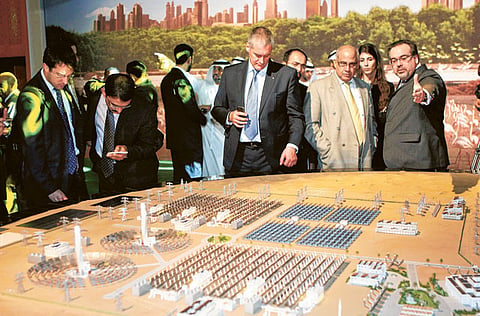
The launch of the Mohammad Bin Rashid Solar Energy Park builds on the solid foundations for sustainable development established by Masdar City in Abu Dhabi.
The huge solar power project, which was launched by His Highness Shaikh Mohammad Bin Rashid Al Maktoum, Vice-President and Prime Minister of the UAE and Ruler of Dubai, marks the beginning of a push for the country to produce its own clean and sustainable energy that would not only diversify the country's sources of energy but its sources of income.
At the launch, Shaikh Ahmad Bin Saeed Al Maktoum, Chairman of Dubai's Supreme Council of Energy, explained that the vital 48-square km project will cost Dh12 billion and help meet the growing demand for energy in the UAE, where demand for electric power is among the highest in the world. On top of this, Dubai recently announced the establishment of the world's largest wind power offshore platform.
It goes without saying that these new approaches in the area of energy will have a significant economic and environmental impact.
The move will reduce Dubai's costly imports of energy as well as increase dependence on clean and sustainable energy sources at low prices.
It is expected that the cost of solar energy production will fall by 67 per cent over the next three years, especially after China succeeded in the production of low-cost solar cells.
Global hub
The UAE's new approach toward developing solar and wind power is also likely to lead to the development of many projects, enhancing the country's position in the production of alternative energy sources, as well as its status as one of the most important oil-producing and exporting countries in the world. The UAE could turn into a global hub for future energy, especially as the world becomes increasingly dependent on renewable energy.
In his message to the World Future Energy Summit held in Abu Dhabi, UN Secretary-General Ban Ki-moon said, "Energy can change the lives of people … development will not be possible without the development of energy, and the main purpose is to provide everyone with sustainable energy ... everyone should act in order to accomplish what cannot be done by one body alone."
Regarding the UAE's new approaches, Deputy Secretary General of the United Nations Development Programme (UNDP) Rebecca Greenspan said, "You contribute to the revolution of global energy with your initiatives which will change our thinking about power generation, distribution and consumption. You help in the creation of global institutional environment which will enhance the spread of all forms of renewable energy in the world." Among the advantages of solar and wind energy is that they are appropriate for environment and do not depend on primary raw materials, as is the case with other major energy sources, such as hydrocarbon and nuclear energy.
Exports
The sunny weather in GCC countries throughout the year makes it possible for them to invest in this industry by setting up mega solar power projects, not only to meet their local needs for clean energy sources, but also to export solar energy by 2030. Doing so will add significantly to the local economy and GCC economies in general.
The current high oil prices make this the perfect time to increase investment in solar and wind power-related projects. With expectations that oil prices will remain high over the coming years, the cost of solar power production will decline rapidly, making it cheap within a decade if compared to all forms of energy, including nuclear energy.
Lower costs
As there is a good level of coordination between GCC countries in other energy-related affairs, the Mohammad Bin Rashid Solar Project may represent a solid ground for a huge GCC project, not only to produce solar power and import its related technologies, but also to nationalise these technologies and contribute to reducing the cost of production and development.
Dr Mohammad Al Asoomi is a UAE economic expert and specialist in economic and social development in the UAE and the GCC countries.


