IEA intervention dividing Opec members
The International Energy Agency's release of 60 million barrels of oil is moving into the market, albeit slower than anticipated
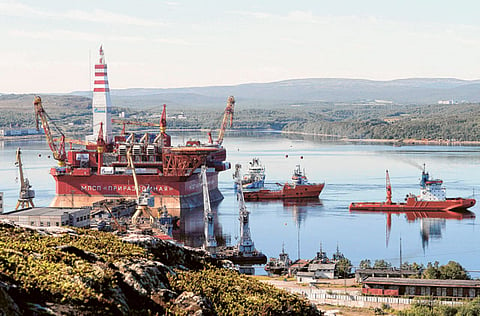
The International Energy Agency's (IEA) release of 60 million barrels of oil, which was announced on June 23, is moving into the market, albeit slower than anticipated.
The US share of 30 million barrels was auctioned off in July where 15 companies of traders and refiners bought the quantity for a delivery that is now almost 75 per cent complete and should be finished by the end of August.
The European share of 18 million barrels is moving slower and companies are allowed until the end of September to release their allocations, with France given the possibility to extend its 3.2 million barrels release to the end of the year.
The procedure here is different as the Europeans do not auction off the quantity, but have arrangements with refiners to release from their own stocks for the quantities reserved for them in the strategic reserve. The Europeans also did not allow trading companies to participate as in the US. The 12 million barrels share from Asian countries perhaps has a similar arrangement and should move to the market in September.
The impact of this, in addition to rising production from Organisation of Petroleum Exporting Countries (Opec) members, is not entirely clear; or at least not exactly as intended. The price of oil has remained resilient and the price of the Opec basket, which was $108 a barrel just before the announcement by the IEA naturally fell for a short while before rising sharply back to about $113 a barrel by the beginning of August by which time the oil release programme was already in full swing.
New revelations
Indeed, the latest precipitous decline of prices to about $101 a barrel on August 10 may not have much to do with the release, as it coincided with new revelations about the world economy and oil demand in the aftermath of the debt crisis in the industrial countries, the battle between the Congress and US administration about the level of the national debt and the subsequent downgrading of the US credit rating and the severe decline in the stock prices around the world. Even though the dip was again short lived, the price of the basket was close to $106 a barrel on Thursday.
The IEA move continues to provoke criticism from many stakeholders. The IEA now calls the move the "Libya collective action" to hide its motives behind the crisis in that country. At the end of July, the IEA said its goal of bringing more sweet crude oil to the market through the release has been largely achieved and it is "not now seeking the release of additional stocks" as if the loss of Libyan production of almost 200 million barrels since the end of February can be covered by 60 million barrels of reserve release.
Critics say the Strategic Petroleum Reserve (SPR) is to provide insurance in case of emergencies and not for politicians to influence gasoline prices to get reelected.
Others said the SPR cannot be viewed as a source of revenue or a "piggy bank" where in one instance a bill is introduced to finance some other government programmes while under current law, any money earned on the sale of SPR must be returned for the purpose of replenishing the reserve.
The successful bidders are still making money, and traders who are storing the oil sometimes in floating tankers because land based storage is full must be anticipating a fresh appreciation of prices if the current negative economic sentiment is passed. This raises the question of why traders, who got almost half the release, were allowed to bid contrary to Europe where the release is sold directly to refiners. The Economist commented saying "the lack of coordination is striking, and makes the IEA's effort to reduce prices less likely to succeed."
At least some of the SPR release is appearing in commercial stocks, where the surplus over the five-year average in crude stocks increased to 19.7 million barrels from a much lower number a month ago and inventories are likely to get much higher when all the sales are delivered. The deficit against year-ago levels has now been erased.
The ties between IEA and Opec are obviously damaged not only for IEA's unwarranted intervention, but because it sows division among Opec members. The burden of mending ties with Opec is seen as a "major challenge for Maria van der Hoeven when she takes over as head of the IEA on September 1."
The author is former head of the Energy Studies Department at Opec Secretariat in Vienna.


