Tough regulatory framework helps Lebanese banks thrive
Central bank official satisfied with financial industry performance
Dubai: Following the 2005 assassination of former premier Rafik Hariri, Lebanon has been through political chaos, a crippling war and mounting burden of public debt.
The country accumulated a huge debt burden as it continued the rebuilding of its infrastructure after a 15-year civil war that ended in 1990. A month-long conflict with Israel in 2006 further weakened the economy. Currently the country's debt is about 150 per cent of its $33 billion (Dh121.17 billion) gross domestic product (GDP).
Despite these challenges, the Lebanese economy grew 9 per cent last year. Lebanese banks — around 60 in total — have assets worth some three times GDP. That, together with their conservative policies, has allowed them to largely avoid the global economic crisis.
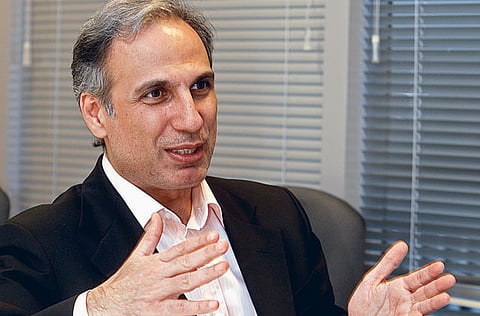
During a recent visit to Dubai, Read H. Charafeddine, First Vice-Governor of Banque du Liban (Lebanon's central bank) spoke to Gulf News about the strengths and challenges ahead for the banking system and the economy.
Gulf News: The war in 2006 and the political impassé in recent years and mounting public debt from the reconstruction costs made many analysts conclude that Lebanon would face capital flight. But surprisingly, over the past two years the country has witnessed a huge inflow of deposits into its banking system and the economy has one of the highest growth levels in the world. How do you explain this?
Read H. Charafeddine: Despite all these challenges you mentioned, the biggest success of Lebanon has been to keep people's trust in the Lebanese pound. Deposits in Lebanon grew by 25 per cent per cent to exceed $110 billion in May, with the percentage of deposits in the local currency increasing significantly. Back in 2007, the percentage of deposits denominated in foreign currency was more than 77 per cent. That time the total deposits accounted for about $60 billion. Currently the share of foreign currency deposits is down to 60 per cent, showing the rising confidence in the Lebanese pound.
Lebanese banks remained largely unscathed by the domestic turmoil and the global financial crisis. What do you attribute this to?
Lebanon has well-established banking practices, good governance and proper regulation and supervision of the banking sector by the central bank.
In the financial institutions segment we have institutions such as brokerage houses, finance companies and exchange houses. Every one of these businesses is clearly regulated. Some people think we breathe down their necks. In fact we really do so.
Banks across the world are going through a phase of slow growth in lending. By contrast Lebanese banks have been reporting strong loan growth. What is driving this growth? Is such growth sustainable?
The huge liquidity in the banking system is encouraging the lending activity. But the central bank has been careful about the loan expansion. Clearly the excess liquidity can push up inflation. Thus we have been mopping up liquidity through certificates of deposit (CDs) on one hand and has been encouraging lending only to productive sectors.
We are mindful of potential bubbles. For example banks are not allowed to lend more than 60 per cent of the project value in the real estate sector and insist on a minimum equity of 40 per cent.
As far as loans to productive sectors, we do provide incentives to banks to lend. We offer concessions in statutory liquidity requirements (SLR) if we are satisfied the loans are given to productive sectors.
Banks are required to keep 15 per cent of their deposits with the central bank, we do free up this on the merit of the lending activity.
A large portion of deposits in Lebanese banks have come from Lebanese expatriates. What is driving them to keep these deposits with Lebanese banks?
The resilience of the Lebanese economy and banks in the face of the global crisis is a clear incentive. Lebanon's economy is expected to grow nearly 8 per cent this year. Additionally, the confidence in the currency and better returns are encouraging depositors to keep their money with Lebanese banks.
Apart from the political, social tensions, Lebanon has a huge public debt burden — in stark contrast the economy growing with minimum inflationary pressures — how do you explain this?
In 2009 the economy grew 9 per cent with inflation at around 3 per cent. We expect the growth and inflation to be around the same level this year. Inflation has been kept strictly under control through monetary policy measures. The public debt reached $52 billion in May and the size of our GDP is $33 billion.
The dynamism of our private sector is one key factor in the success of our economy. Secondly the contribution of the expatriate Lebanese is enormous. Last year they remitted more than $7 billion.
Academic banker
Raed H.Charafeddine is the First Vice-Governor of the Banque du Liban,since April 2009. In that capacity, he is the Alternate Governor of the International Monetary Fund (IMF) as well as the Arab monetary Fund (AMF) for Lebanon. In addition to serving on the Bank's Central council, Charafeddine chairs the Islamic Banking Committee and is a member of the Bank's Investment Committee.
Holding a Masters and Bachelor degrees in Business Administration from the University of North Carolina, USA.Charafeddine has been a visiting lecturer at several Universities in Lebanon such as American University of Beirut, Lebanese America University and Hariri Canadian University.


