Sunnis miss out again on power sharing
Unwieldy nature of the deal threatens to create more political gridlock
Baghdad: The deal on a new Iraqi government appears to sideline the country's Sunni minority yet again while returning Shiite Prime Minister Nouri Al Maliki to power.
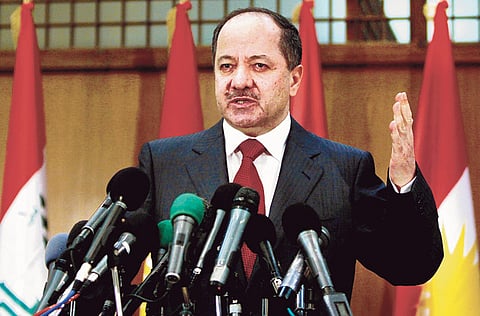
The deal confirmed early on Thursday by Masoud Barzani, president of Iraq's autonomous Kurdish region, was hammered out after eight months of political deadlock following inconclusive elections on March 7.
A Sunni-backed coalition led by former Prime Minister Ayad Allawi won the most seats in the vote, but Allawi missed out on bids for both the prime minister's job and the presidency.
Barzani confirmed the Kurds, the bloc that came in fourth place in the election, will retain the presidency — the second highest position in Iraq's political structure.
Al Maliki, whose Shiite bloc was second behind Allawi's Iraqiya, aligned months ago with a large Shiite bloc led by anti-American cleric Muqtada Al Sadr.
Significant victory
Together, the coalition brought them close to a majority in the 325-seat parliament and all but ensured that Iraq's government for the next four years would continue to be dominated by conservative Shiite parties close to Iran, much like the outgoing regime.
The deal reached late on Wednesday reflects a significant victory for neighboring Iran, which had pushed for Al Maliki's return.
One of the biggest concerns in the haggling over a new government was that the Sunnis could be politically sidelined again, fuelling the sectarian tensions that underlie much of the violence in Iraq.
The outlines of the new government certainly keep those concerns alive.
The lack of significant roles for Allawi's Sunni-backed coalition casts doubt on whether members the Sunni population will support the new government.
The minority Sunnis dominated Iraq's government under Saddam Hussain, but after he was ousted in the 2003 US-led invasion of Iraq, Shiites took power. Alongside a Sunni insurgency against the government and the foreign forces, years of Sunni-Shiite sectarian violence ensued and brought the country to the brink of civil war.
Barzani said Allawi will be in charge of a new council with authority over security.
But a key question going forward will be how much authority the yet-to-be-created council will actually have and whether Al Maliki will try to sideline it in an attempt to keep power until himself. Iraqiya has tried to make sure the council position has real teeth, but that remains to be seen.
Most important job
Iraqiya also won control of the parliament speaker position, the third most important job in Iraqi politics.
But the unwieldy nature of the deal, which includes roles for all the blocs, seems to guarantee more political gridlock in the future.
Regardless, the White House welcomed the development.
"The apparent agreement to form an inclusive government is a big step forward for Iraq," said Tony Blinken, national security adviser to Vice President Joe Biden, the administration's point man for Iraq. "All along we've said the best result would be a government that reflects the results of the elections, includes all the major blocs representing Iraq's ethnic and sectarian groups, and that does not exclude or marginalise anyone."
But the return of Al Maliki to the premier's post underscores Iran's rising influence in Iraq at a time when American forces are leaving. It was Iran that engineered Al Maliki's recent endorsement by anti-American cleric Al Sadr, who controls 40 seats in the new parliament. The two men, fellow Shiites, had been enemies in the past.
It was unclear what role Al Sadr and his hard-line Shiite faction might play in a new government — and whether Al Maliki's partnership with the Sadrists could derail pro-Western security and commercial policies.


