Travel quiz for adults and kids: ancient history
Sharpen your travel IQ while staying at home. This week’s quiz has an ancient history theme
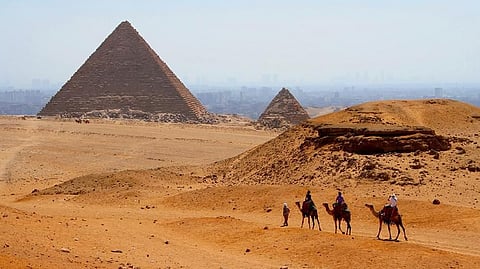
- A: The ruins of Pompeii
- B: Venus de Milo
- C: The Terracotta Army
- D: The Tomb of Cleopatra
- A: The Sphinx
- B: The Temples of Karnak
- C: The Tomb of Tutankhamun
- D: The Lighthouse of Alexandria
- A: Stonehenge
- B: Lincoln Cathedral
- C: The Tower of London
- D: Westminster Abbey
- A: Athena
- B: Aphrodite
- C: Zeus
- D: Poseidon
- A: Corfu
- B: Rhodes
- C: Crete
- D: Kefalonia
- A: Ibiza Town, Ibiza
- B: Malia, Crete
- C: Bodrum, Turkey
- D: Paphos, Cyprus
- A: Greece
- B: Egypt
- C: Croatia
- D: Turkey
- A: California
- B: Malta
- C: Cyprus
- D: Sicily
Kids’ corner
- A: Augustus’s Castle
- B: Hadrian’s Wall
- C: Nero’s Fence
- D: Caligula’s Car Park
- A: Londinium
- B: Brixtonium
- C: Chelsanthium
- D: Oxfordstretium
- A: Hogwarts School
- B: Durham Cathedral
- C: Little Whinging
- D: King’s Cross Station
- A: Aphrodite
- B: Hercules
- C: Zeus
- D: Perseus
- A: 8,000
- B: 80,000
- C: 800,000
- D: 8,000,000
ANSWERS
(1) B: Venus de Milo – dug up on April 8 1820 by a farmer on the Aegean island of Milos (hence the name), and now visible in the Louvre. Cleopatra’s tomb has never been found.
(2) D: The Lighthouse of Alexandria. Earthquakes destroyed it. Some of its stonework was used to build the Citadel of Qaitbay – a fortress – on the same site in the 15th century.
(3) B: Lincoln Cathedral - between 1311 and 1548. Its central spire, toppled by a storm in the latter year, is thought to have reached 525ft (160m).
(4) A: Athena. The Greek goddess of wisdom and warfare was hailed as Athens’ protector – and probably took her name from the city, rather than vice versa.
(5) C: Crete. You can visit the “birth cave” near Psychro, in the east of the island.
(6) D: Paphos. According to folklore, Aphrodite’s Rock, a sea stack outside the village of Kouklia, marks the spot.
(7) D: Turkey. The remnants of a Bronze Age city at Hisarlik, near the Dardanelles Strait, are thought to be all that is left of the site of the Trojan War.
(8) B: Malta. Golden Bay, on the north-west side of the main island, was heavily used.
(9) Latin America: Chichen Itza (Mexico), Machu Picchu (Peru), the statue of Christ the Redeemer in Rio (Brazil). Asia: The Great Wall of China, the Taj Mahal (India), Petra (Jordan). Europe: The Colosseum (Italy).
(10) A: Statue of Zeus at Olympia; B: Hanging Gardens of Babylon; C: Colossus of Rhodes; D: Temple of Artemis at Ephesus; E: Mausoleum at Halicarnassus.
(1) B: Hadrian’s Wall.
(2) A: Londinium. It sat on the north side of the Thames.
(3) D: King’s Cross Station. One (unlikely) legend has it that Boadicea is buried between Platforms 9 and 10 - close to Harry’s fabled Platform 93/4.
(4) B: Hercules (1997). You can watch it on the new Disney streaming platform.
(5) B: 80,000. Slightly bigger than Manchester United’s Old Trafford stadium, smaller than Barcelona’s Camp Nou.
The Daily Telegraph


