Soulland opens first Middle East store in Dubai
Founder Jacob Kampp Berliner on Why Copenhagen Cool Is Betting on the Gulf
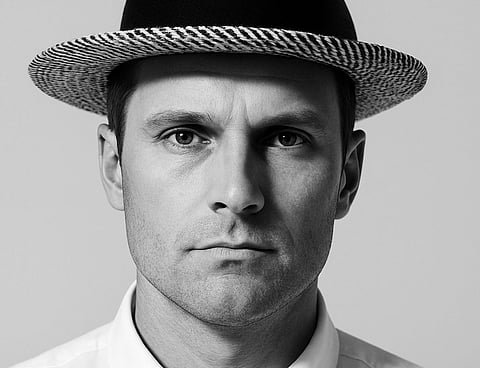
Soulland opened the doors to its first Middle East store at Dubai Hills Mall on July 11, marking the Copenhagen label's first physical presence in the region.
"I hope they feel they've discovered a brand that genuinely cares about what it does," says founder and CEO Jacob Kampp Berliner, when asked what he wants a first-time customer in Dubai to walk away with. "I hope they can see it and feel it in the quality, the creativity and the playfulness that runs through everything we make." It is a modest ambition for a brand marking its entry into one of the world's most closely watched luxury markets - and that modesty, on closer inspection, turns out to be the strategy.
Founded in 2002, Soulland has spent over two decades building a reputation for restraint rather than reinvention: tailoring loosened just enough, silhouettes that sit between structure and ease, and a design language that treats fashion as part of a wider cultural conversation rather than a seasonal product cycle. The brand has appeared on the official schedules of Copenhagen and London Fashion Weeks, shown at Pitti Uomo 102 in Florence, and collected honours including Designer of the Year at the DANSK Fashion Awards and Show of the Year at the ELLE Denmark Awards - credentials that place it firmly inside the current wave of Scandinavian design's global rise.
Dubai, meanwhile, has spent the past several years building something of its own: a home-grown creative scene less interested in importing luxury for luxury's sake and more focused on shaping a visual identity that belongs to the region. It is a city where fashion, architecture, art and music increasingly speak to one another - and where a new generation of creatives is asking to be taken seriously on its own terms, not simply as a market to be entered.
Berliner is characteristically leisurely about why now. "We have always sold well in the Middle East, but we had never really explored the opportunities in the market," he explains. "We met a great partner there who was truly interested in fashion, and it felt very natural to join forces and work together to grow Soulland in the region." It is a telling contrast - the difference between a brand chasing a market and a brand waiting for the right conversation to start one.
That distinction runs through everything Berliner says about how Soulland does business abroad. Asked what he hopes to start in a new market that has nothing to do with selling clothes, his answer skips commercial strategy entirely: "I always start by finding out whether we share interests beyond business - music, art, specialty coffee, design, and culture. If we're able to inspire each other, it creates a strong foundation for building a successful commercial strategy together."
He is equally candid about correcting his own assumptions about the region. "I feel that, in the Nordics, we have a very narrow understanding of the Middle East, largely shaped by the media," he says. "What inspires me is the incredible mix of ancient history, nomadic traditions, and some of today's most ambitious metropolitan and entrepreneurial societies. The region also has a beautiful palette of colours, patterns and craftsmanship that I find incredibly inspiring." And yet expansion, in his telling, will never mean dilution. "We live in Copenhagen, so it will always be the natural starting point for every decision we make," he says. "You can't take Copenhagen out of the brand."
Pressed on what international brands still misunderstand about the Gulf, Berliner's answer has the ring of something learned rather than rehearsed. "I think there's a huge desire in the region to build its own creative platforms, whether that's in fashion, music or other cultural fields," he says. "I can't speak for other brands, but I believe the only way to stay interesting is to stay relevant. And being relevant means trusting the people who truly understand the region instead of trying to force your own perspective onto it."
That instinct is written into the store itself. Rather than a fixed retail set, Berliner describes something closer to a living installation: "The whole idea is that it's a retail space that keeps evolving. Furniture, art, vinyl, books, magazines and other things we love, read or listen to will constantly change over time. Hopefully, it becomes an inspiring place where people want to spend time, not just shop."
It is not the first time Soulland has taken a leap which wasn't fully scripted. Berliner recalls, with evident amusement, the brand once signing on to design and produce 30,000 ties and scarves as official gifts for the European Parliament - despite having never designed either before. "We had never designed a tie or a scarf before, so signing a contract to design, produce and deliver everything on time was pretty crazy," he says. "Somehow, we pulled it off."
That willingness to leap extends to who Berliner wants to work with next. He names Sons of Yusuf, the Kuwaiti rap group, as an artist he would like to explore "how music, storytelling and fashion can come together to create something that feels authentic to both of us." He is just as quick to name Nöl Collective, the Palestinian label, as a collaborator whose partnership "would also say something about where we stand" - a remark that is less about product than about principle. "Big brands often become afraid of having an opinion because everything becomes about protecting the business," he says. "The luxury of running a smaller brand is that you can stay true to your beliefs and speak openly about them. That can mean choosing not to work in markets you don't want to support, or collaborating with people and projects you genuinely believe in."
That same way of thinking shows up in the material choices behind the clothes themselves. "We've also spent a lot of resources making our products as responsible as possible," Berliner says. "Today we work almost exclusively with deadstock fabrics, organic cotton and other lower-impact materials. Fashion won't solve the world's problems, but every decision a brand makes sends a signal about the kind of future it wants to be part of."
Opening a storefront is a single act. Starting a conversation is not - and sustaining one is harder still. Soulland hasn't arrived at Dubai Hills Mall to plant a flag in a growth market; it's arrived at the moment Dubai's own cultural voice is starting to carry beyond its borders, and positioned itself as a participant in that conversation, not a broadcaster over it.
For Copenhagen, that is proof its particular idiom - restrained, considered, unshowy - travels. For Dubai, it is one more piece of evidence that the city's creative infrastructure has grown substantial enough to draw brands in search of genuine fit, not merely footfall. Two fashion capitals, each having spent two decades building a version of authority the other now recognises, have found rather more common ground than either might once have guessed.


