Why Apple sued OpenAI and what it means for iPhone users
The case targets AI devices while ChatGPT remains available across Apple products
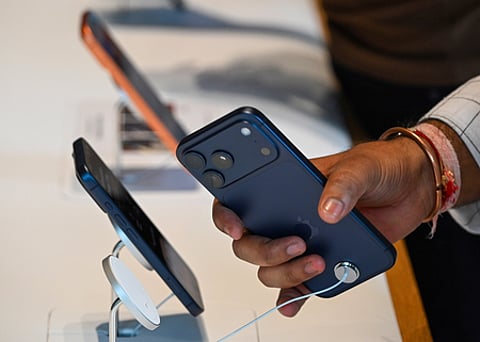
Dubai: Apple users are unlikely to see an immediate change to ChatGPT features on their devices following the company’s lawsuit against OpenAI, since the legal action is focused on alleged trade secret theft connected to the AI company’s hardware plans.
The commercial agreement that brought ChatGPT into Apple Intelligence is explicitly outside the scope of the case, according to Apple’s complaint. The company’s current support pages also continue to offer ChatGPT through Siri, Writing Tools, Image Playground and Visual Intelligence.
Get updated faster and for FREE: Download the Gulf News app now - simply click here.
The greater risk sits further ahead, with the case threatening to complicate OpenAI’s efforts to build a new generation of consumer devices that could eventually compete with the iPhone, Apple Watch, AirPods and other products.
Why Apple went to court
Apple filed the lawsuit in the US District Court for the Northern District of California against OpenAI, its hardware chief Tang Tan, former Apple engineer Chang Liu and io Products, the hardware company acquired by OpenAI.
The iPhone maker alleges that OpenAI used former Apple employees, recruitment interviews and supplier relationships to obtain confidential information covering unreleased products, engineering specifications, manufacturing methods and component technologies.
“At every level, from members of its technical staff to its chief hardware officer, and in coordination with business partners, OpenAI has been stealing Apple’s trade secrets and confidential information,” Apple said in the lawsuit.
Those allegations have not been proven in court, and OpenAI has rejected the suggestion that it sought Apple’s protected information.
“We have no interest in other companies’ trade secrets. We remain focused on building innovative technology that empowers people everywhere,” an OpenAI spokesperson said.
Former Apple executives at the centre
Tang Tan spent 24 years at Apple and was most recently vice-president of product design, where he worked on the iPhone, Apple Watch and other major devices. He later helped establish io Products before becoming OpenAI’s chief hardware officer.
OpenAI acquired io for about $6.5 billion in 2025 and combined the business with its hardware operation. Apple said more than 400 former employees of the iPhone maker are now working at OpenAI, although the lawsuit focuses on specific allegations involving Tan, Liu and other recruits.
Apple claims Tan used confidential product terminology and information during interviews to question prospective recruits about unreleased products. The complaint also alleges that candidates were encouraged to bring Apple work materials and discuss proprietary components and designs.
Liu, who joined OpenAI in January, is accused of accessing and downloading dozens of confidential hardware files after leaving Apple. The complaint claims the material included information about unreleased products, technical specifications, engineering presentations and proprietary project data.
Apple also alleges that Liu retained an Apple laptop, accessed company systems through a previously unknown authentication flaw and coached a former colleague on avoiding scrutiny while copying files. These remain Apple’s allegations and have yet to be tested before a judge or jury.
The fight is really about future devices
Apple and OpenAI began as high-profile partners when ChatGPT was integrated into Apple Intelligence and Siri. Their interests began moving closer to direct competition once OpenAI started building its own hardware operation.
The case gives a clearer view of how seriously Apple views that threat. OpenAI has assembled former Apple engineers and designers, including people who worked on some of the company’s most successful products, while also building relationships with established electronics manufacturers and suppliers.
Apple’s complaint says OpenAI’s hardware programme has worked with Foxconn, Luxshare and Goertek, companies with extensive experience supplying or assembling Apple products. It also says OpenAI had completed its first device prototypes by late 2025.
The dispute centres on whether OpenAI can turn the experience of former Apple staff into new products without using information that legally belongs to their previous employer.
Employees are generally free to apply the skills and experience acquired during their careers, but confidential files, unreleased designs and protected manufacturing processes remain the property of the employer. The line between personal expertise and protected information will be central to the case.
What Apple wants from OpenAI
Apple is seeking financial damages and a jury trial, but the more immediate demand concerns OpenAI’s device programme.
The company wants the court to prevent OpenAI and the other defendants from possessing, using or disclosing its confidential information. It has also asked for the return of Apple property, restrictions on further access and an order preventing the destruction of evidence.
A court order covering those requests could force OpenAI to separate disputed information from its hardware work while the litigation proceeds. Apple would still need to support its claims with evidence, while OpenAI will have an opportunity to challenge the allegations and present its defence.
The discovery process will be important because it could give Apple access to internal communications, recruitment records and technical documents connected to OpenAI’s hardware development. Apple said in its filing that litigation and discovery were required to expose the scale of the alleged conduct.
What it means for Apple and ChatGPT users
Current iPhone, iPad and Mac users can continue accessing ChatGPT through supported Apple Intelligence features. Neither company has announced the removal or suspension of that integration, and Apple’s filing says the existing ChatGPT agreement is not part of the dispute.
The longer-term impact concerns the products consumers may be offered in the coming years. OpenAI has been building devices that place artificial intelligence at the centre of the experience, while Apple is developing its own AI-powered wearables and home products.
Delays or restrictions affecting OpenAI’s programme could reduce the speed at which those competing devices reach consumers. The case could also make both companies more cautious about expanding their partnership into additional Apple features while they fight over hardware development.
OpenAI Chief Executive Sam Altman has publicly played down the confrontation while acknowledging Apple’s strength.
“I am not afraid of apple, but i have tremendous respect for them. s-tier company,” Altman wrote on X.
- With inputs from Bloomberg.