Home technology gets smart
Liam Nelson investigates the smartening up of home electronics
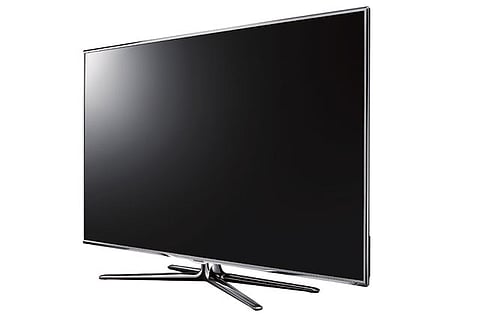
Our technology is getting smarter every year, and this is a fact true of electronics both large and small. Some Smart devices concern themselves with efficiency; from small-scale climate control systems that can be scaled to suit occupancy and usage, to the European Union's ambitious ‘Smart Watts' pilot project, which offers real time energy prices.
Driving this sea of change is a confluence of technological currents; microprocessors getting faster, while memory gets both faster and cheaper. Add to that the ever-expanding connectivity of the wireless world, and you have computing creeping into every corner of your gadgetry.
TV IQ
"It's not meant to replace the computer," says Samsung's resident Smart TV expert. But with Smart technology permeating the domestic realm, there's one area of the house in which consumers have always been fairly technology-forward, and that's in the TV room. Sure, Smart TV isn't likely to replace your laptop any time soon, especially for work productivity, but there's so much it can do. Just for fun, let's say you hauled your new 51-inch set down to the local café to work on that screenplay/memoir/shopping list you've been promising yourself you would write; Samsung has a handy remote control app for Android phones and tablets, meaning that you could theoretically fire up Smart TV's fully featured, flash-enabled browser, log into your Google account, access Google Docs and type out this very article on a Samsung Smart TV.
Wireless solutions
With digital media cropping up on a variety of devices, Samsung is offering an integrated media solution via its AllShare feature, which offers a wireless DLNA service to connect all DLNA compatible devices to your TV. As remote file playback becomes a reality of the digital home, DLNA-certified devices make it easy on the end-user, discovering, connecting, and communicating with each other over your home network.
Auto cleaning
Other smart devices have humbler goals, like cleaning the house, and LG's Hom-Bot, a sort of robot vacuum cleaner that uses a pair of cameras to map out your room for maximum cleaning efficiency, can remember changes to the furniture layout in a room, and differentiate and react accordingly to stationary objects, like a table, and those that are moving, like your toddler.
Connecting to your Wi-Fi network, you can even use its video cameras to look in on your home from afar and feed your pets in conjunction with a networked automatic pet food dispenser.
Social television
At the heart of Smart TV is Samsung's Smart Hub, a desktop-like Graphical User Interface (GUI) that draws part of its inspiration from Android and iOS, with a tiled app section of the display for high-profile widgets. This area of the screen is also configurable, and a growing assortment of applications are available from Samsung Apps, an online app store for Smart TV. And its Social TV allows you to chat with others in real-time while watching the same TV content.
Future of Smart TV
KS Lee, Vice President of LG's Home Entertainment Brand Marketing Team weighs in on LG's vision for Smart TV
A key feature for Cinema 3D TVs is the Smart TV function. What exactly is a Smart TV, considering that Internet browsers and apps are not new to TVs?
I don't think there's a clear definition, which results in confusion in the market. But basically, Smart TVs should have an Internet connection on top of seamless connectivity with Smartphones and tablet PCs. For example, checking Facebook on your phone and sharing the content with others on a big screen. This is where you'll need Smart TV, which can receive information easily and seamlessly at the click of the remote button or from LG's motion-sensing remote.
Concept-wise, Smart TV might be similar to LG's earlier NetCast function, but the user experience and connectivity of the former have been improved significantly. Apps and a Google TV-like search function are nice, and we will be adopting these, but they are not the key drivers for Smart TV compared with content sharing, catch-up TV and video-on-demand (VOD) services.
In LG's opinion, how will Smart TV functions shape the future of home entertainment?
Premium content, which includes catch-up TV and VOD services, are clear winning points that LG has been developing. It has the biggest impact on consumers' behaviour and TV viewing. With a Smart TV, users can watch programs anytime with catch-up TV and VOD services. In the not-so-distant future, there will even be support for new business models like advertising. By collecting users' behaviours, LG could provide targeted media advertising for businesses to reach out to very specific customers. This not exactly a new idea, though it will take time to materialise.
Unlike the US and Europe, there aren't many video-on-demand services available in Asia and other developing countries. How can LG address this issue for its Smart TV platform?
LG, Samsung and Sony are all working with content providers to explore possible partnerships for their TVs, though most broadcasters seldom award any exclusivity rights. This means that if a TV maker had developed a business relationship with them, it could be easily extended to other brands. Nonetheless, we've a competitive advantage over Samsung in terms of content, globally. For example In Latin America, we're ahead of Samsung: We've a very strong partnership with Globo, which is the largest content provider in Brazil; we've also sought the best programs for Chile, Peru and Colombia. This content has been available on our broadband TVs since last year.


