Recharge your inner batteries: Discover the power of non-sleep deep rest (NSDR), know the science behind it
Guided practice, dubbed a "game-changer", lets you rest deeply while staying conscious
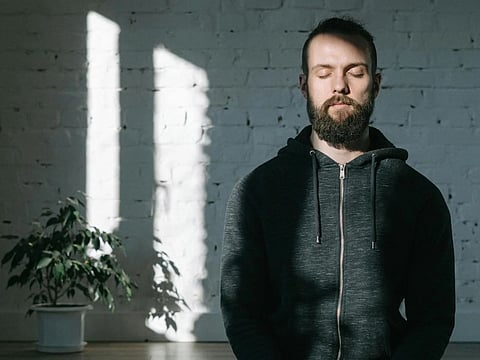
Ever wished you could hit a reset button for your brain — without actually dozing off?
Enter Non-Sleep Deep Rest (NSDR), the ultimate life hack for boosting energy, sharpening focus, and melting away stress, all in under 20 minutes.
Unlike a siesta, NSDR doesn’t involve actual sleep — it’s a guided practice that lets you rest deeply while staying conscious. Curious?
Let’s dive into the science and secrets of this game-changing practice:
What is non-sleep deep rest (NSDR)? Explain the science behind it:
"NSDR, or Non-Sleep Deep Rest, is a science-backed practice that brings the body and mind into a deep state of relaxation without actually falling asleep," explains Dr Elie Abirached, a Dubai-based biohacking and longevity expert, in an exclusive interview with Gulf News.
"It helps recharge energy, reset the nervous system, and improve focus - all in a short period," he added.
What's the science behind it?
The science behind NSDR lies in its ability to shift the brain into slower brainwave states, like theta and delta, similar to those experienced during deep sleep or meditation.
A well-cited study from Dr. Andrew Huberman’s lab at Stanford University explains how NSDR protocols (like Yoga Nidra and guided breathing) can replenish dopamine reserves, improve neuroplasticity, and enhance cognitive recovery (Huberman, 2021).
Another study published in Frontiers in Human Neuroscience (2020) also showed that Yoga Nidra, a form of NSDR, can reduce cortisol and improve overall stress resilience, which is crucial for high performers.
How is it different from the "siesta" concept?
Unlike a siesta, which typically involves actual sleep, NSDR is about reaching a deep, conscious state of rest — without falling asleep.
It is an intentional and guided practice, often including breathwork, body scanning, and visualisation to calm the nervous system and induce profound relaxation.
Unlike a siesta, (NSDR) is an intentional and guided practice, often including breathwork, body scanning, and visualisation to calm the nervous system and induce profound relaxation.Dr Elie Abirached
How long does an NSDR session last?
The goal of NSDR isn’t to nap but to restore energy, improve focus, and reset mental clarity in as little as 10-20 minutes.
"It’s like hitting a reset button for the brain — something that doesn’t always happen during a casual nap or siesta," said Dr Abirached, who founded Limitless Human and Restore Fitness and is an Eight Sleep Ambassador.
"For busy professionals or high performers who can’t afford a long nap, NSDR offers a structured, time-efficient way to get many of the benefits of deep rest without needing to disconnect from the day."
How is NSDR helpful for people who are fasting (i.e., during Ramadan)?
During Ramadan, many people struggle with low energy, disrupted sleep cycles, and increased stress, especially when trying to balance work, family, and fasting, Dr Abirached said.
"NSDR becomes a powerful tool to recharge both body and mind without breaking the fast," he said.
A short NSDR session during the day can restore energy, improve focus, and reduce the mental fog that often comes from fasting and altered sleep. It also helps regulate cortisol and nervous system balance, which means better stress management and emotional regulation throughout long fasting hours.Dr Elie Abirached, a Dubai-based biohacking and longevity expert
Most importantly, he pointed out, "NSDR can enhance the quality of limited sleep during Ramadan, helping people feel rejuvenated and sharper even when they aren’t getting their usual rest. It’s a practical, accessible biohack that aligns seamlessly with the spiritual and physical demands of fasting."
How NSRD works:
1️⃣ Find a quiet space.
2️⃣ Lie down or sit comfortably.
3️⃣ Follow a guided NSDR protocol (like Yoga Nidra) or focus on slow breathing.
4️⃣ Allow your body and mind to enter a deep rest state.
In just 10-20 minutes, you can boost energy, memory, and even neuroplasticity, making it a perfect tool for high performers and biohackers alike.
If you’re skipping rest thinking you don’t have time — this is your solution.
2024 Study
A 2024 study published in the journal Applied Psychology Health and Well-Being by Omar Boukhris, et al., examined the effects of NSDR on 65 physically active participants (42 male, 23 female).
They volunteers were randomly assigned into two groups whose physical and cognitive performance, as well as sleepiness, acute readiness, recovery, stress, and mood state were examined.
The results stumped the researchers: they found that NSDR is associated with "significant benefits to physical readiness, emotional balance, overall recovery, negative emotional state, overall stress, and tension" in comparison to the control group (a group of participants in a study that does not receive the experimental treatment)".
The researchers even recommended NSDR intervention as a "valuable strategy for acutely enhancing overall well-being and readiness".


