Too young to choose, old enough to be chosen
Protecting girls requires early action on education, poverty and family security
Every year, an estimated 12 million girls are married before their eighteenth birthday.
Behind that figure lies one of the most troubling contradictions in child protection: a girl can be considered too young to determine her own future, yet old enough for others to decide that she should become a wife.
Child marriage is often discussed as though the harm begins with a wedding. It does not.
By the time a child is standing in a wedding dress, a series of protections may already have failed her. She may have been pushed out of school. Her family may be facing poverty, conflict or displacement. The systems designed to identify children at risk may be weak or inaccessible. A harmful practice may have become so deeply normalised that those around her no longer question it.
The wedding is often the visible end of a chain of failures that began much earlier.
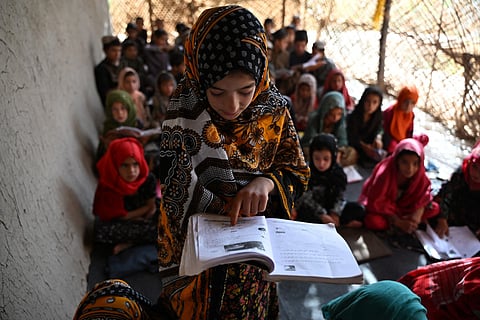
Consider a 12-year-old girl who starts her day thinking about school and ends it being told she will soon become a bride. Her textbook is closed. Her notebook is packed away. She is told she will no longer need either.
The next time the school bell rings, her classmates return to their desks. Her seat is empty. That empty seat is evidence of more than a marriage. It marks everything that failed before it.
UNICEF estimates that around 640 million girls and women alive today were married in childhood. The scale of this crisis demands more than outrage. It requires us to examine why child marriage persists and, crucially, what it takes to prevent it.
Financial pressure
Poverty remains one of its most significant drivers. For families facing severe financial pressure, marriage can be perceived as a way of reducing economic hardship or securing a daughter’s future. Conflict and displacement intensify that pressure, while disrupted education removes one of the strongest protections available to girls.
Social norms matter too. Harmful practices become difficult to challenge when they are treated as inevitable, particularly where communities lack viable alternatives, accurate information and access to trusted protection services.
Understanding these pressures does not excuse the decision to marry a child. It shows us where prevention must begin.
Awareness and legislation are essential. Neither is sufficient if the circumstances that allow child marriage to persist remain unchanged.
Early prevention
Prevention must begin earlier. It means keeping girls in school and ensuring they can return when education is disrupted. It means strengthening families’ economic security so that hardship does not turn marriage into a perceived solution. It means giving communities the knowledge and confidence to recognise risk and intervene before decisions become irreversible. And it means building institutions that connect child protection with education, social support and economic opportunity.
Success must be measured by more than the effectiveness of our response after harm occurs. We must ask whether we reached the family, school or community while another outcome was still possible.
Long-term partnerships
That requires long-term partnerships. No organisation can address the forces behind child marriage in isolation. Governments, humanitarian organisations, schools, communities and local institutions all have a role in creating environments where families have alternatives and children receive meaningful protection.
The goal is greater than stopping a wedding. It is ensuring that a girl never reaches the point where marriage appears to be the only future available to her.
That is the difference between responding to harm and preventing it. The effort to end child marriage must therefore be understood as a sustained investment in education, family security, social protection and every child’s right to shape her own future.
Systems, policies and partnerships can sound abstract. The child they are meant to protect is not.
She is the child who should still be sitting at her desk, with her books open and her future still hers to shape. Ending child marriage begins by ensuring that no empty seat goes unnoticed and that no girl disappears from childhood before we act.
Perhaps we do not need to imagine 12 million girls. One is enough.

Lujan Mourad is Director of the Khalid bin Sultan Al Qasimi Humanitarian Foundation


