The real threat to Pakistan isn’t terrorism
Washington should encourage more Pakistan-India energy cooperation
It has been a bloody few weeks in Pakistan, even by the country’s violent standards. Sectarian extremists assaulted an open-air market. Separatist militants executed bus passengers. Terrorists bombed a children’s football game and a policeman’s funeral. A deadly jailbreak freed more than 200 jihadis. And the nation’s capital went on lockdown after rumours of impending high-profile attacks.
This unrelenting terror makes all the more striking a recent statement by Khawaja Asif, Pakistan’s Water and Power Minister. Energy, he declared in an interview, is a greater challenge than terrorism.
Asif’s statement is striking — and spot-on. Militancy grabs headlines internationally and it is undoubtedly of grave concern. However, Pakistan’s energy crisis directly affects many more people than the Taliban. More than anything else — corruption, sectarianism, inadequate public services — a lack of power is destabilising Pakistan, a nuclear-armed nation of 193 million people.
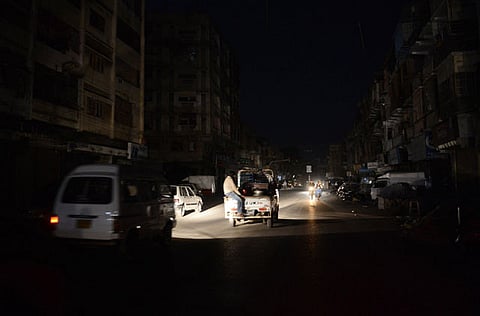
Pakistanis — including those in the militant-choked northwest — suffer as much as 20 hours of daily power outages. Energy shortfalls have exceeded 40 per cent of national demand and cost the country 4 per cent of gross domestic product. Hundreds of factories, including those in the dominant textile industry, have shut down, leaving scores unemployed. Hospitals have had to curtail services, putting patients’ lives at risk. Doctors report the crisis is increasing stress and depression.
Militants have naturally exploited Pakistan’s energy insecurity. In April, the Pakistani Taliban destroyed the largest power station in Khyber-Pakhtunkhwa, the restive province bordering Pakistan’s tribal belt. Half of Peshawar, the provincial capital, lost power. Power shortages have also sparked violent protests among the ordinary citizens. Rioters have attacked utility offices, law enforcement, banks, shops and the homes and offices of ruling and opposition party politicians.
The root cause of Pakistan’s power crisis is a dysfunctional energy sector that even Asif admits is a “nightmare”. With multiple ministries and agencies responsible for energy matters and no clear lines of authority, the policymaking process is wholly uncoordinated. Inefficiency is rife; transmission and distribution losses have approached 30 per cent. Finally, the sector is burdened by so much debt that Pakistan literally cannot afford to provide energy.
These are big problems and solving them will require big, politically risky moves: Expanding Pakistan’s tax base, cracking down on theft and restructuring the power sector. Encouragingly, Pakistan’s new government has made energy its top priority and proposed a new national policy.
Unfortunately, some of its correctives can be as destabilising as the crisis itself. The new energy policy calls for emphasising cheaper, unexploited indigenous reserves. These include coal in Thar, an impoverished desert region in Sindh province. For decades, Pakistan has extracted natural gas from another arid, poor, resource-rich region: Balochistan. Over time, the fruits of this extraction have largely eluded locals, fuelling an anti-government insurgency that blows up gas lines and severs electricity wires.
If Pakistan targets Thar’s coal fields, the consequences can be similarly explosive. Sindh is already embroiled in natural resource disputes, as locals blame their province’s water shortages on dams in upstream Punjab province. Islamabad’s plans to expand generation capacity by building more dams can drive up tensions between Pakistan’s fractious provinces.
All this has troubling implications for the US, which has a strategic interest in a stable Pakistan. More unrest heightens the operational challenges of the US withdrawal from Afghanistan, which requires the use of Pakistani supply routes.
During his recent trip to Pakistan, US Secretary of State John Kerry announced that US-funded projects have added more than 1,200 megawatts of power to the national grid. This is a mere sliver of Pakistan’s daily demand, which averages 15,000 MW. It hardly makes up for the estimated 4,000 MW that will be generated by a proposed gas pipeline with Iran, which Washington staunchly opposes. There is only so much that the $1.5 billion (Dh5.51 billion) in annual economic assistance for Pakistan — authorised by the US Congress through next year — can do. Still, modest efforts are better than none at all — and now is the right time to pursue them. Relations with Islamabad have softened and a broad-based strategic dialogue, suspended for several years, is expected to resume. Washington should use this opportunity to supplement its financing of high-cost generation projects (such as dams) with cheaper, smaller projects that subsidise electricity costs for the urban poor.
President Barack Obama’s administration should also work with Pakistan to establish a more welcoming environment for American energy investors and entrepreneurs. A bilateral investment treaty, now under negotiation, will be an excellent start. This will not improve Pakistan’s security situation or tax-to-GDP ratio, but it can strengthen intellectual property rights. That will facilitate the entry of US technology, including solar-powered lanterns and electricity-independent sterilisation technology for medical equipment.
Finally, Washington should encourage more Pakistan-India energy cooperation. The two countries have agreed to a deal that will export electricity to Pakistan and a joint working group is considering further possibilities. Such cooperation can be enhanced if, as expected, the two neighbours eventually normalise their trade relationship.
None of these measures will end the blackouts. Yet, we have too often ignored the roots of instability in Pakistan. Any efforts to address its power crisis can only benefit its people.
— Washington Post
Michael Kugelman is the senior programme associate for South Asia at the Woodrow Wilson International Centre for Scholars in Washington.


