Petrodollar isn’t collapsing - but Iran war is exposing its limits
Iran war exposes cracks in the petrodollar as oil trade turns increasingly fragmented
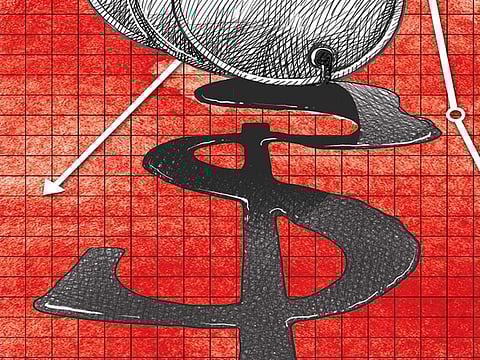
For decades, the global oil market operated on a relatively simple assumption: crude oil flows through the world economy in US dollars, and that system helps anchor American financial power. The Iran conflict is testing that assumption in real time.
Nearly three months into the crisis, with the Strait of Hormuz remaining under intense geopolitical scrutiny despite a fragile ceasefire window, the global conversation around oil is no longer just about supply disruptions or higher fuel costs. It is increasingly about currencies, financial influence, and whether the foundations of the petrodollar system are beginning to shift.
The answer is more nuanced than the headlines suggest. The petrodollar is not collapsing. The dollar is not suddenly losing its reserve-currency status. Oil exporters are not abandoning the US financial system overnight. What is happening instead is more subtle — and potentially more important over the long term. The global energy trade is fragmenting.
Changing oil-dollar relationship
That fragmentation is being driven by war, sanctions, Asian demand growth, and the rising willingness of countries to experiment with payment systems that reduce dependence on Washington-controlled financial infrastructure.
Ironically, the Iran conflict has strengthened the dollar in the short term even as it accelerates discussions about alternatives. That contradiction sits at the heart of today’s market reality.
Traditionally, surging oil prices tended to weaken the US currency because America was heavily dependent on imported crude. Higher energy prices worsened the US trade balance and pressured growth. That relationship has changed dramatically.
The United States is now one of the world’s largest energy producers, making it less vulnerable to oil shocks than many Asian and European economies. At the same time, oil remains overwhelmingly priced in dollars. When crude prices rise sharply, importing nations still need larger quantities of dollars to pay for energy.
The result since the Iran conflict escalated has been unusual but telling: oil and the dollar have risen together. Markets are effectively treating the dollar as a form of energy exposure. That reflects the enduring strength of the existing system. Even amid geopolitical instability, investors continue to turn toward dollar liquidity during periods of stress.
Pressure points in global oil trade
Yet the same crisis is also exposing cracks that were already emerging beneath the surface.
The Strait of Hormuz remains one of the world’s most critical energy chokepoints, handling roughly one-fifth of global oil flows. Any threat to shipping there immediately reverberates through foreign exchange markets, sovereign debt, shipping insurance, and commodity pricing.
Under that pressure, energy buyers are becoming more pragmatic. Countries are increasingly willing to negotiate bilateral supply deals, explore local-currency settlements, and build payment channels outside traditional Western banking systems. Reports of yuan-denominated transactions involving Iranian crude may still represent a relatively small portion of global trade, but they carry symbolic significance far beyond their volume.
China’s role in this transition cannot be ignored. As the largest buyer of Middle Eastern oil, Beijing has spent years gradually expanding the use of the yuan in cross-border trade while investing in alternative financial infrastructure. The Iran conflict has accelerated incentives for both buyers and sellers to test those systems under real-world conditions.
This does not mean the “petroyuan” is about to replace the petrodollar. The reality is far more complicated.
Why the dollar still dominates
The dollar’s dominance rests on far deeper foundations than oil invoicing alone. The scale of US Treasury markets, the liquidity of dollar funding systems, and the global trust placed in American financial institutions remain unmatched.
Even many Gulf sovereign wealth funds that are diversifying globally still hold large dollar-denominated portfolios. That distinction matters. The original petrodollar model of the 1970s relied heavily on oil exporters recycling surplus dollars back into US assets, reinforcing America’s financial centrality. Today’s world is more diversified. Gulf capital increasingly flows into equities, infrastructure, technology, and strategic investments across multiple regions.
The system is evolving from a singular financial order into a more layered one. For Gulf economies, including the UAE, this shift presents both risks and opportunities. The UAE has positioned itself as one of the world’s most globally connected financial and logistics hubs precisely because it understands the importance of flexibility in a changing geopolitical environment. Its ability to maintain strong economic relationships with both Western and Asian markets has become an increasingly valuable strategic advantage. That balancing act is now more important than ever.
Gulf’s pragmatic recalibration
The region is not abandoning the dollar system. Nor is it turning away from long-standing partnerships with the United States. But Gulf states are clearly hedging against a future where trade becomes more regionalised, where payment systems become more diversified, and where geopolitical shocks increasingly disrupt traditional financial channels. This is not ideological. It is practical.
Energy markets are adapting to a world where resilience matters as much as efficiency. The most important takeaway from the current crisis is not that the dollar is doomed. It is that the global oil trade is becoming less centralised and less predictable. More transactions may occur in multiple currencies. More governments may seek alternatives to sanction-sensitive payment systems. More energy flows may bypass transparent market mechanisms altogether. That creates new challenges.
Opacity in oil markets increases volatility. Shadow shipping networks, politically negotiated supply agreements, and fragmented settlement systems make pricing less efficient and reduce market visibility for investors and regulators alike.
System adapting under pressure
At the same time, the dollar still benefits whenever uncertainty rises sharply enough to trigger a global search for liquidity and safety. That is why the petrodollar system today appears neither fully secure nor close to collapse. It is adapting under pressure.
The Iran conflict did not create this transformation. It accelerated trends that were already underway — the rise of Asia in global energy demand, the growing importance of strategic autonomy in trade, and the gradual diversification of financial power away from a single centre.
The next chapter will depend less on military developments alone and more on what currency the next generation of oil trade chooses to trust.


