Science literacy: The mind’s vaccine
As we learn and study the different laws of basic elementary level science, we will be empowered to differentiate between things that we hear and see on a daily basis
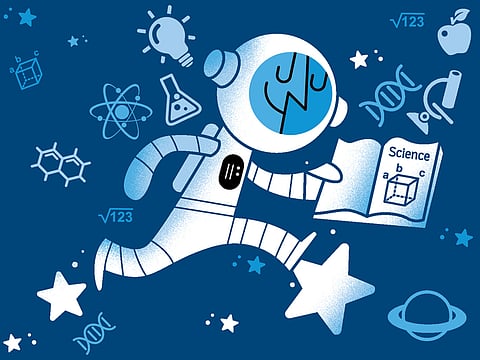
Growing up in the UAE, science almost passed me by. The subject was presented to us in school as one that only those beyond a certain level of intelligence could comprehend, or it was positioned as a subject that was difficult and dull. Moreover, choosing science as a career path was not encouraged in the UAE and especially in the Emirati community as there were no viable career opportunities for scientists back then.
The only career options that were available to those with a science background, we were given to understand, would either be school teacher or a medical professional. I’m glad to say this is changing, and quickly at that.
However, it was at college that I started asking questions about the world and the universe in which we reside, following my own path of discovery. After a long process of inquiry, I realised how the wonders of science are all around us, from the manner in which our blood flows throughout our bodies to the movements of colliding galaxies; science is the force that governs our understanding of the natural laws we abide by — and our ability to not only exert our will on those forces, but understand the consequences, too.
With that in mind, understanding or being literate of its concepts can enable a future in which every individual on Earth can choose to either lead and be a part of its developments or be at the mercy of science.
More than at any other time in human history, humanity is reaping the benefits of science and technology. However, we go about our lives without considering the amount of actual science that we are using, witnessing and being affected by on a daily basis.
In short, we are all scientists.
What is science literacy and is it relevant?
According to a research paper from the University of Tartu, Estonia, in 2008, titled “The Meaning of Science Literacy”, the authors presented different definitions of science literacy since the concept was first introduced decades ago. However, out of all of the different definitions, the one definition that I believe conveys the term in a simplified and concise manner, is that science literacy is the “Knowledge of the substantive content of science and the ability to distinguish from non-science”.
With that, science literacy enables us to use the concepts and rules of science in order to better our decision making processes. As we learn and study the different laws of basic elementary level science, we will be empowered to differentiate between things that we hear and see on a daily basis. And based on the laws of science, we can distinguish between what is actually factual and realistic and what is not.
Nonetheless, one may question if science literacy protects us from any wrong doing that such false information may bring? Well, the simple answer is no. Science literacy will not protect you from all misinformation that is being presented to you on a daily basis, however, as Dr Neil deGrasse Tyson puts it “Science literacy is a vaccine against the charlatans of the world that would exploit your ignorance”.
Even so, one can argue that in order for someone to be truly scientifically literate, one must be a scientist. But the great thing about science literacy is that anyone can be scientifically literate, just by understanding and comprehending the basic laws of science and its disciplines.
Science literacy and the future
Half a century into the future and with the help of science literacy, future societies will be able to look beyond the information that would be provided to them and extract the appropriate information that would be of use to them. With science literacy, humanity as a collective will be able to focus on the ways in which science has advanced our species and how it can propel us into a bright and positive future. Likewise, in the future we will be able to apply the scientific method that is associated with science literacy in all aspects of life.
As a result, we can come together and work to create concepts and ideas that that will enable humanity as a species to do better and work together as a unit. With that in mind, I can’t help but remember a quote by Carl Sagan: “It will not be we who reach Alpha Centauri and the other nearby stars. It will be a species very like us, but with more of our strengths and fewer of our weaknesses, more confident, far-seeing, capable, and prudent.” And perhaps science literacy will be the catalyst that will propel us into a future in which the stars are within our reach.
Saeed Al Gergawi is a specialist in future technology trends. You can follow him on Twitter at www.twitter.com/@saeed_algergawi.


