Palin's presidential hopes dashed
She didn't pull the trigger, and she's not the first to use the language of combat. But the Alaskan's career surely can't survive the Arizona shooter's bullet
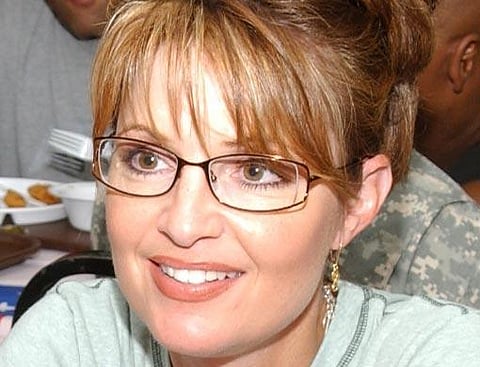
Until Saturday, it was a fair working assumption that Sarah Palin was just a few weeks away from announcing her candidacy for the presidency of the United States. Barack Obama launched his campaign in February 2007, a full 21 months before polling day in November 2008, making February 2011 the obvious time for anyone with an eye on 2012. But if Palin had pencilled an imminent date in her diary, she's certainly rubbed it out now. Events outside a Safeway in Tucson have seen to that.
Imagine how a Palin presidential campaign would now unfold. Her fellow Republicans might steer clear of the Arizona killings in the primary phase of the contest but, if she somehow became her party's nominee, she would be challenged constantly about a single image: the map she posted on her website last autumn dotted with 20 gunsight-style crosshairs over 20 congressional districts occupied by Democrats who had dared to vote for Obama's health care reform — among them one Gabrielle Giffords.
Palin might try to argue that she wasn't really targeting Giffords and the others, echoing the absurd attempt by one of her closest aides at the weekend to pretend those rifle sights were really "surveyor's symbols".
But that won't wash, not when Palin herself referred via Twitter to the "‘bullseye' icon used 2 target the 20 Obamacare-lovin' incumbent seats". More importantly, there would be a potent witness ready to testify against Palin: Giffords herself.
The most important 13 seconds of videotape could prove to be the clip, already running on a loop on American television, of Giffords complaining last autumn about that crosshairs ad, warning those behind such violent imagery to "realise there's consequences to that action".
That statement, full of poignant prescience, can't help but point a finger at Palin. If, as those around her hope and pray, Giffords survives, she would need to do no more than appear on a platform or in a TV ad in the 2012 campaign to indict Palin. She would embody in her very person the case that the former governor of Alaska lacks the judgment to be president.
Perhaps Palin could have overcome this obstacle, expressing deep contrition for the crosshairs map and vowing to join those calling for calmer, cooler public discourse. But her response since the shootings has deepened her problem.
Her single public statement was chilly and defensive. It began, "My sincere condolences are offered", a form of words that, one senior Democrat mused to me, looked as if "it had been drafted by a lawyer", anxious not to say anything that read like an admission of guilt.
The result is that the Giffords shooting and Palin's statements before and after it have seared into the public mind a version of the would-be president that alienates her from the moderate and independent voters crucial to any general election victory, aligning her with the most extreme elements of the Republican party.
Defence mechanism
Is any of this fair? If it is true that, as one veteran political adviser puts it, "The crosshairs are now on Sarah Palin's career," is that just? There is much Palin could point to in her defence. The evidence is scant so far that the alleged gunman, Jared Lee Loughner, was a paid-up member of the Palin cult.
At first glance, he seems less the determined political assassin than a man in a dangerously advanced state of mental illness. If Loughner didn't see Palin's call to arms in the last midterm campaign, and developed his hostility to Giffords long before anyone had heard of the Alaskan huntress, then surely, her allies will say, she should escape any blame.
What's more, Palin is hardly the first politician to use the language of combat. She could argue that anyone who has ever referred to ‘battleground' constituencies, talked of candidates ‘wounded' by ‘fatal blows' or arguments ‘shot down' is just as guilty as she is.
Yet these attempts at exoneration go only so far. Even if Loughner is shown to suffer from extreme mental illness, he did not exist in a vacuum. Instead he lived in a climate that pervades today's America, and that exists with particular intensity in Arizona, in which political violence is glorified. As Andrew Sullivan has pointed out, the gunman could have chosen anywhere for his rampage, but he chose a specific politician whom many influential people had already defined as a target.
By rights, then, those who have been stoking this fire should be shamed into changing their vocabulary. Yet the precedents are not encouraging. After the Oklahoma City bombing in 1995, Bill Clinton denounced the ‘loud and angry voices' who, he said, were guilty of ‘spreading hate and leaving the impression that violence is acceptable'.
Clinton's response to Oklahoma revived his presidency, but it did not still the loud and angry voices: Rush Limbaugh was spewing vitriol then and he's still doing it now. If Obama can do as well as Clinton, he will have done himself a great favour. If he can do better than Clinton, he will have done his country a great service.


