Not 'our British friends'
Obama's cold approach to Brown underlines the high-level political discord playing havoc with the British-American 'special relationship'
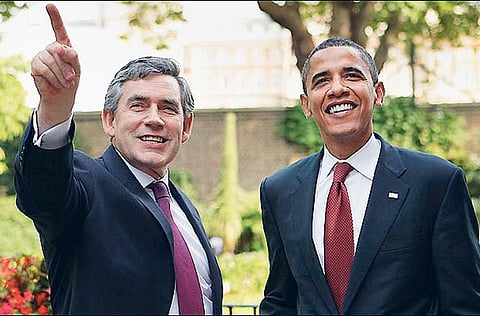
British Prime Minister Gordon Brown's admission that he had not spoken to US President Barack Obama since the attempted Christmas Day bombing speaks volumes about the fracture in the relationship between Downing Street and the White House.
So too did an extraordinary 24 hours in which Brown's spokesman indicated that MI5 had passed on the name of Umar Farouk Abdul Mutallab, the Detroit bomber, to American intelligence in 2008 a claim that at first mystified the White House.
Mystification turned to frustration that Downing Street appeared incapable of unequivocally retracting the claim. But then there was a bewildering turnaround as the White House stepped back from briefing that the British were mistaken.
White House officials had initially emphatically denied that Abdul Mutallab's name was provided by the British at any stage before the attack a denial supported by British diplomatic sources. Then, utter confusion reigned.
Whereas Tony Blair and George W. Bush would speak sometimes several times a week, this confusion demonstrated transatlantic relations at the highest level are distant and disconnected.
After the September 11 attacks, officials from Downing Street and the British Embassy in Washington were seconded to an ‘Office of Global Communications' in the Old Executive Office Building where they worked alongside Bush administration officials.
Despite the ideological chasm between them, Alastair Campbell, Blair's spin doctor, and Karen Hughes, the Texan former television reporter who shaped Bush's image, scarcely took a decision on how to present a foreign policy issue without consulting.
Intelligence and military cooperation between the US and Britain remains close. British intelligence liaison officers are frequent visitors to CIA and FBI headquarters.
But there is discord in the political sphere. The White House was livid about the release by the Scottish administration of the Lockerbie bomber last August.
To Americans, Brown's government seems at best in disarray over the issue and at worst duplicitous. For some, the words ‘our British friends' became a term of irony.
Obama rebuffed five requests for a private meeting with Brown when he visited the United Nations in New York.
Some suggest Obama dislikes Britain, perhaps even because of the experience of his grandfather who was imprisoned in 1949 and, the president claims, was tortured by the British during the Kenyan struggle for independence.
"The facts are, Obama hates the Brits," said one person close to the administration. "Something to do with his grandfather in Kenya. A colonial hangover. And there is nothing you can do about it."
Others attribute perceived ‘snubs' and transatlantic ‘rifts' as a British obsession with the ‘special relationship' that betrays a lack of national self-confidence.


