Looming war clouds over region
Killing of Turk citizens by the Syrian Army may well provoke a chain reaction
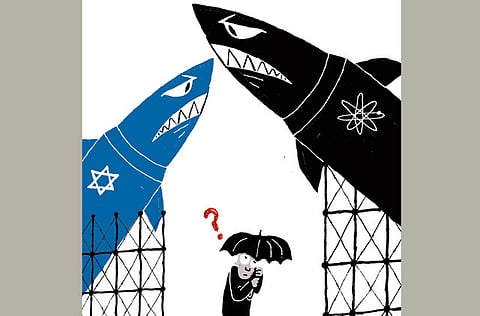
Immediately after the harsh exchange of words on the platform of the 67th session of the UN late last month, between the prime ministers of Iran and Israel, a widely circulated message spread across the social media in Kuwait, on Twitter and Facebook, asking people to prepare themselves for the upcoming and expected war in the Gulf, by stocking food, water and other commodities and putting tapes on their windows to protract them from shells!. The message was an anonymous one, but it was taken for granted by majority of people in Kuwait. It was talked about in Dewanias — the social meeting place of men in Kuwait — at workplaces and among families to the extent that some people even cancelled their intended visits for the coming Haj period in anticipation of what was coming.
Nobody knows yet when war could break out, but almost every political analyst, noticing the carousel of events and the turmoil, which have been going on within the region, feel that war is inevitable.
So in effect, threat of war is looming in the region. The Iranians, on many occasions in the past, have stated that they will strike against “American interests in the neighbourhood”, which means the Gulf states, and between then and now, we heard an Iranian official directly threaten one or more Gulf states with revenge. Israel, on the other hand, has been stating on every occasion that it will not accept a nuclear Iran!
Some studies suggest that one in three international boycotts on a certain country usually ends in war — the Iraqi experience is one such example. Although Iran’s government has not gone to war in recent history — as the Iraq-Iran war in the ‘80s erupted because of an aggression by Saddam Hussain — it could, under pressure, go to war and call it a defensive move. Given the mounting pressure, the events that occurred in Tehran Bazar last week were indicative of what we could expect. Sometimes, events cannot be controlled and all parties think that time is running to their advantage.
For us, in the Gulf states, time is running out. We do not have any leverage or control over either Israel or Iran, or to go even further, the US. Everybody is waiting for the outcome of the upcoming elections in the US in four weeks from now. The wait is not just to see who wins the race, but what the next boss of White House can do to defuse the time bomb in the region.
The nuclear issue is not the only issue poisoning the air in the Middle East. The Syrian situation could provoke a regional war as well. The Iranians will fight tooth and nail not to lose Syria, Tehran’s strong ally. Still the Syrians, as their Foreign Minister, Waleed Al Mua’alem, recently stated at the UN, that Qatar, Saudi Arabia and Turkey were aiding “foreign terrorists” in Syria, fighting solely against the government. This is the first time that the names of these countries has been mentioned publicly — something which will probably not be taken lightly by these countries. Besides, the recent killing of Turk citizens by the Syrian Army may well provoke a chain reaction, which could lead to war.
In the Gulf, we will probably pay a high price if such wars become a reality and if the current political conflict escalates from a war of words to a war of actions. The most widely feared outcome is nuclear pollution, as the entire region’s population drinks desalinated water coming from the Gulf. This could mean a massacre on a mammoth scale.
Some of the war speculations refer to the resolution taken and passed unanimously by the US Congress recently. It refers to the fact that the US government is changing its policy towards Iran from contentment to “all necessary majors”. That means the Big Power is reaching the end of the road to convince Iran’s authority to cooperate with international demands to stop working towards a nuclear arms race. That resolution means action, not conventional diplomacy!
So, although the message through the social media network to Kuwait to prepare for war was taken lightly by some, it is not without basis as it is backed by the prevailing serious developments on the ground. People are convinced that war will come, it is only the timing that they differ on.
Mohammed Alrumaihi is a professor of political sociology at Kuwait University.


