Let Abdullah’s legacy continue
True progress will not happen without first reforming the patriarchal mindset
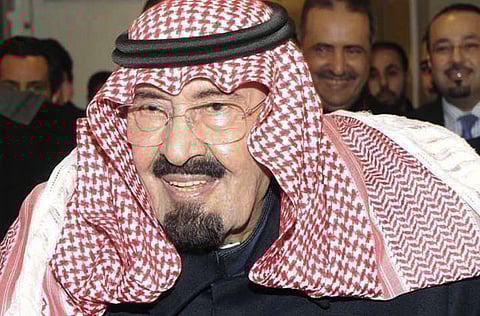
After millions of Saudis and the world mourned the death of King Abdullah Bin Abdul Aziz and following the smooth transition of power, all attention will be focused on the policies adopted by the new Saudi King, Salman Bin Abdul Aziz, towards internal and external issues. One of the most important issues is the continuation of reform on women’s rights that was started by the late king Abdullah.
No one can deny the advancement in women’s rights during king Abdullah’s reign. During his time in power: The first female deputy minister of education, Norah Al Faiz, was appointed in 2009, women were given the right to contest the municipal elections, the Justice Department allowed women to enter the legal profession, and the first law office for women was opened in the beginning of 2014 in Jeddah. A highlight of his reign was when 30 appointed elite women entered the Saudi Shura Council in January 2013.
The question now is, will the new King continue what has been developed and, if so, how?
The first impressive change that happened in King Slaman’s reshuffle was the emergence of new and young ministers in the Cabinet, which captured the attention of the whole Saudi society. Some observers described that as continuation of the reform path initiated by the late king Abdullah. A number of privileged women were disappointed that there was not even one woman in the Cabinet and expressed their frustration through the social media. The conservatives, on the other hand, replied to these tweets and comments, saying that this was what women deserved and they did not want to see women in any leading position.
The problem of women empowerment in Saudi Arabia is that it has divided Saudis between reformists and conservatives. Despite all the reforms that were accomplished during King Abdullah’s reign, he was just one player in a circle of powerful princes. These multiple sources of power created two opposing groups — the reformists and conservatives. There is no one set of rules that protects or promotes women’s rights. Most progress has come more or less in the form of a concession by one of the powerful players in this circle. As a result, the development of women’s rights is unstable and unsteady.
According to Suhaila Zain Al Abdeen, a Saudi scholar in Sharia, the dilemma for conservatives is that their interpretations of verses pertaining to women from the Quran are derived from tradition and cultural heritage. As a result, provisions of jurisprudence (fiqh) are based on these traditions and tribal heritage, which are not consistent with God’s justice. Women are also the victims of another traditional interpretation of the principle of Sad Al thara’i’ (blocking the means), which is the prohibition of certain practices that are permitted under the pretext of preventing possible sins, such as the ban against women driving. These traditional interpretations can be an obstacle to progress in varying ways. For example, women require the approval of a male guardian for their education. According to Al Abdeen this has deprived women of this right in a number of cases. However, education is obligatory in Islam for both sexes and does not require a guardian’s consent. The same is happening in women’s employment due to fatwas from certain clerics restricting employment opportunities for women.
Regardless of all the reforms that took place during king Abdullah’s reign, women only make up 14.11 per cent of the workforce in Saudi Arabia. The majority (84.1 per cent) of whom still work mainly in the Saudi education sector. Even though king Abdullah’s scholarship programme gave the opportunity to a number of female students to study abroad, those women are still not allowed to travel without having a male family companion. Such patriarchal and tribal interpretations of verses in the Quran and conservative traditions that relate to women are not always imposed upon people. However, large proportions of the Saudi society are conservative and therefore many see these traditions as appropriate especially regarding women.
If the new leadership in Saudi Arabia is serious about development and progress, it should consider both social development and change. Abdullah Al Gethame, a Saudi academic and literary critic, called the development that occurred in Saudi Arabia “Tafra”, which means “economic boom”. “Boom” is the negative face of development because building the place was achieved much faster than building the person. One of the main reasons for this was the absence of social experts in the first development plan. As a result, the place has become more modern than the person. Therefore, modernity has only arrived in a physical sense, while, according to Al Gethame, backwardness of the mind has remained.
The progression of women’s rights will not be accomplished without both social and human development. There should be in-depth analysis of the reasons why people are against women empowerment. Perhaps there is a correlation between those who are against assigning women to important positions and those who are against women driving. True progress will not happen without first reforming the patriarchal tribal interpretations of the Islamic discourse. Also, there is a real need for social experts and reformers. This will enable the development of society to go hand in hand with the progress of the place. These changes can strengthen the base for women’s development so it will not merely depend on the concessions of the powerful player, but that will be possible based on a set of clear rules in a more developed society aligned with the rest of the civilised world.
Najat Al Saied is a Saudi academic, a graduate in media studies from the University of Westminster, UK. Her PhD thesis is: Development Initiatives in Programming on Privately-Owned Arab Satellite Television and their Reception among Disadvantaged Saudi Women. She is an assistant professor at Zayed University in Dubai.


