‘Black Panther’ offers a regressive, neocolonial vision of Africa
Far from offering a redemptive counter-mythology, the movie trots out many of the same destructive myths about Africans that circulate the globe
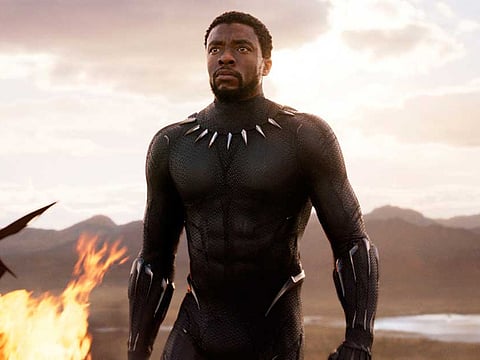
I finally went to see Ryan Coogler’s Black Panther, the latest superhero action blockbuster from Marvel Studios. It is a fantastically well-made movie, set to be one of the highest grossing movies of all time, putting it in a league with the likes of Steven Spielberg’s Jurassic Park and George Lucas’ Star Wars. Based on the Marvel Comics character of the same name from the fictional African state of Wakanda, the most technologically advanced nation in the world but which apparently prefers to hide its light under the bushel of Third World country status, it has been praised for its depiction of an Africa not defined by colonisation or by its relationship with Europe. Wakanda does not pose as a backdrop for white struggles and passions. “It breaks with the spirit of derision that has always saturated Hollywood films about Africa,” gushes Brent Staples in the New York Times.
However, the truth is, the movie is little more than a marvel of marketing. Far from offering a “redemptive counter-mythology”, as Jelani Cobb writes in the New Yorker, the movie trots out many of the same destructive myths about Africans that circulate the globe. At heart, it is a movie about a divided, tribalised continent, discovered by a white man who wants nothing more than to take its mineral resources, a continent run by a wealthy, power-hungry, feuding and feudalist elite, where a nation with the most advanced tech and weapons in the world nonetheless has no thinkers to develop systems of transitioning rulership that do not involve lethal combat or coups d’etat.
In fact, Wakanda is very like the usual portrayals of Africa, right down to her invisible residents. Other Marvel cities are peopled by many Ordinary Joes, from policemen to high school students to retirees and the super-rich, all of whom, at least theoretically, have some chance of becoming superheroes. Wakanda, on the other hand, is about royalty and warriors. Its wealth does not come from the ingenuity of its people but from a lucky meteor strike and the benevolence of its all-wise rulers.
This is a vision of Africa that could only spring from the neocolonial mind. It is really telling how close a black “redemptive counter-mythology” sails to the colonial vision of a childish people needing a strong guiding hand to lead them. Despite their centuries of vibranium-induced technological advancement, the Wakandans remain so remarkably unsophisticated that a “returning” American can basically stroll in and take over, just as 19th-century Europeans did to the real Africa.
Black Panther may be a rare feel-good movie for black folks in America, but it should not be mistaken for an attempt at liberating Africa from Europe. Quite the opposite. Its “redemptive counter-mythology” entrenches the tropes that have been used to dehumanise Africans for centuries. The Wakandans, for all their technological progress, still cleanly fit into the Western moulds, a dark people in a dark continent.
In truth, the Africa of Hollywood’s imagination is not much different from that of the Chinese one. This month, a show celebrating the Lunar New Year on the Chinese state broadcaster CCTV had a skit set in Kenya featuring a Chinese actress in blackface, African actors in monkey costumes and hordes of other grateful blacks gushing: “I love China!”
The stereotypes are reminiscent of the 2017 runaway blockbuster Wolf Warrior 2, the Chinese version of the “white saviour”.
If Black Panther, with its 90 per cent black — if not exactly African — cast, was supposed to lead the way towards a more decent portrayal of the continent and its denizens, it clearly doesn’t. However, apart from its cliched beautiful African sunset, the movie may have a silver lining if it makes us worry less about the portrayal of Africa and think more deeply about the portrayal of Africans.
European ideas of African similitude included Victorian notions of a continent of childishly simple and primitive people, unsoiled by and needing protection from the complexities of modernity and living in harmony with nature on an Edenic paradise, a bygone society of wizened sagely old men sitting under trees spewing maxims surrounded by overly sexualised women. Sound familiar?
The Afrofuturism of black America, it seems, has little to offer the people of Africa. It cannot engage with them as human beings but, like the white and Chinese worlds, only as props for its own struggles and self-aggrandisement. And, in all fairness, Black Panther is not meant for Africans. Which is probably why there was no hurry to premiere it on the continent. In any case, relatively few can afford the $10 that I splurged on a ticket and 3-D glasses.
Perhaps it is not a bad thing entirely that some Africans, such as Kenyan journalist Larry Madowo, do not see themselves in Black Panther. “The accents are all over the place! It was jarring and annoying to me!” he says. If they did, they might continue to believe that they are doomed to be just like the Wakandans — dreamed up by the West and forever subject to the limitations of others’ imaginations.
— Washington Post
Patrick Gathara is a writer and award-winning political cartoonist in Kenya.


