Beyond classrooms: The future of learning is personal
Education is evolving to help every student learn at their own pace
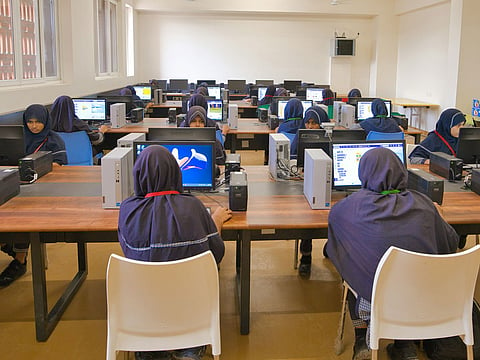
A remarkable transformation is underway across the global education landscape. Classrooms are no longer defined by rows of desks, static textbooks and standardised lessons. Instead, they are becoming dynamic learning environments powered by technology, data and artificial intelligence (AI), designed to meet the unique needs of every learner.
This evolution reflects a growing recognition that the traditional one-size-fits-all education model was designed for an industrial era, while today’s students are preparing for a digital, knowledge-based economy. Success in the future workplace will depend less on memorising information and more on critical thinking, creativity, adaptability and digital fluency. As a result, education systems worldwide are increasingly embracing technology to create learning experiences that are more personalised, accessible and engaging.
A generation that learns differently
Today’s youth, Gen Z and Gen Alpha, are the first generations to grow up immersed in digital technologies. They communicate, collaborate, solve problems and consume information through connected devices every day. Naturally, this has influenced their expectations of education, with students increasingly seeking learning experiences that are interactive, responsive and tailored to their needs.
Research increasingly supports this shift. According to UNESCO, technology has significant potential to improve learning when it complements effective teaching rather than replacing it. However, the organisation also cautions that digital transformation must remain centred on pedagogy, inclusion and equity - not technology for technology’s sake.
Meanwhile, the World Economic Forum’s Future of Jobs Report 2025 identifies analytical thinking, AI literacy, resilience, creative thinking and lifelong learning among the most important workforce skills over the next decade. These competencies require education systems to move beyond content delivery towards developing adaptable learners capable of navigating continuous change.
This is where education technology has emerged as a powerful enabler.
Rather than simply replacing physical textbooks with digital versions, advanced learning platforms use AI and analytics to understand how students learn, identify knowledge gaps and provide personalised support. Every learner can follow a pathway suited to their abilities, pace and areas for improvement.
The UAE’s vision for AI-powered education
The UAE is positioning itself at the forefront of this global transformation. The recent decision to introduce AI as a mandatory subject across public schools reflects a broader national ambition to prepare future generations not only to use emerging technologies, but also to understand their ethical, social and economic implications. The move aligns closely with the country’s long-term vision to build a knowledge-based economy and strengthen its position as a global hub for innovation, advanced technology and AI-driven industries.
How personalised learning is transforming education
One of the biggest limitations of traditional education has always been the challenge of addressing individual learning needs within a classroom of diverse abilities. Every student learns differently. Some may excel in mathematics and science but require additional support in languages or other subjects. Others may need more time to understand concepts that their peers grasp quickly.
For teachers managing increasingly diverse classrooms, providing individualised support at scale can be difficult. AI-powered learning platforms help bridge this gap by providing educators with real-time insights into student performance, engagement and learning patterns. Rather than replacing teachers, these technologies enable them to focus their expertise where it matters most -providing targeted guidance, intervention and encouragement for students who need it while allowing others to progress independently.
Preparing for a digital future
As global economies evolve, it is critical to equip students with future-ready skills – nurturing a new generation of capable leaders. To facilitate this, education systems must also change, paving the way for more personalised, accessible and connected forms of learning.
However, it is also evident that the future of education will not be defined by technology alone. Teachers will still play the most important role in shaping young minds. Technology will merely act as a support system for both students and educators, while making learning more connected, personalised and flexible. Education providers must remain committed to leveraging technology as a means to enhance human expertise through immersive learning experiences.
Geoffrey Alphonso, Chief Executive Officer of Alef Education


