AI in UAE workforce will require new labour laws
As technology restructures the future workforce, some areas that are currently unregulated will require streamlining
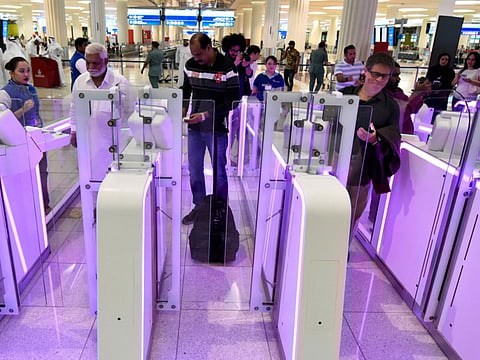
The use of technology in workplaces has had an impact on how companies operate in the UAE in the past five to 10 years. The development of Artificial Intelligence (AI) is likely to have a much more significant impact on businesses and industries in the short to medium term future.
AI and the increasingly frequent use and development of robotics will bring about changes in the workforce and the wider community at various levels and across different sectors. The UAE is extremely innovative and forward thinking, and the authorities are already considering using AI in the aviation and transport sectors.
A report by Forrester recently predicted that “intelligent agents and related robots” will have eliminated 6 per cent of all jobs by 2021. The biggest impact is likely to be in the transportation sector while logistics, customer service and consumer services will also be impacted. The UAE airports have already enabled iris scans and facial recognition, and immigration officers won’t be required in the near future. The airport authorities plan to rely heavily on AI by 2020 to cope with the large numbers of visitors for the Expo.
The increased reliance on technology will require authorities and business leaders in the Middle East to collaborate across borders to take full advantage of the looming commercial opportunities. It is difficult to predict the changes that will be wrought by AI in future workforce arrangements, but there will inevitably be issues that are not currently regulated and will need to be addressed within labour and employment laws and policies.
From a strict employment law perspective, the reduction in certain roles will of course require organisations to undergo restructuring and implement redundancy procedures where an employee is no longer required for a particular activity. However, as with other industrial changes, it will create a demand for a different type of skillset or a different type of workforce. There will be an increasing number of jobs related to programming, robotics and engineering. Businesses will require these skillsets to improve and maintain the AI and automation being used around us.
Some areas for businesses to consider when developing their workforce around technology are the following:
n Whether it is possible for their existing staff to be trained and developed to work with AI technology;
n Whether staff could be based and work remotely/from overseas with technology;
n Whether staff are able to engage and connect internally and with their clients in a more agile manner in light of the use of technology;
n Whether staff that are recruited to assist with the technology could join the company on a fixed-term contract basis to develop and train the existing staff for a limited period only, rather than on a permanent, unlimited term basis;
n Whether there will be any impact on employment benefits pursuant to the type of employees which the business is recruiting and the use of technology.
Ultimately, the development of AI within the workplace will have an impact on employment relationships and the ways in which companies engage their employees in the UAE and globally. Governments and employers will have to determine which jobs should be performed exclusively by humans, which may even result in “human quotas” in different sectors.
The UAE private sector has one of the most diverse and fluid workforces in the world. Therefore, the UAE is one of the economies that is well-placed to react to this change in desired skillset and talent recruitment. The UAE is always able to attract the best talent from all sectors from around the world and therefore, as businesses start to require a skillset that is able to manage and engage with AI in a more sophisticated way, businesses incorporated within the UAE will be well-placed to take advantage of that opportunity.
Luke Tapp is a Senior Associate and Head of the Middle East Employment Practice for Pinsent Masons LLP.


