A new definition for Al Qaida
Al Qaida today is the realisation of Bin Laden’s broader vision
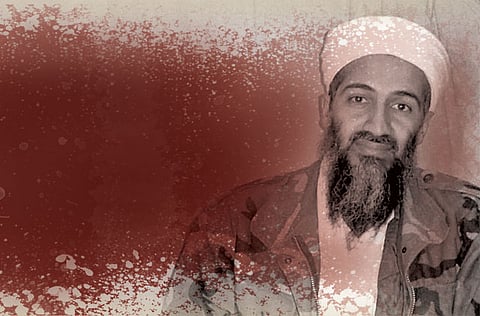
What exactly is Al Qaida? And who cares? Confusion about how to define the terrorist group is rife. Was Al Qaida involved in the September 11, 2012, attacks in Benghazi, Libya, that left four Americans dead? The Obama administration says no. Are the groups proliferating around Africa and the Middle East really part of the Al Qaida that toppled the World Trade Center and hit the Pentagon?
There is no simple answer. Al Qaida is a global terrorist organisation that relies on secrecy to survive. Even Al Qaida members are confused about each other’s status: The leader of the group in Yemen had to ask his Algerian counterpart for clarification about Ansar Al Din’s relationship to Al Qaida in the Islamic Maghreb. The covert nature of the network intentionally obscures many relationships.
Here’s the problem: According to recently declassified testimony of General Martin Dempsey, chairman of the Joint Chiefs of Staff, before the House Armed Services Committee in October, the US military regards itself as legally barred from going after the perpetrators of the Benghazi attacks (and, presumably, others who attack Americans) unless they are affiliated with Al Qaida. The Obama administration’s parsing of words to deny Al Qaida’s direct involvement effectively precludes a military response in these situations.
But the United States can neither disrupt nor defend itself from an enemy it cannot define. Nor are we safer because of arbitrary definitions. The question demands an answer: What is Al Qaida?
Al Qaida’s leadership regulates the use of its name and resources; it has formally and publicly recognised affiliates in Yemen, Iraq, Somalia, Syria and West Africa. In each of these cases, the regional leadership pledged loyalty to the Al Qaida leader, Ayman Al Zawahiri, who accepted their oaths. State Department spokeswoman Jen Psaki may have been right when she said last month that “they don’t give out T-shirts or membership cards,” but any sensible definition of group membership must surely recognise the explicit and public exchanges of oaths of loyalty and command between Osama Bin Laden and Al Zawahiri, on the one hand, and the leaders of overt franchises on the other.
Many experts disagree about the extent to which locally oriented militants are officially part of Al Qaida. The White House has focused on terrorists currently targeting the United States, which form a small subset of the overall Al Qaida movement. In the course of the debate over Benghazi, that focus has narrowed further to the question of whether “Al Qaida core” ordered a specific attack.
There is even disagreement over the definition of “core” Al Qaida. Most administration officials suggest that it is the small group keeping company with Al Zawahiri in Pakistan. Others define it as veteran members of the Al Qaida network, active before the September 11, 2001, attacks. But this core has long been dispersed, with only a small part still in Pakistan. Some members now lead regional franchises: Nasir Al Wuhayshi, Bin Laden’s former secretary, is both emir of Al Qaida in the Arabian Peninsula (AQAP) and Al Qaida’s general manager.
In reality, Al Qaida’s goals are furthered by the so-called core, affiliates and local groups that enjoy no formal relationships with the Al Zawahiri contingent. The Jamal Network in Egypt, Al Mulathamun in the Sahel and the Tehrik-e-Taliban Pakistan (TTP) have a direct but informal relationship with Al Qaida. The TTP poses a particular definitional problem because it has neither sought nor received formal membership in Al Qaida, yet it conducted the attempted Times Square bombing in May 2010.
The greatest Al Qaida threat to the United States is AQAP, which has attempted to attack the US homeland three times since 2009 and whose leader is clearly a member of Al Qaida core, despite his location in Yemen. Still, most of AQAP’s efforts in recent years have gone into seizing control of parts of Yemen, making it “locally focused.” And what to make of Al Shabab, the formally recognised affiliate in Somalia that does not use the Al Qaida name? It has been fixated on Somalia but has conducted attacks throughout the region and recruits directly, and in English, from the American Somali community.
Al Qaida today is the realisation of Bin Laden’s broader vision. He did not limit himself only to the founding and running of Al Qaida but imagined a network uniting like-minded groups extending far beyond state borders. The Al Qaida operatives around Bin Laden’s successor in Pakistan are — at least for the time being — hemmed in by US forces in Afghanistan, and they are under siege from Afghanistan-based US drone attacks. But the Al Qaida network — a defined set of groups running from West Africa to Southeast Asia — carries on Bin Laden’s legacy and remains a danger.
An excessively narrow definition of Al Qaida is just as dangerous as one that includes every Sunni Muslim extremist group. Clearly not all parts of the broader Al Qaida network are equally dangerous. Nor does dealing with each automatically require the use of military force. Decisions to use force against Al Qaida must be shaped by strategy and prioritisation, like any other national security decision. But excluding large portions of the Al Qaida network from consideration and hiding behind semantics guarantees strategic failure. Defining the enemy down is not the answer.
— Washington Post
Katherine Zimmerman is a senior analyst at the American Enterprise Institute’s Critical Threats Project.


