Focus: Child welfare
Imagine a child so completely neglected, that he simply stops growing. The case of a nine-year-old boy in the UK being neglected by his single mother brought forth the issue of severe parental neglect.
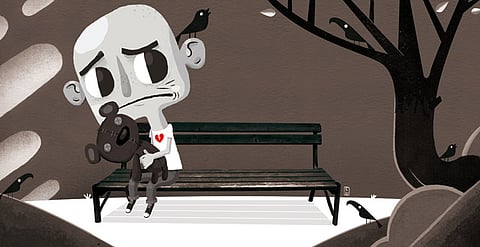
Imagine a child so completely neglected, that he simply stops growing. The case of a nine-year-old boy in the UK being neglected by his single mother brought forth the issue of severe parental neglect. Found by social welfare workers, the child was not being given breakfast, his head was riddled with lice and he could not remember the last time he saw a doctor. All the psychological trauma had a severe physical impact — ‘psychological dwarfism'. This week, readers from the UAE — Vamika, Jerusha, Jayden, Dawn, Joe and Rabia K. — came together in a live online chat at 2pm to debate on the issue of social welfare. The format follows that of a chatroom. Here is how the debate unfolded:
2:01 Gulf News: Good afternoon, readers! This week we discuss an extremely sensitive and important issue of child welfare. To know the background of this debate, click here: http://gulfnews.com/news/world/uk/neglected-boy-in-uk-becomes-a-dwarf-1.674459
2:04 Gulf News: What are your initial reactions to the story?
2:12 Vamika: It was utterly sad to hear that despite the awareness in today's world, there continue to exist such neglecting parents, who are entirely incapable of handling their children. What is worse is that the condition of the child has resulted from no fault of his own. Such parents should be subject to criminal charges as their reckless behaviour is a violation of the human rights of their child.
2:14 Jayden: I agree. Parents neglect their children in many ways, and too many of us turn a blind eye, so the neglect continues. It's time to send a message that this is not ok.
2:15 Gulf News: Do you think such incidents should be punished under criminal law?
2:17 Jayden: Yes. And it should be more than just a few months [of prison term]. Such punishments [as handed down to the mother of the boy suffering from psychological dwarfism] are just a slap on the wrist for someone who has severely reduced the quality of life of someone.
2:17 Vamika: Yes, definitely. However, this would be difficult to implement, as there needs to be a fine line between what is illegal and what is not.
2:18 Gulf News: And should such parents be allowed to keep the guardianship of the child?
2:18 Jerusha: No, I believe in cases of severe abuse or neglect parents shouldn't be allowed to keep custody of their child.
2:19 Dawn: I suppose it would depend on the situation. But in such cases absolutely not.
2:20 Jerusha: In less serious cases, maybe they could be given a warning and suitable punishment.
2:20 Joe: I agree. If it is a case of the parents being able to reform and learn their lesson then I think they should be allowed to keep their children, but should remain under observation for a period of time.
2:20 Vamika: That will differ from case to case. The guardianship of the child would depend on the severity of the incident. If parents prove to be adequate after the incident, then they should be permitted to keep the child. I also believe the child should have a say in the decision.
2:21 Jayden: I agree with Jerusha. However, I do think they should be observed for a while.
2:21 Gulf News: If we take guardianship away from parents, would it lead to more problems in society, in terms of social structure and stability?
2:22 Joe: I think that it would help produce better and more productive members of society than if the children were left with parents who neglect them.
2:24 Jerusha: That may vary according to different situations. If children have been traumatised, they might definitely suffer the consequences psychologically later on. Older children might have problems adjusting to foster families. But overall, if the new parents are loving there shouldn't be any serious problems.
2:24 Dawn: It is true. Taking the child away and placing them in another home would give them the chance to grow up unaffected by neglect.
2:24 Vamika: Everything is about opportunity cost. Realistically, most decisions lead to certain problems that are inevitable. We need to look at the greater benefit. If it is better for the child to stay away from the parents, then society is better off with him/her being away from the parents.
2:24 Gulf News: In the case of this boy, why do you think the teachers or neighbours failed to raise the alarm?
2:24 Jayden: A lot of people are just afraid to interfere.
2:25 Joe: Some are just unobservant or choose to ignore a child in need.
2:25 Vamika: I think that is due to the lack of concern and initiative. It takes a lot of effort for a single individual to raise a whole issue about which they may not even have much detail.
2:25 Jerusha: I think they are more afraid than anything else.
2:26 Gulf News: And what do you all think the
main fear is? The parents' reaction or getting into trouble with the ‘authorities'?
2:26 Dawn: I think a lot of people just don't know what to do. Maybe the authorities should try to increase awareness on what to do in such cases?
2:27 Jerusha: The parent's reaction. You won't get into trouble with the authorities if you genuinely feel you are reporting a crime.
2:28 Vamika: That would definitely be the authorities. Most people don't want to get too ‘involved' in an issue that is completely unrelated to them, as it just leads to further complications. And I agree with Dawn, that most people just don't know the next step forward.
2:28 Jayden: Maybe they are afraid of both, but maybe it's about being afraid of finding out how bad the neglect or abuse really is. [The fear of] feeling bad they didn't do something sooner.
2:30 Joe: I agree with Vamika. A lot of people don't report any crime they see because they fear getting involved with the authorities or of getting caught up in the criminal investigation.
2:31 Dawn: But how do you approach the parents in this situation?
2:31 Rabia K.: I agree. People are not very interested in getting involved in such cases.
2:32 Gulf News: Do you think there is more child neglect, because society will not directly be held responsible by the victim? Because you personally do not fear being questioned by a child for having ignored the neglect.
2:33 Vamika: I don't think there is any point in approaching the parents. Unless they are mentally unstable, there is no way they are not aware of their own actions. If their affect on the child is not enough for the parents to change, then nothing else will be effective.
2:33 Dawn: No, I think [they ignore] because they will not be held responsible by society.
2:35 Jerusha: Well, the primary responsibility of childcare falls on the parent's shoulders. These days, the community and society have an extremely diminished role in raising a child. So, I personally don't know if society can be held accountable anymore.
2:37 Jayden: I think anyone who ignores the abuse will have many sleepless nights regardless of whether the child questions why they didn't help.
2:37 Rabia K.: Well, when people see parental neglect – first reaction is to ignore the situation and not get involved. And people also ignore because they know there will be no reaction from the community around.
2:37 Vamika: I completely agree with Jerusha. Today, parents have the choice to raise their child in whatever way they wish. Additionally, there aren't too many countries that have legal policies that protect the rights of children.
2:38 Joe: This is true, but I believe society should stop turning a blind eye and reinforce that this neglect is not okay.
2:38 Jerusha: If you, as an outsider, tell the parents how to treat their child, you will in most cases be told to mind your own business.
2:39 Dawn: I don't think it's a case of telling them how to raise their child so much as finding out how far the neglect goes and then contacting the appropriate authorities.
2:40 Jerusha: I do agree with Joe. We shouldn't in good conscience be able to turn a blind eye to parental abuse but there is a general feeling of helplessness in such situations. People should be empowered to report such cases to the authorities.
2:40 Gulf News: And who do you think can empower people to report such cases? Is it the police, government bodies, or schools?
2:42 Jayden: I think education is a big factor. A lot people just don't know where to turn.
2:42 Rabia K.: The government should start campaigns. Encouraging people to report. Making it easy for them to report. Giving them simple phone numbers to remember.
2:43 Dawn: I agree with Rabia and Jayden. More needs to be done to educate people and create awareness.
2:43 Jerusha: I think all three can work together. This isn't the responsibility of any one organisation. Schools can increase awareness among students and government authorities and the police can educate the general public.
2:44 Vamika: I think it is the obligation of the government to outline some basic rights of a child and investigate when they are not being met. If schools were given the authority to deal with such situations, there would be a disparity in how these are being dealt with. The government needs to set a fixed standard that is applicable to all. However, the school should have a major role in identifying and reporting these cases.


