Share and care for a positive web world
The creator of a sitcom thinks piracy helps establish a direct link between an individual and entertainment
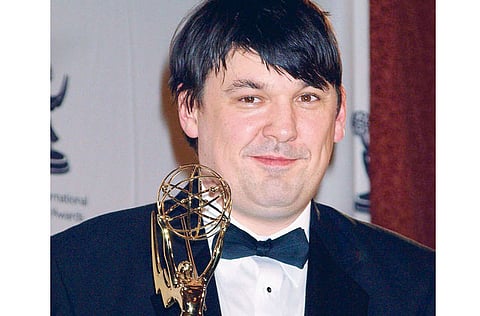
Graham Linehan is a man of contradictions: a successful writer of studio sitcoms who is an apparent defender of piracy.
He should be a bit of a muddle but, somehow, Linehan manages to put all these thoughts together. In part, you can see that mix of ideas in his work. Linehan, who co-wrote Father Ted and Black Books and now writes and directs Channel 4's The IT Crowd, is a champion of Twitter and yet remains a strong believer in old-fashioned sitcoms, recorded in front of an audience.
He also has faith in web users and filesharers as fundamentally honest. "It's probably not been the best thing for people to brand themselves as pirates — the image we should be concentrating on is sharing," he says.
Linehan's argument that companies have to stop trying to defeat filesharing and maintaining the status quo can be misunderstood.
"Someone the other day was introducing me to his wife and he said: ‘Graham believes newspapers should be free.' And I said: ‘No, no, no.'" So what does he mean?
The issue is not that filesharers just want everything for free, Linehan says, but that they want to cut out the marketing and promotional hype and judge things for themselves; they want to circumvent the rules that say everybody should be buying a certain hyped album on a certain release day or that things are released on different days in different territories or that consumers can't buy music straight from those who make it.
Rid of the middleman
"With piracy, people think it's about getting stuff for free," he says. "It's not — it's about getting rid of the middleman that stands between you and your enjoyment of the film or the music."
Linehan says he doesn't advocate piracy: "But that's the reason for it — companies have to meet people halfway. I get contacted daily by people in America asking if there was a legal way to download The IT Crowd. But the whole mechanism is too rigid to allow for such things."
What Linehan does not have is an answer as to what this new system might look like. He admits it with good humour: "It feels like you've bought a car and it's not working properly. And I can't fix the car but I can tell you when it's broken."
It's an infuriating position, although not entirely without logic — at the heart of Linehan's argument is the idea we need to throw out all preconceptions as to how these industries work and create new ideas together.
He wants to start a conversation, rather than dictate the answers. Yet, he says: "The world at the moment seems to be divided into the people who get it and those who don't — and they're the people making the laws."
His position can seem a little at odds with his view of broadcasters. If we're no longer reliant on film companies or record companies to guide us to great content, do we still need TV people telling us what to watch?
"I think I would rather see commissioners with a good sense of what people want, rather than always asking people what they want," Linehan says. "I want a captain who knows how to land the aeroplane, I don't want one who has to ask the passengers where he should land."
There's also the question of people pirating his content. While he appears relaxed about people downloading The IT Crowd once it has been aired, believing that the people who do so are often fans who will buy the DVD box set, Linehan wouldn't want the series to be leaked online ahead of broadcast: "I'd hate that because they'd be ruining the experience of the show for others."
There is a balance to be struck between sharing because you're a fan and sharing because you don't care about an artist's work. Linehan is convinced the positives of the web outbalance the negatives, that eventually it will become a meritocracy, uncovering talent that would otherwise stay hidden.


