'It's fun to be good'
Accepting that little gramophone statue last month has encouraged her to keep pushing her work to a wider audience, but Esperanza Spalding' Grammy hasn't changed her low-key style
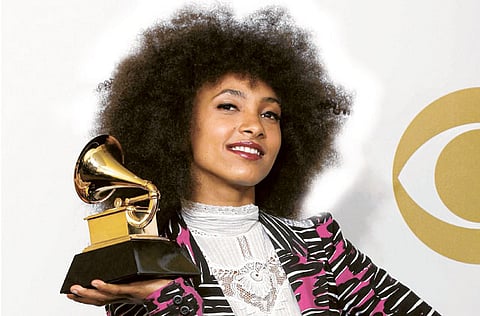
After shocking the universe by winning a Grammy for best new artist last month — besting the likes of Justin Bieber and Drake — Esperanza Spalding spent a week touring Japan. Then she boomeranged back to the West Coast to recharge alongside family and friends in her native Portland, Oregon.
This week, she jets off on a world tour that stops in Barcelona, Paris and Cape Town. But here's one place the globe-trotting jazz bassist with the chirpy singing voice hasn't been since her big Grammy win: on the internet, where overzealous Bieber fans have been talking all kinds of digital smack on Twitter, Facebook, even on Spalding's Wikipedia page.
The 26-year-old shrugs it off with the kind of freon cool you can feel through a telephone receiver. "I've heard about it, but I haven't seen any of it, and I don't want to," she says, making green tea at her mother's house in Portland.
"Just to be totally crude, my reaction, honestly, is, ‘So what?'" Spalding has other pressures to cheerfully ignore, too, like becoming the poster child for 21st-century jazz.
She's the first jazz musician to win a best new artist Grammy, and many in the genre see her upset as a huge stamp of validation from the greater music industry.
Others say the award might not mean much for jazz in the long run. "Whether her victory means that more mainstream attention will be paid to the jazz community around her, and not just to her own career, is doubtful," wrote Patrick Jarenwattananon on NPR's A Blog Supreme the morning after the Grammys.
Responsible
Spalding says she doesn't feel responsible for carrying any torches, anyway. She feels responsible only for her own music.
"I want to get better, because it's fun to be good," she says. "It's fun to be able to express yourself through this medium, but the medium demands a lot of time and attention. So that's where I feel the responsibility."
And while she may be completely new to the masses, Spalding's music has been widely celebrated — and frequently debated — in jazz circles for years.
She studied at Berklee College of Music, became an instructor there at the age of 20, and soon began playing with esteemed artists, including Stanley Clarke, Pat Metheny and Joe Lovano. She released solo albums in rapid-fire succession: Junjo in 2006, Esperanza in 2008 and Chamber Music Society just last summer — each incorporating elements of chamber music, bossa nova and R&B that rankled jazz purists.
Along the way, she made a fan of President Obama, who after inviting her to perform twice at the White House in 2009, asked her to play at the Nobel Peace Prize concert in Oslo in December of that year when he received the award.
Spalding says she hasn't heard from the first family since her Grammy win — "I think he has bigger things on his plate," she says — but she admits that the recognition has helped motivate her.
"Those little boosts from outside are like Red Bull for your creative discipline," she says.
By that measure, a Grammy feels like two dozen espresso shots. Spalding draws clear lines between making her music and promoting it and says accepting that little gramophone statue has encouraged her to keep pushing her work to a wider audience.
"With that Grammy, being invited onto a larger playing field and being invited there as my self, I actually feel more free to do exactly what I want to do," she says.
"I feel like I can be received as myself." After completing her tour duties in April, she'll spend the hot months chipping away at Radio Music Society, an ambitious new recording that Spalding says will aim to capture the spontaneity of improvisation and frame it in the sonics of contemporary pop.
She hopes it will help bring jazz back to the mainstream American airwaves. "I don't know if that will really happen," Spalding says of her radio dreams. "But it's an inspiring objective."


