How to beat the bullies
Peer pressure, bullying, dealing with failure…
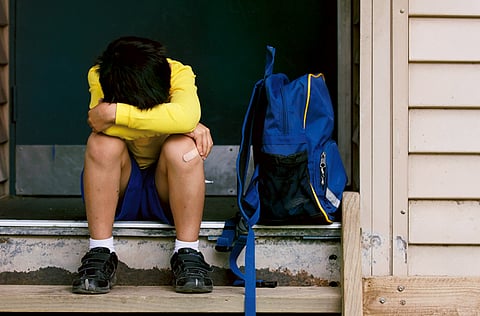
For Richard*, it started when he moved to Dubai with his family and enrolled at a new school in year four. “It was the darkest period in my life,” the 13-year-old Australian recalls, remembering the taunts and jibes he endured for close to two years.
“I was new to the place and desperate to make friends and fit into a new life here, but some boys made my life really miserable.
“During break time they would pick on me, verbally taunting me about everything – my clothes, looks, accent, hairstyle, the bag I was carrying – it was hurtful and I would start arguing with them but that only encouraged them.’’
The bullying soon took its toll and Richard’s grades dropped. He became listless, uncommunicative and even stopped playing football – his favourite sport.
The 38-year-old housewife, whose husband Jason* is a banker, talked to Richard and eventually he opened up, admitting he was being bullied.
That was when she considered calling a counsellor. So, although Richard was reluctant, she persuaded him to see Sunaina Vohra, a certified life and neuro-linguistic programming (NLP) coach.
“One of the first things Sunaina told me was something that was so simple and easy I felt like kicking myself for not thinking about it,’’ says Richard, now in year six. “She told me just to ignore them and walk away.”
Sunaina, who runs Athena Business and Life Coaching in Dubai, gave him lots of tips to stand up to the bullies. “She told me to consider if what they said really meant anything to me,” says Richard. “I thought about everything they’d called me and realised it didn’t. So she was right, there was nothing worth getting worked up about. The boys could have been having self-esteem issues, which is why they were picking on others, I was told. By having a go at me, they made themselves feel superior and important.’’
Not surprisingly, the jibes stopped. “Realising their efforts to rile him were not working, they just gave up,’’ says Sunaina.
A universal problem
Bullying or hazing – a ritual of humiliation used to initiate someone into a group – is a problem many children face at school and early college years, and most educational institutions take a stern approach towards any child who indulges in hazing fellow students.
“A lot of the time, children don’t realise they are being bullied,” says Sunaiana, who gives regular sessions on how to tackle bullying. “It doesn’t have to be taunts and insults. It could even be jokes or pranks that can end up being humiliating. We teach children to recognise bullying and negative peer pressure, and its different types and forms. We also help them discover the root causes, the effects of bullying and its consequences on them and others.
Bullies are often students who have self-esteem and confidence issues, she says. They’re often jealous, envious, afraid or insecure and resort to belittling and riling others to mask their insecurities.
“The first lesson we give children is to learn to stand up for themselves and others and learn how to say ‘no’ to negative peer pressure and bullying,’’ says Sunaina.
Even if children are not being bullied, the classes teach them to deal with potential bullying in future.
Seven-year-old Gihansa Jayawickrama, a student of Dubai Gem Private School, says, “I have not been bullied but if ever I am then I know how to deal with that with the skills I’ve learnt.”
“So I use a skill that Sunaina taught me called ‘powershifting’. I go to the mirror and do an action to punch the ‘grungies’ – the bad things that make me feel sad – out of sight, and then I feel all right. Sometimes I do that in school too when I feel down over something.”
Children of all ages benefit from such coaching. Mehak Ganatra, 12, a student of Dubai College, uses these techniques to get around negative peer pressure. “Sometimes I feel pressured to do something because it is trendy,” she says. “Classmates will say, ‘you have to do it because it makes you look cool and part of the group’. But I’ve learnt to ignore those things and to make my own decisions. Sunaina taught me is to be responsible for my actions.’’
Managing mistakes
Even when children are not being put under pressure by peers and have never been bullied, they might need to navigate failure and manage mistakes such as doing badly in an exam or getting a low grade on an assignment. So, how does one manage a mistake?
First, admit to yourself that you made a mistake, Sunaiana says. Secondly, apologise for your mistake to the person – so, for example, to the subject teacher you had to do the assignment for.
The third step is to find a lesson from the mistake – for instance, to manage your time better or keep reminders about pending projects – and learn from it. And the fourth and final step is to learn to let go of the mistake.
Mehak has been through the drill. “Just because you’ve had a failure – like not making it to the school basketball team – doesn’t mean you have to live with it forever,” she says. “You have to work harder and give it another shot or just let it go.’’
It’s important children realise that making a mistake doesn’t mean you’ve failed yourself; you’ve only failed in the event. Once you master the skills or hone your talents to do the task better, you will be able to accomplish it, so the failure is only temporary, says Sunaina.


