Following instructions for a living
A signspotter on the evolution of the art, the humour involved in each creation and the link it has with the language and the culture of a place
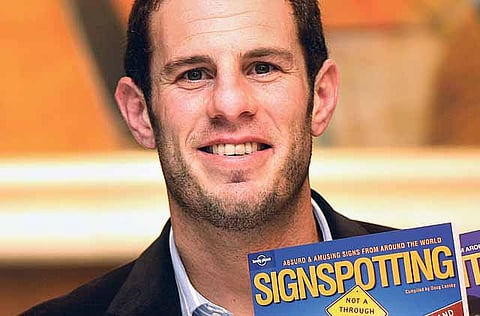
Ever noticed the little wooden board in a garden saying: "Pulling flowers is not allowed?" Then you've been "signspotting".
Doug Lansky, an American travel writer, has made signspotting part of his profession. He not only holds exhibitions of his collection but hosts a website where people can show off their own signspotting. He has written two books and has authored books for Lonely Planet and worked with the National Geographic channel.
Lansky explained the art during his exhibition at Dubai Festival City.
"Signspotting is like a giant Lego kit that doesn't come with any instructions. I'm the human ‘instructions'," Lansky says.
What does your exhibition show?
I've been collecting signs since I started travelling. After almost ten years of being a travel writer, I became a father. I had to rethink how I was going to continue, as I wanted to be home more. I called the editors and said: ‘What about putting up a funny sign each week instead of the column?' And they agreed. It went really well. Then, in late 1999 or early 2000, I set up a website. We got a huge response. More people started sending in their signs. I have had almost 45,000 signs come in since 2000. Even now, I get between 5 and 50 every day.
So you work more as a curator than a signspotter?
When I started, the signs were all mine. It's difficult to compete with millions of travellers who keep their eye out for these things. It has increased, with people going to more exotic destinations. Also, the use of English as a second language is spreading.
What difference have you seen in the signs?
Now it's very high-tech. Earlier, signs were just a "mum-pop-and-their-16-year-old-son" kind of affair, where the son who was taking English in school was either asked to write or edit it and, often, that is what lent it humour. But with big international campaigns, there are different people doing things — from the director who chooses the slogan to the guy who puts it up — and often they are in different cities, even countries. So there are all these huge gaps where the signs can fall into a chasm in humour.
Is it just humour the signs raise?
The signs speak about the culture of the place. Speaking of culture and language, another important thing is trust. Think of all the people getting tattoos in a foreign language they have no idea about. A misspelling can make all the difference. If we were to put up signs in the US in Thai or Chinese or Hindi, I'm sure the people from Thailand, China or India will be rolling in laughter. So as long as we are thankful they're at least trying for our benefit, I think it's OK to laugh.
Tell us about your travels.
I was a backpacker for about two and a half years. I would be on the road for six months, then come back, work and save for my next trip. There are different ways to see a country. I've been to Brazil thrice and when I visited again recently, I barely felt I had been there. Put away the guidebooks. The information in most is old and nor is the writer smarter than you.


