Don't toy with safety
Modern toys could present hidden hazards; make playtime as safe as possible for your little ones
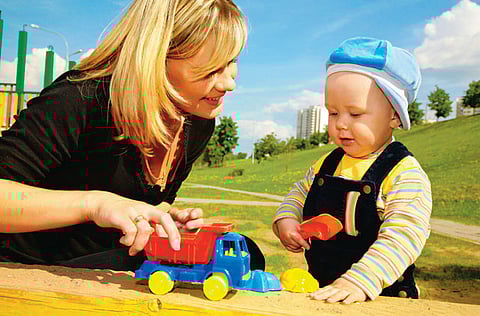
There was a time when boys played with building blocks and girls were happy with dolls. Toys were simple to buy, easy to select and they were the best hand-me-downs for younger siblings. But we are currently living in the ‘use and throw' days, and products come at various levels of quality and content. So how does a parent decide what is best for their child? Is a quality assurance stamp all that is needed to select an item off the shelf at the toy store or do you allow toddler tantrums be the guide to what you pay for at the counter?
Learning tools
Rahul Saxena, Head of Marketing at Babyshop, works closely with several principal brands and toy manufacturers.He plays a major role in merchandise buying decisions at the store, and understands the importance of establishing a perfect fit between the age bracket the toys are slotted into and the awareness level of the child who is the intended user of the product. "Toys often tend to double as pacifiers or learning tools for babies while toddlers and older age groups look at them as a means to explore the world and unleash their creativity," he says.
Early learning tools that help develop motor and visual skills are great buys for infants. They build up their power of recognition and imagination and also stimulate their audiovisual senses. Activity oriented, colourful preschool toys help young ones develop their intelligence and creativity. Sporting goods and outdoor camping items such as play tents improve the child's physical and social skills.
"When buying toys, try to correctly assimilate the instructions on the product and judge the applicability to your children. Also, it would be safer to adopt non-toxic, flame-resistant and hypoallergenic variants of toys for kids below two years of age. Even if it takesa little extra money, it is always advisable to buy the highest quality in playthingsfor your little one," he adds.
Jo Ann Page agrees. A Child Study Case Manager at the Child Learning and Enrichment Medical Center in Dubai, Page has eight years of experience with child behaviour and is herself a mother of two. With her experience as a parent and as a child psychologist, she says that parental awareness of quality and content is key when you pick a toy for your child. "All reputable toy stores sell products that are quality checked and have tags that specify the age groups of kids best suited to use the product. This, coupled with safety instructions help parents maketheir buying decisions."
Bringing the right toy home is justthe start. Safety must extend beyondthe shopping trip.
"Parents must realise that children of different age groups not only need different kinds of toys, they also play differently. Therefore, it is important for playtime to be supervised. Try to avoid leaving children unattended when they are playing," Page says.
Getting creative
Teach the child the value of things; encourage them to clean up after they play. This will not only inculcate good habits and orderliness but also ensure that no one gets hurt due to any small parts or toys lying around.
Page concludes: "Toy dependency is an individual choice. One does not essentially need the latest games and gizmos to keep the kids happy. Children can spend hours being creative with simple items such as colours, crayons, clay dough, paint, a skip rope and even jigsaw puzzles. It all depends on what you give them and how they grow from it."


