Hanger in there
Scrap of beef gives so much more than sum of its parts, you'll always seek it
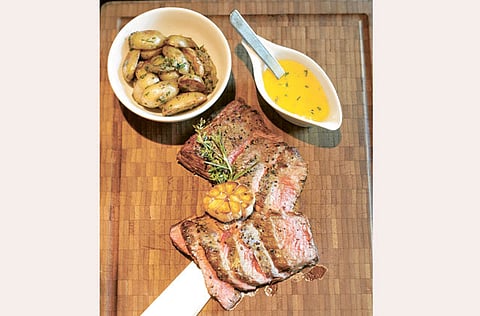
There are those of us who love food, and then there are those people who like fillet steak. Choose a camp, because no-one can be in both.
Strong words? Perhaps. But then again steak lovers are pretty cut-and-dried, and steak lovers don't eat fillet, that yielding, flavour-bereft substance that passes for meat. Yes, when it comes to steak, I firmly believe in picking on something my own size, something that's going to put up a bit of a fight. It's called hanger steak. Once conquered, this little-known scrap of beef gives so much more than the sum of its parts that you'll be seeking it out wherever you can.
That's not an easy prospect, as hanger steak — and its other tough-customer-cousin, the skirt — is rarely seen on steakhouse menus in the UAE. Plop down in 99 per cent of steak restaurants, and you'll fawningly be offered choice cuts such as fillet, New York strip, ribeye and sirloin. All well and good — anyone that loves a good steak will of course find something to enjoy. But for those foodies who are looking to expand their world of meat, hanger should be your first stop.
This scraggly cut is certainly not the most attractive on the cow — there's no thick streak of ivory fat down the side, curving around a uniform, glossy piece of meat.
There's no Wagyu-style marbling. It's dark, ragged and even better, you can see the abundant grain of the meat. I say better, because that grain is your guide to slicing up this little gem, sometimes called butcher's steak (because who knows better than the butcher which cut is cheap and tasty?). Once cooked, the hanger steak should be sliced thinly against the grain, otherwise you'll be chewing your eye teeth down to the gum.
I'm not selling this very well, am I?
I had my first hanger steak in a Paris cafe, where my French friends ordered onglet aux echalotes for me (this is before I became well versed in all the deliciousness that's found in French cafes, bakeries and motorway service stations, and needed assistance). My immediate reaction was unprintable (I was, however, already versed in that aspect of the French language and culture): it seemed tough, and I believe like most people expecting a nice tender steak, I let the surprisingly chewy texture cloud my entire opinion of the dish. But onglet aux echalotes is a cafe classic, and therefore it had to have some merit, I believed. Determined to discover why it was so popular, I took a chance on it at my next lunch break and discovered its charm: the immense meaty flavour. I later discovered it's a choice cut of meat in diverse cuisines — from Mexican fajitas to New York's Korean genius, David Chang of Momofuku, who has a winning marinated hanger recipe.
"This is a working man's steak," says Jason Oakley, executive chef at Margaux, a modern French restaurant at Souk Al Bahar, one of the few restaurants in Dubai to have hanger steak on the menu.
"It needs a bit of nurturing. It's right above the diaphragm, and it's a lot less used" than other cuts of beef like fillet, that "you'll pay for," he says. Oakley's the rare chef in Dubai who seeks out what he calls the "off-cuts" because he recognises how rewarding they can be (later, he regaled me with tales of the time he cooked up a Vietnamese banh mi sandwich with veal tongue).
"I would say four-six minutes per side depending on thickness — medium cooking is gorgeous," instructs Oakley. "Slice it thin, it's juicy and tender. If you slice it with the fibres, you'll be chewing for days."
"Hanger is pretty new to Dubai," says Anton Fivoz, the South African executive chef at West14, a steakhouse on the Palm Jumeirah.
Most diners in Dubai go for the tender fillet, but it's a cut that's lower on the "flavour profile", says Fivoz. "Fillet is around 60-65 per cent of sales. Since I put hanger on, it's at 15 per cent. But it's cheaper, and on the flavour profile, it's second best."
He adds it's about educating the customer a little. "People forget to indulge in other cuts, and since mad cow hit Europe, [where beef is cut with a mind to the off-cuts] people went to Australia for their meat, and the most imported cut from Oz is fillet. Restaurants should also be more proactive."
Sign up for the Daily Briefing
Get the latest news and updates straight to your inbox

